Uncategorised
- Show on Map: No
- Layout: Single Item Slider
- Background Color: White
- Show on Map: No
- Layout: Single Item Slider
- Background Color: White
- Show on Map: No
- Layout: Single Item Slider
- Background Color: White
Annexes to the Draft Submission to the Co-Chairs
- Show on Map: No
- Layout: Single Item Slider
- Background Color: White
- Show on Map: No
- Layout: Single Item Slider
- Background Color: White
- Show on Map: No
- Layout: Single Item Slider
- Background Color: White
Workstream 1 — Draft Submission to the Co-Chairs
Draft Submission to the Co-Chairs - Annexes
- Annex A — Heads of State Initiatives, HoSI: full submission.
- Annex B — Scaling the Mutual Accountability Mechanism, MAM: full submission.
- Annex C — Just Water Partnership Principles: full submission.
- Annex D — Just Water Partnership Principles: full submission.
- Annex E — WG1 scoring results and submissions received.
Proposals
We encourage all participating organizations to:
- Review all proposals carefully
- Coordinate internally to submit one vote per organization (using both voting sheets)
- Avoid self-voting (do not assess your own submitted proposals)
Key information
To ensure fairness and balanced participation, we require all submitting organizations to vote as a condition for their proposal to remain eligible
Scoring Template for the Flagship Initatives
Scoring Template for the Priority Actions
Submit your completed voting sheets to:
Voting deadline: Thursday, 25 June, 12:00 PM CET
Way forward
Results announcement: Friday, 26 June
Next steps: The WS coordinator will finalize the consolidated Workstream 1 submission (3-pagers) and circulate it to the workstream early next week for review before submission to the co-chairs.
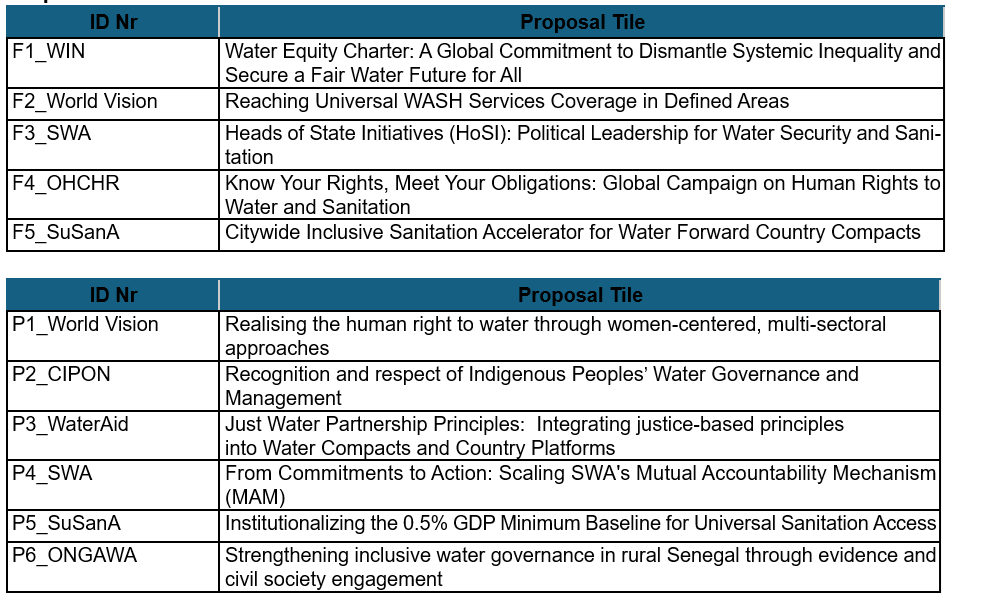
Please find an overview of the submitted proposals below:
Flagship Initiatives
F_2: Reaching Universal WASH Services Coverage in Defined Areas by World Vision
F_5: Citywide Inclusive Sanitation Accelerator for Water Forward Country Compacts by SuSanA
Priority Actions
P_5: Institutionalizing the 0.5% GDP Minimum Baseline for Universal Sanitation Access by SuSanA
- Show on Map: No
- Layout: Single Item Slider
- Background Color: White
- Show on Map: No
- Layout: Single Item Slider
- Background Color: White
- Show on Map: No
- Layout: Single Item Slider
- Background Color: White
The water, sanitation and hygiene (WASH) sector faces a wide range of challenges. Many innovative and effective solutions have been developed by sector actors to address them. The WASH Kit brings together a selection of solutions that have proven successful in projects implemented on the ground by the Deutsche Gesellschaft für Internationale Zusammenarbeit (GIZ) GmbH and its partners. By compiling practical tools, methodologies and resources in one place, the WASH Kit helps organisations identify and apply tested solutions for improving water, sanitation and hygiene services in diverse contexts.
The WASH Kit covers three main areas. First, it provides tools for diagnosis, planning and monitoring. These help decision-makers understand existing sanitation challenges, assess risks, and identify the most effective interventions. Second, it includes practical resources for the construction, rehabilitation, operation and maintenance of sanitation infrastructure in schools, healthcare facilities and other public institutions. Third, it offers approaches for awareness raising, education and knowledge sharing, helping communities adopt healthier hygiene behaviours and promoting long-term change.
One of the key strengths of the WASH Kit is its flexibility. Users can select individual solutions or combine several of them according to their specific project needs and available resources. A browser-based Tool Finder supports this process by guiding users through a series of questions and recommending suitable solutions.
The WASH Kit comprises 19 solutions. Examples include Toilets Making the Grade®, a school competition that encourages schools to tackle sanitation challenges on their own in a playful way, or the Shit Flow Diagram that helps visualise the flow of excreta in a city. The WASH Kit also includes eight curated sets of resources grounded in practical experience from the GIZ-implemented Sanitation for Millions project, addressing topics like safe menstrual hygiene management, operation and maintenance of sanitary infrastructure, and more.
By combining practical experience, proven methodologies and user-friendly resources, the WASH Kit helps organisations implement effective WASH interventions more quickly, efficiently and sustainably. The WASH Kit has been developed by the GIZ-implemented programmes Sanitation for Millions and InnoBlue – Innovations for Resilience that were commissioned by the German Federal Ministry for Economic Cooperation and Development (BMZ).
Here you can find the WASH Kit Manual
Here you can find the WASH Kit Tool Finder
Modules on Diagnosis, Planning, Monitoring
{accordeon_01}
Modules on Construction and Maintenance
{accordeon_02}
Modules on Awareness Raising and Knowledge Transfer
{accordeon_03}
- Show on Map: No
- Layout: Single Item Slider
- Background Color: White
- Show on Map: No
- Layout: Single Item Slider
- Background Color: White
- Show on Map: No
- Layout: Single Item Slider
- Background Color: White
Please find below all presentations from FSM 5 Conference. Enjoy reading!
Video recordings and summaries of the sessions will follow soon!
FSM5 OVERVIEW
[click on the DAY or TRACK you are interested in, to go directly to the section]
|
19 FEBRUARY 2019 |
20 FEBRUARY 2019 |
21 FEBRUARY 2019 |
|
11:00am - 12:30pm |
11:30am - 13:00pm |
11:00am - 12:30pm |
|
02.30pm – 04.00pm |
04.00pm – 05.30pm |
02.30pm – 04.00pm |
|
11:00am - 12:30pm |
11:30am - 13:00pm |
11:00am - 12:30pm |
|
02.30pm – 04.00pm |
04.00pm – 05.30pm |
02.30pm – 04.00pm |
|
11:00am - 12:30pm |
11:30am - 13:00pm |
11:00am - 12:30pm |
|
02.30pm – 04.00pm |
04.00pm – 05.30pm |
02.30pm – 04.00pm |
|
4:30pm - 5:30pm |
2:30pm - 3:30pm |
1:00pm - 2:30pm |
DAY 1, OPENING PLENARY
DAY 1, TRACK 1: RESEARCH
TUESDAY, 19 FEBRUARY 2019, 11:00am - 12:30pm
RESEARCH: Financing and Business
1. PARKINSON, J. et al., “A Framework for Supporting Innovative Financing for Improving Urban Sanitation in Ghana”, (Ghana)
2. BHARATHAN, S.R. et al., “Techno-commercial comparison of FSSTP Tenders across Indian States during 2016-2018”, (India)
3. LEBU, S., SKLAR, R., “Marketing Strategies and Demand Creation for Scaling a Pit Emptying Business in Kigali-Rwanda”, (Rwanda)
4. LARAMEE, J. et al., “Lifecycle Cost Comparison of Fecal-Sludge and Sewer-Based Sanitation Systems in India”, (India)
TUESDAY, 19 FEBRUARY 2019, 2.30pm – 4.00pm
RESEARCH: Technology and Innovation
1. BHAGWAN, J. et al., “Bring on the RevoluSAN: South Africa’s Response to next Generation Sanitation”, (South Africa)
2. COTTINGHAM, R. et al.,“Road to Commercialising Sanitation Technologies: Engineering Field Testing Platform in Durban, South Africa”, (South Africa)
3. PORTIOLLI, G. et al., “The Flexcrevator: Development and Field Testing of Mechanized Pit Emptying with Trash Exclusion”, (Global)
4. WARD, B.J. et al., “Progress in Faecal Sludge Dewatering”, (Global)
5. SEPTIEN, S. et al., “Solar Drying of Faecal Sludge”, South Africa
DAY 1, TRACK 2: CASE STUDIES
TUESDAY, 19 FEBRUARY 2019, 11:00am - 12:30pm
CASE STUDIES: Local Level Policy
1. GEBREZGABHER, S., OTOO, M., “Integrated Faecal Sludge-Based Business Models: Insights from Empirical Cases in Developing Countries”, (Multi-country)
2. ARDESI, A. et al., “Strategy for an Enabling Environment on FSM in the French Speaking Cities”, (Multi-country)
3. SHRESTHA, P. et al., “FSM an Integral Part of Total Sanitation Approach: A Case Study of Gulariya Municipality, Nepal”, (Nepal)
4. JOHNSTON, R., SLAYMAKER, T., “Towards National and Global Monitoring of Faecal Sludge Management”, (Global)
TUESDAY, 19 FEBRUARY 2019, 2.30pm – 4.00pm
CASE STUDIES: National Policy
1. RAHMAN, H. et al., “Embedding and Scaling an Innovative PPP Model for Citywide Services in Dhaka, Bangladesh”, (Bangladesh)
2. BARADI, M., MALHOTRA, M., “Skilling FSSM Workforce in Urban India”, (India)
3. MARDIKANTO, A. et al., “Learning from Experiences: National Initiatives in FSM Implementation in Indonesia”, (Indonesia)
4. BLACKETT, I., HAWKINS, P., “Learning from 20 Case Studies on the Business, Policy and Technology of FSM”, (Multi-country)
DAY 1, TRACK 3: INDUSTRY
TUESDAY, 19 FEBRUARY 2019, 11:00am - 12:30pm
INDUSTRY: Data, Tools, and Information
1. GANESHKUMAR, M. et al., “Management Information System for Septage Management for the State of Tamil Nadu, India”, (India)
2. KISKER, J., DRABBLE, S., “Pula: An app for Vacuum Tanker Businesses”, (Global)
3. MEHTA, D. et al., “IT Enabled Online Monitoring Systems for Scheduled Septic Tank Emptying—Sinnar, India”, (India)
4. NOAKES, L., “How Urban Sanitation Data Standards Will Accelerate Progress to SDG 6.2”, (Global)
5. PALANISAMY, S. et al., “A Systematic Approach to De-Sludging in Karunguzhi - Scheduled Desludging Tool”, (India)
TUESDAY, 19 FEBRUARY 2019, 2.30pm – 4.00pm
INDUSTRY: Container Based Systems and Capacity Building
1. DIOP, Y.S., “Capacity Building for an Improved Fecal Sludge Management and Service Chain”, (Senegal)
2. FOOTE, A. et al., “Public-Private Partnership to Achieve Safely Managed Sanitation: NAIVAWASS & Sanivation”, (Kenya)
3. ELLEDGE, M. et al., “Evidence for the Integration of Menstrual Hygiene Management in WASH Facilities”, (Global)
4. RUSSEL, K.R. et al., “Container Based Sanitation: A viable additional to citywide inclusive sanitation”, (Global)
5. ROACH, M., GARDINER, V., “Going Glocal: Delivering FSM Models for Global Cities”, (Global)
6. HUSAIN, S., MUNANKAMI, R., “BCC Strategy Implementation: Story of Khulna City Corporation (KCC) in Bangladesh” , (Bangladesh)
DAY 1, AFTERNOON PLENARY
1. KAISER, G., “Cape Town\'s Sanitation - Progress, Challenges, Future Outlook” (South Africa)
2. SRINIVAS CHARY, V., “Faecal Sludge & Septage Management in India: Journey towards SDG 6.2” (India)
DAY 2, OPENING PLENARY
1. DIOP, B.S., “FSM: A business opportunity for the African private sector”
2. CAONG, S.H., “FSM as Utility Operation: The Manila Water Story”
3. LUPHUWANA, N., “Social Franchising: My Story”
DAY 2, TRACK 1: RESEARCH
WEDNESDAY, 20 FEBRUARY 2019, 11:30am – 13:00pm
RESEARCH: Faelcal Sludge Characterisation
1. MURUKESAN, V., CHAKRABORTI, N., “Fecal Sludge Mapping - Understanding fecal sludge source, volumes, characteristics for optimal treatment”, (India)
2. STRANDE, L., ENGLUND, M., “\'SPA-DET\' Approach for Quantities and Qualities of Faecal Sludge”, (Multi-country)
3. FREIHARDT, J. et al., “Citizen Science for Faecal Sludge Characterization in Blantyre, Malawi”, (Malawi)
4. KOME, A. et al., “Timely Emptying, Scheduled Emptying or No Emptying at All”, (Global)
WEDNESDAY, 20 FEBRUARY 2019, 4.00pm – 5.30pm
RESEARCH: Social and Behavior Studies
1. DUTT, P., KUMAR, R.,“Understanding FSM Behaviour in India: From Exploration to Evaluation”, (India)
2. HARPER, J. et al., “When Rural Latrine Pits Fill: Characterizing Household Choices and Encouraging Safe Fecal Sludge Management”, (Cambodia)
3. GAUTAM, M., “Emptying and De-Sludging Practices: An Occupational Safety Needs Assessment Study”, (India)
4. PARKER, A., “Bringing a Gender Lens to Sanitation Technology Development”, (Global)
5. MWANZA, N., “Evidence to Action: Unsafe FSM and Associated Exposure in Peri-Urban Kanyama, Lusaka, Zambia”, (Zambia)
DAY 2, TRACK 2: CASE STUDIES
WEDNESDAY, 20 FEBRUARY 2019, 11:30am – 13:00pm
CASE STUDIES: Faecal Sludge Removal and Transport
1. LUGALI, Y. et al., “Mobile Faecal Sludge Stations in Urban FSM - A Case of Two Pilots in Kampala City”, (Uganda)
2. MULENGA, B., “Scaling Pit Emptying Services in Blantyre-Malawi Through Pit Emptiers Association”, (Malawi)
3. MANSURI, A. et al., “Performance Based Contracts for Private Sector in FSM Services Maharashtra, India”, (India)
4. GOUNDEN, T. et al., “Complexities Around Public Private Partnerships within the Circular Economy in Durban, South Africa”, (South Africa)
WEDNESDAY, 20 FEBRUARY 2019, 4.00pm – 5.30pm
CASE STUDIES: Onsite Sanitation and Behaviour Change
1. MUSIIME, J., “Innovative Citywide FSM Marketing: Experiences from Kampala, Uganda”, (Uganda)
2. BROWNE, S., MAHTANI, A., “Review of Pilot FSM Demand Creation Campaign in Freetown, Sierra Leone”, (Sierra Leone)
3. TOGOLA, L.,“Soakaway Pits Are Money Makers for Landlords in Abidjan, Cote D’Ivoire”, (Cote D\'Ivoire)
4. JAHAN, H.,“The Treasure Hunt: City-Wide Social Mobilisation Campaign on FSM in Faridpur, Bangladesh”, (Bangladesh)
DAY 2, TRACK 3: INDUSTRY
WEDNESDAY, 2 FEBRUARY 2019, 11:30am – 13:00pm
INDUSTRY: Treatment - Emptying, Technology and Standards
1. LEE, R. et al., “Validation Testing of the ISO 30500 Standard on Innovative Non-Sewered Sanitation Systems (NSSS)”,
2. NGABOYAMAHINA, E. et al., “Demonstrating Pathogen-Free Thermal Treatment Solutions That Comply with ISO/PC 318 Energy Neutrality Requirements”,
3. GREENE, N. et al., “Is There a Business Case for Mechanical Pit Latrine Emptying Machines?”,
4. UNDERDOWN, C. et al., “Improving FSM Investment Decisions by Estimating Total Solids from Rapid In-Situ Penetrometer Tests”,
5. MWALUGONGO, W., “Safe containment of manually emptied pit latrine waste from Nairobi\'s urban slums” (Kenya)
WEDNESDAY, 20 FEBRUARY 2019, 4:00pm – 5:30pm
INDUSTRY: Biological Treatment
1. MCWHIRTER, M., “10,000 Septic Tanks Later: Impacts and Results of Starting Large Scale FSM”, (Indonesia)
2. MOUNKAPEGNA, J.R. et al.,“Enjeux de la gestion des boues de vidange Foumban au Cameroun”, (Cameroon)
3. FORBIS-STOKES, A.A. et al., “The Anaerobic Digestion Pasteurization Latrine: Operation in 3 Countries and Looking Ahead”, (Multi-country)
4. PANUVATVANICH, A. et al., “Reinvent Novel Septic Tank Based on User Demand in Cambodia, Thailand & Vietnam” (Multi-country)
DAY 2, AFTERNOON PLENARY
Financing Mechanisms for the Sanitation Industry
1. CHANDA, O., “Financing Mechanisms for the Sanitation Industry”
2. ROSE, A., “Sanitation Technology Funder Landscape”
3. BORDA, “Links in the sanitation services chain”
DAY 3, OPENING PLENARY
1. GODFREY, A., “Key Features of a FSM Policy Guideline”
2. SOW, I., “Importance d\'une Association de vidangeurs dans le secteur l\'assainissement autonome: Cas de l\'Association des Acteurs de l\'Assainissement de Senegal”
3. CHAN, M.Y., “The Role Standards and Technology Certification Platforms in FSM Application”
DAY 3, TRACK 1: RESEARCH
THURSDAY, 21 FEBRUARY 2019, 10:30am – 12:00pm
RESEARCH: Co-Treatment and Reuse
1. SHAMANNA, G. et al., “Findings from Co-Composting Operations at a Faecal Sludge Treatment Plant (FSTP), Devanahalli, India”, (India)
2. SRINIVAS CHARY, V. et al., “Technology Innovations for Co-Treatment of Septage at Sewage Treatment Plants, Andhra Pradesh, India”, (India)
3. MOYA, B. et al., “Challenges to the Use of Human Excreta Derived Fertilisers in Horticultural Export Farms”, (Global)
4. NARTEY, E.G. et al., “Crop and Soil Performance Influenced by Fortiferâ in Different Agroecological Zones in Ghana”, (Ghana)
5. MCCONVILLE, J.R. et al., “Technical and Societal Readiness of Nutrient-Recovery Sanitation Systems in Kampala, Uganda”, (Uganda)
THURSDAY, 21 FEBRUARY 2019, 3:00pm – 4:30pm
RESEARCH: Institutional Frameworks and City-Wide Approaches
1. REDDY, Y.M., CHARY, V.S., “GIS Analysis for City-Wide FSM Optimisation and Decision Making: Narsapur, India”, (India)
2. WILLETTS, J. et al., “Climate Sensitive FSM: New Thinking from Vulnerability, Resilience and Risk-Hazard Approaches”, (Global)
3. ROHILLA, S. et al., “Mapping Faecal Waste and Mainstreaming Citywide Sanitation in Ganga Basin— Uttar Pradesh”, (India)
4. DEY, S. et al., “Application of an Intersectionality-Informed Gender Mainstreaming Framework in FSSM in Andhra Pradesh, India” (India)
DAY 3, TRACK 2: CASE STUDIES
THURSDAY, 21 FEBRUARY 2019, 10:30am – 12:00pm
CASE STUDIES: Fecal Sludge Treatment
1. WARUE, S., “Pro-Poor and Economically Viable Decentralised FS Treatment Facilities in Kenya”, (Kenya)
2. REDDY. Y.M., CHARY, V.S., “PPP Model for Developing Faecal Sludge Treatment Facilities at Scale: Andhra Pradesh, India”, (India)
3. ARDESI, A. et al., “Sustainable Value Chain Linking FSM and Agriculture in Vientiane, Lao PDR”, (Lao PDR)
4. MOORTHY, A. et al., “Operation Maintenance of Faecal Sludge Treatment Plant at Devanahalli, India: Learnings”, (India)
THURSDAY, 21 FEBRUARY 2019, 3:00pm – 4:30pm
CASE STUDIES: FSM and City-Wide Sanitation
1. DIRIX, D. et al., “Faecal Sludge Management in Toamasina Madagascar”, (Madagascar)
2. NDZANA, A.P., KAYAP, S., “Prise en main programmée de la filière GBV par la Municipalité de Yaoundé”, (Cameroon)
3. SPALGON, R., “India’s First Public Private Partnership for Integrated FSM in Leh, India”, (India)
4. ZHANG, C. MULLACKAL, M.,“Management and Institution Approaches: 3 Successful Cases from
Sri Lanka, Philippines and Malaysia”, (Multi-country)
DAY 3, TRACK 3, INDUSTRY
THURSDAY, 21 FEBRUARY 2019, 10:30am – 12:00pm
INDUSTRY: Private Sector, Finance and Markets
1. MAINA, M.W., “Public Water and Sewerage Utilities Collaboration with Private Sector-Pit Emptiers in Kenya”, (Kenya)
2. THIAM-KA, D. et al., “Accelerating Private Operator Growth through Technical Assistance for Investment Readiness”, (Global)
3. VAN DEN BEUKEL, A., “Cogs within the Circular Economy: Waste to Resource in Accra, Ghana”, (Ghana)
4. MANSURI, A. et al., “Perspective of a Desludging Enterprise on Performance Based Contract in Maharashtra, India”, (India)
5. PRAKASH, S., “Blue Water Company” (India)
THURSDAY, 21 FEBRUARY 2019, 3:00pm – 4:30pm
INDUSTRY: Thermal Processing
1. SCHOEBITZ, L. et al., “Development of Tools for Efficient Remote Monitoring of Faecal Sludge Treatment Units”, (Global)
2. MYRES, T., et al., “Detailed Combustion Analysis of Fecal Matter to Optimize Thermal Processing Technologies”, (Global)
3. IVE, O., “Development of a Low Tech Carbonising Process for Management by Small Enterprises”, (South Africa)
4. PIASCIK, J., “Transitions Transformative Technolgies from Laboratory to Field Testing to a Commercial Product”, (Global)
DAY 3, DESLUDGING SESSION
THURSDAY, 21 FEBRUARY 2019, 1:00pm – 2:30pm
DESLUDGING: What You Always Wanted to Know about Faecal Sludge...and Never Dared to Ask!
1. KARTHYKEYAN, D., GANESH, K., “Wireframe for a Non-Intrusive Monitoring System for Desludging Operators”, (Global)
2. WILSON, N., “The Role of Illustrated Systems Analysis in FSM Hardware Innovation”, (Global)
3. FORBIS-STOKES, A.A., “Mobile Treatment Unit for Septage Emptying and Safe Disposal in Dindigul, India”, (India)
4. SELEMAN, A. et al., “Drivers of Persistent Unhygienic Faecal Desludging and Potential Sustainable Solutions in Unplanned Urban Settlements in Dar es Salaam, Tanzania”, (Tanzania)
5. STILL, D. et al., “A Rapid, Low-Cost Test for Faecal Sludge Strength Used to Evaluate Pump Performance”, (Zambia)
6. UNDERDOWN, C. et al., “Calibration of Manual Cone Penetrometer for Testing Faecal Sludge Strength in Mzuzu, Malawi”, (Malawi)
7. TILLEY, E. YESAYA, M., “Sludge Bomb: Managing the Growing Backlog of Unemptied FS in Blantyre, Malaw” (Malawi)
- Show on Map: No
- Layout: Single Item Slider
- Background Color: White
- Show on Map: No
- Layout: Single Item Slider
- Background Color: White
- Show on Map: No
- Layout: Single Item Slider
- Background Color: White
General Information about the Election 2025
The next Global Steering Committee (GSC) will be elected from 24 to 27 November 2025. The results will be announced on 28 November 2025.
Voting is simple: You only need to log in to your SuSanA account and submit your vote during the election period. Every vote counts!
If you have more questions, then please check out our Frequently Asked Questions (FAQs) on the Global Steering Committee page.
Candidates 2025
For this year’s election, there are seven voting regions:
- Sub-Saharan Africa
- Europe & Central Asia
- Latin America & Caribbean
- North America
- South Asia
- East Asia & Pacific
- Middle East & North Africa
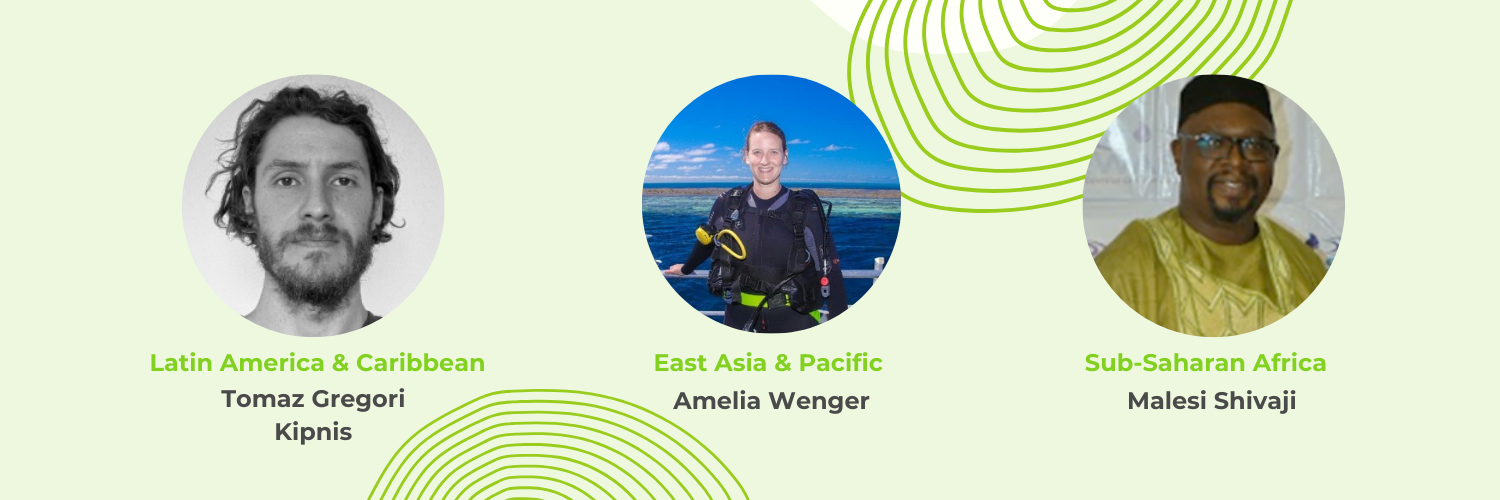
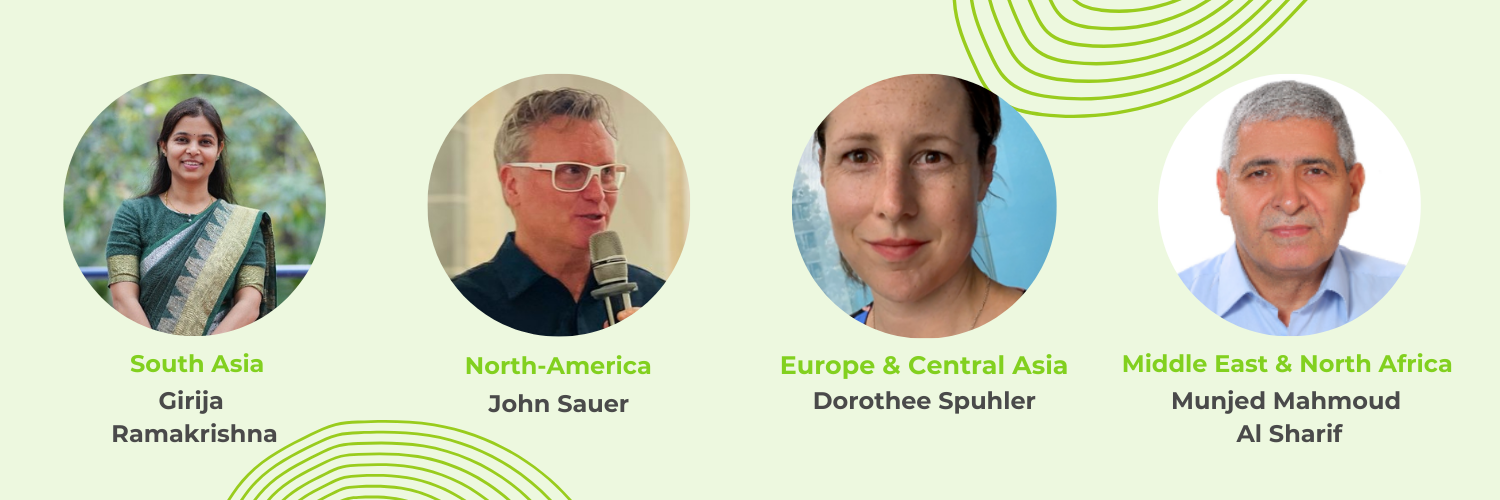
Our New Global Steering Committee
FAQs and further Information
{accordeon_01}