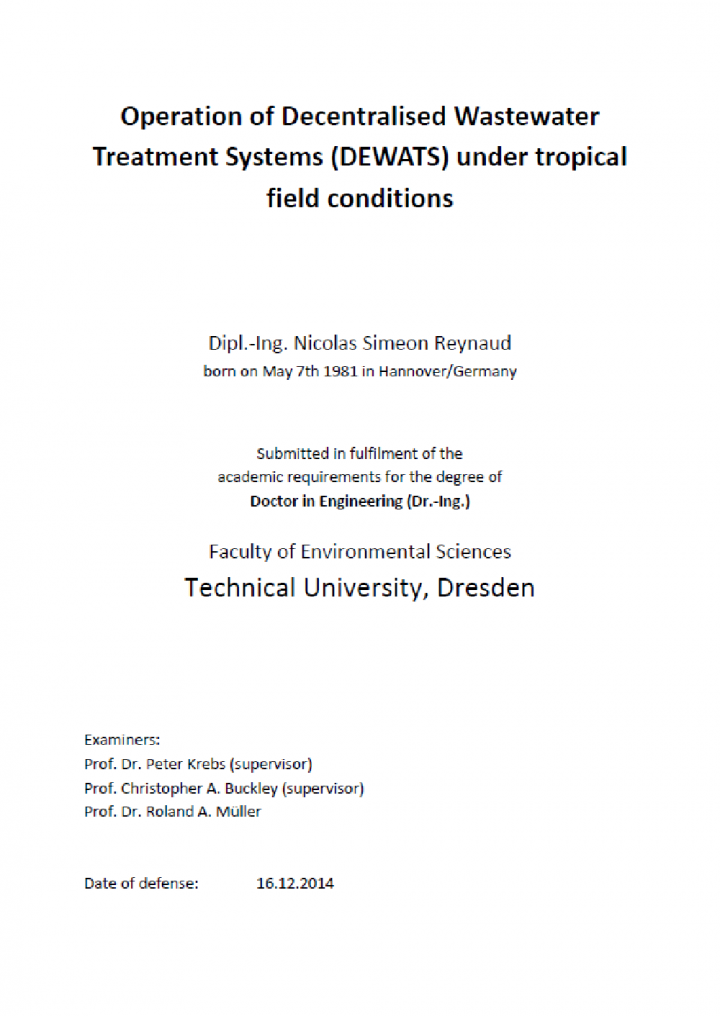
Reynaud, N. (2015) Operation of Decentralised Wastewater Treatment Systems (DEWATS) under tropical field conditions PhD thesis
Decentralised Wastewater Treatment Systems (DEWATS) such as disseminated by the Bremen Overseas Research and Development Association (BORDA) are increasingly being recognized by decision makers across the world as an option for service delivery in densely populated low-income areas. However, little practical experience has been gathered methodologically on basic engineering and performance aspects surrounding these systems. This thesis investigates full-scale anaerobic reactors of communal DEWATS implemented in […]
Online since: 20.01.2016
Views: 8979
Downloads: 734
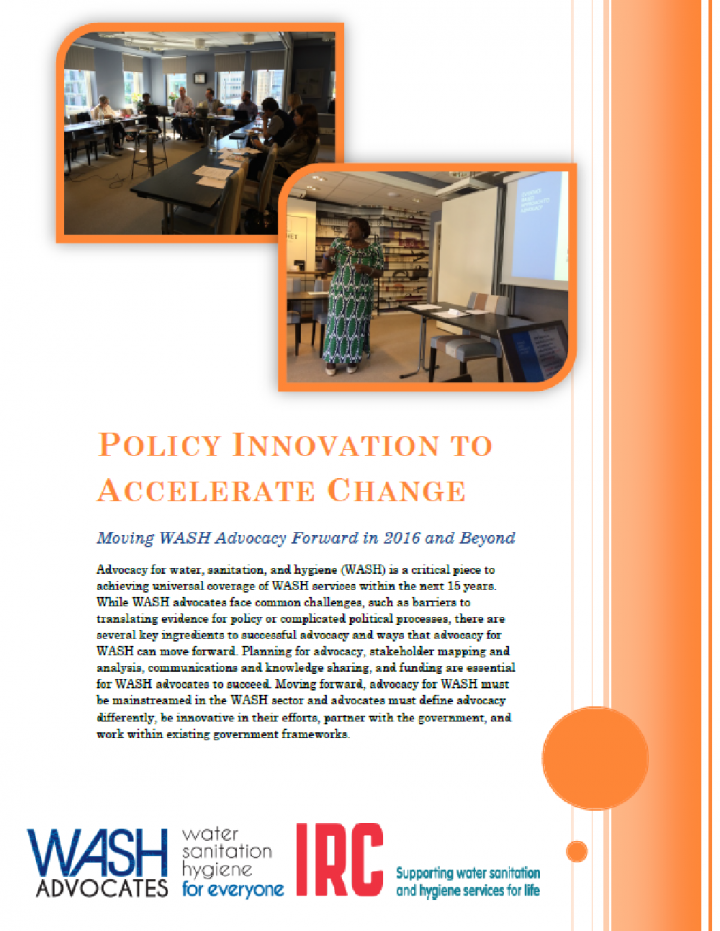
WASH Advocates & IRC (2015) Policy innovation to accelerate change Moving WASH Advocacy Forward in 2016 and Beyond
A group of 17 WASH advocates representing nine countries gathered in Stockholm, Sweden, and online on August 21, 2015, for a day of knowledge sharing and discussions on advocacy for WASH in developing countries. The day included case studies, open discussions, and presentations on current and emerging practices. This report explores the common themes that emerged from the meeting. The group had rich discussions on common […]
Online since: 19.01.2016
Views: 4314
Downloads: 387
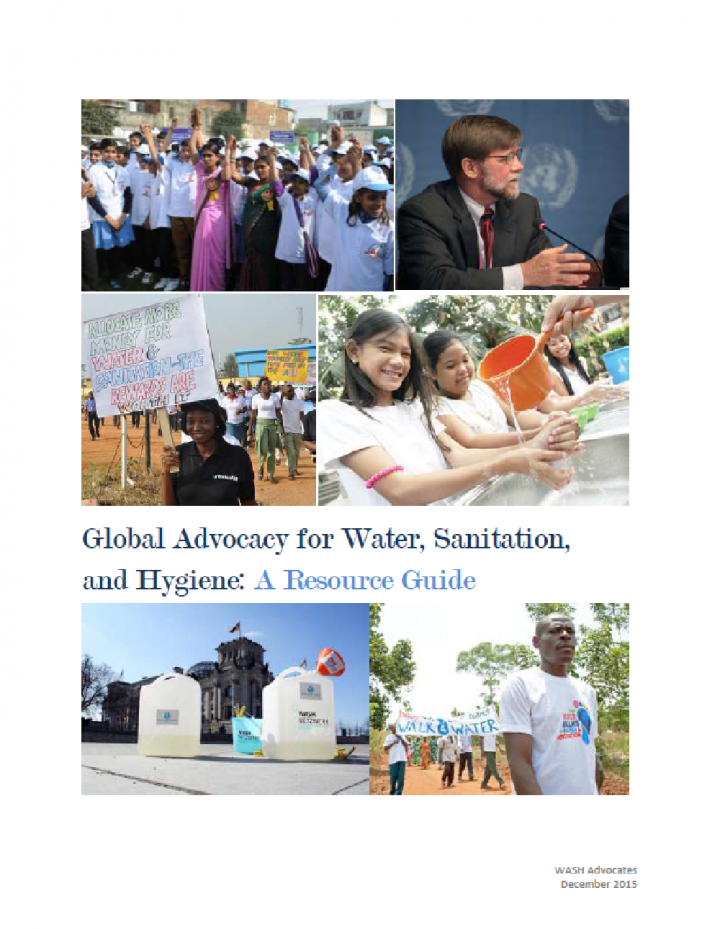
WASH Advocates (2015) Global Advocacy for Water, Sanitation, and Hygiene A Resource Guide
This resource guide provides recent reports, manuals, strategies, examples of advocacy efforts, and other resources that cover WASH and global advocacy along with relevant organizations in the WASH advocacy field. This guide can serve as a tool for professionals, implementers, and advocates looking to pursue and promote WASH advocacy efforts.
Online since: 19.01.2016
Views: 5962
Downloads: 589
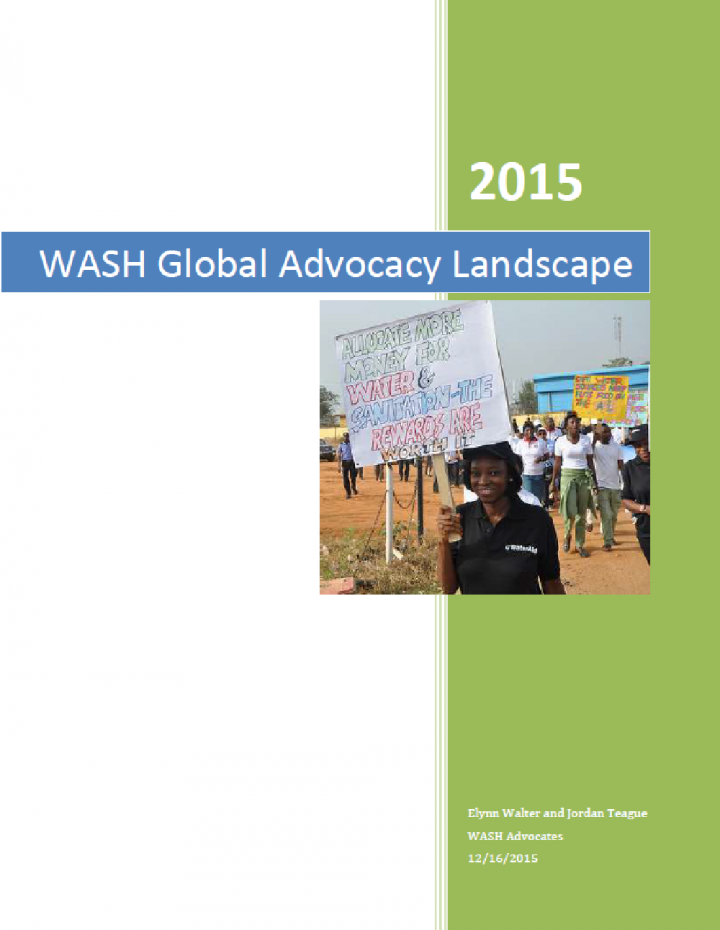
Walter, E., Teague, J. (2015) WASH Global Advocacy Landscape
This landscape intends to provide a 10-year lookback at the progression of advocacy for WASH; a current snapshot of WASH advocacy globally including gaps and areas of opportunity; and recommendations for WASH Advocacy in 2016 and beyond. The landscape intends to demonstrate the incredible work and accomplishments of the diverse actors in the WASH advocacy space. This document does not cover all WASH advocacy efforts […]
Online since: 19.01.2016
Views: 5028
Downloads: 389
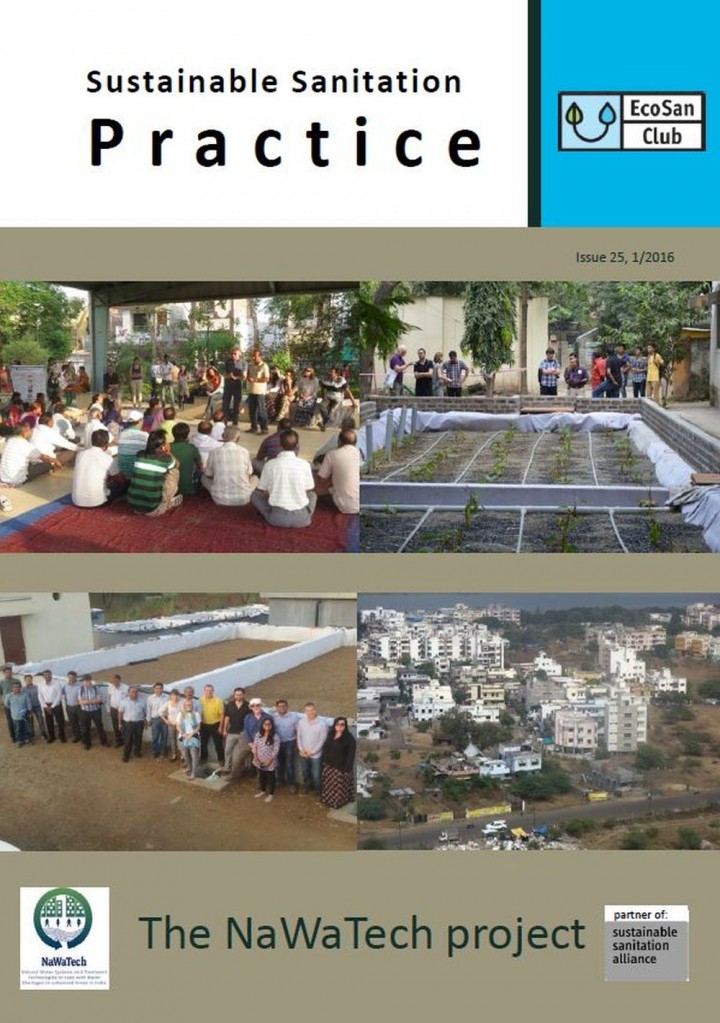
EcoSan Club (2016) The NaWaTech project
The NaWaTech project (Natural Water Systems and Treatment Technologies to cope with Water Shortages in UrbanisedbAreas in India) is an Indian-European Research and Development Project aimed at maximising the exploitation of natural and compact technical systems and processes for the effective management of municipal water resources, water supply and sanitation services, and the municipal water cycle as a whole in urbanised areas of India. The […]
Online since: 19.01.2016
Views: 5847
Downloads: 955
Caplan, K. (2015) Thematic Discussion: Private sector engagement in sanitation and hygiene: Exploring roles across the sanitation chain Discussion Synthesis
Online since: 13.01.2016
Views: 4039
Downloads: 387
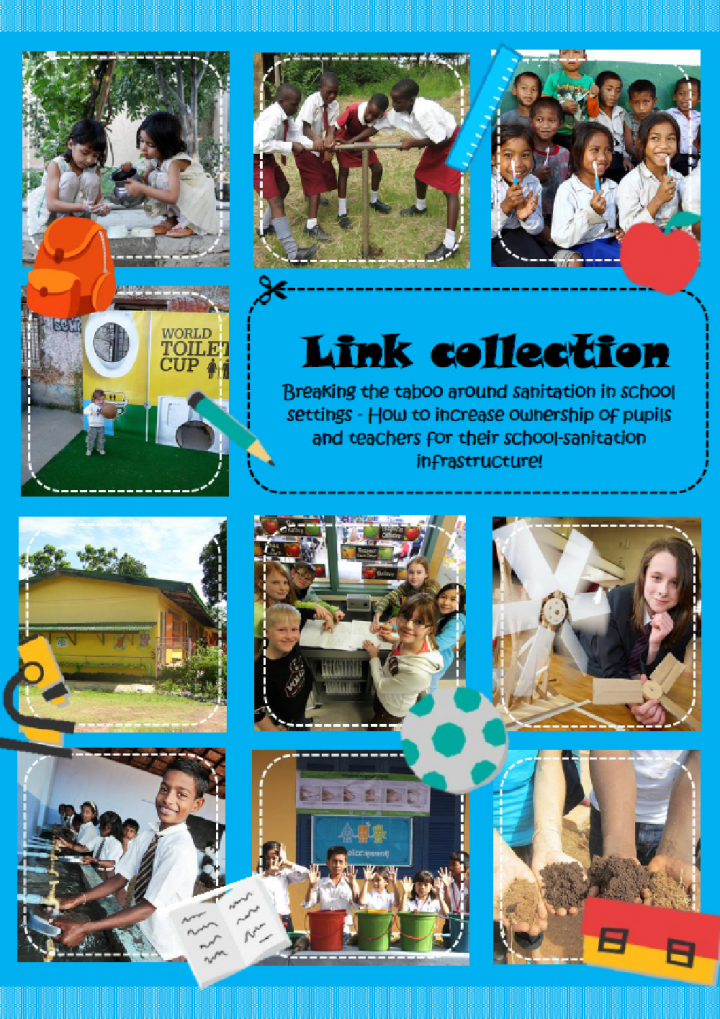
GIZ (2015) Link Collection WASH in Schools Breaking the taboo around sanitation in school settings- How to increase ownership of pupils and teachers for their school-sanitation infrastructure!
This Link collection is for practitioners, WASH-club organizers, teachers and everyone who has an interest in achieving an overview of the broad WASH in Schools scene. The aim of this Link collection is to provide an overview of the various reports, approaches, activities and further research sources about WASH education in schools. A special focus lies on publications with concrete examples and instructions on how to […]
Online since: 13.01.2016
Views: 3254
Downloads: 5649
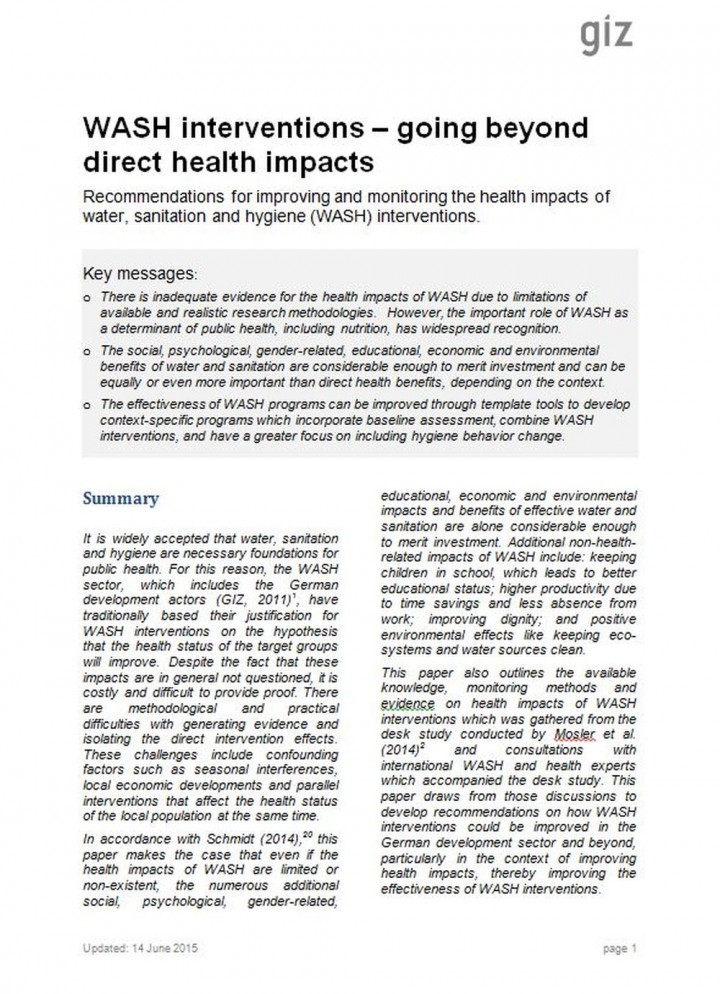
Rieck, C., Graham, R. (2015) WASH interventions – going beyond direct health impacts Recommendations for improving and monitoring the health impacts of water, sanitation and hygiene (WASH) interventions
It is widely accepted that water, sanitation and hygiene are necessary foundations for public health. For this reason, the WASH sector, which includes the German development actors (GIZ, 2011), have traditionally based their justification for WASH interventions on the hypothesis that the health status of the target groups will improve. Despite the fact that these impacts are in general not questioned, it is costly and […]
Online since: 12.01.2016
Views: 3195
Downloads: 783
Rohilla, S.K., Luthra, B., Varma, R.S., Padhi, S.K. (2015) SFD Report - Srikakulam, India SFD Promotion Initiative
Srikakulam is a coastal city located in the state of Andhra Pradesh (AP). It is the district headquarters and is an important administrative and commercial centre. It is one of the oldest municipalities of the state, established in 1856. It is located adjacent to the National Highway number 5 connecting Chennai and Kolkata. River Nagavali flows through the city. (MA&UD, 2011). The population of city as […]
Online since: 07.01.2016
Views: 5149
Downloads: 605
Rohilla, S.K., Luthra, B., Varma, R.S., Padhi, S.K. (2015) SFD Report - Cuttack, India SFD Promotion Initiative
Cuttack city, lies in east coast plains of India, is the former capital and one of the oldest cities of Odisha, established in 1876 as municipality. It is the district headquarter and is situated at a distance of about 25 km to the north of Bhubaneswar, the present capital of Odisha. The city is surrounded by the rivers Mahanadi, Kathajodi, Birupa and Kuakhai (CMC, 2011). […]
Online since: 07.01.2016
Views: 5615
Downloads: 716
Rohilla, S.K., Luthra, B., Varma, R.S., Padhi, S.K. (2015) SFD Report - Aizawl, India SFD Promotion Initiative
Aizawl, capital of Mizoram state, lies in east Himalayan region of India. It is the largest city of the state. Area under municipal council, which is 103.93 sq.km, has been chosen for the study. Aizawl Municipal Council (AMC) is further divided into 19 Wards. The population of city under AMC, as per 2011 Census, is 293,416 persons. The density of City is 2,823 persons per […]
Online since: 07.01.2016
Views: 5703
Downloads: 9714
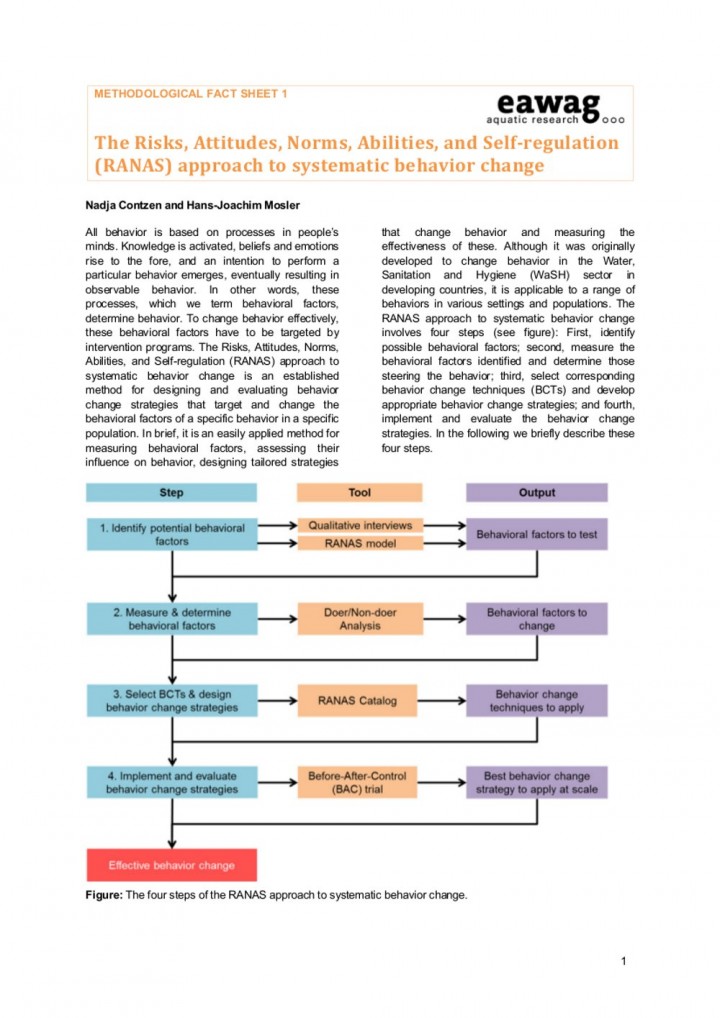
Contzen, N., Mosler, H.-J. (2015) RANAS (Risks, Attitudes, Norms, Abilities, and Self‐regulation) methodological fact sheets 6 methodological fact sheets on behavior change
These six fact sheets about methodologies deal with the RANAS (Risks, Attitudes, Norms, Abilities, and Self‐regulation) approach that is an often used method for designing and evaluating behavior change strategies. The factsheets contain a brief description of the approach ready to use for practitioners.
Online since: 04.01.2016
Views: 15965
Downloads: 2385
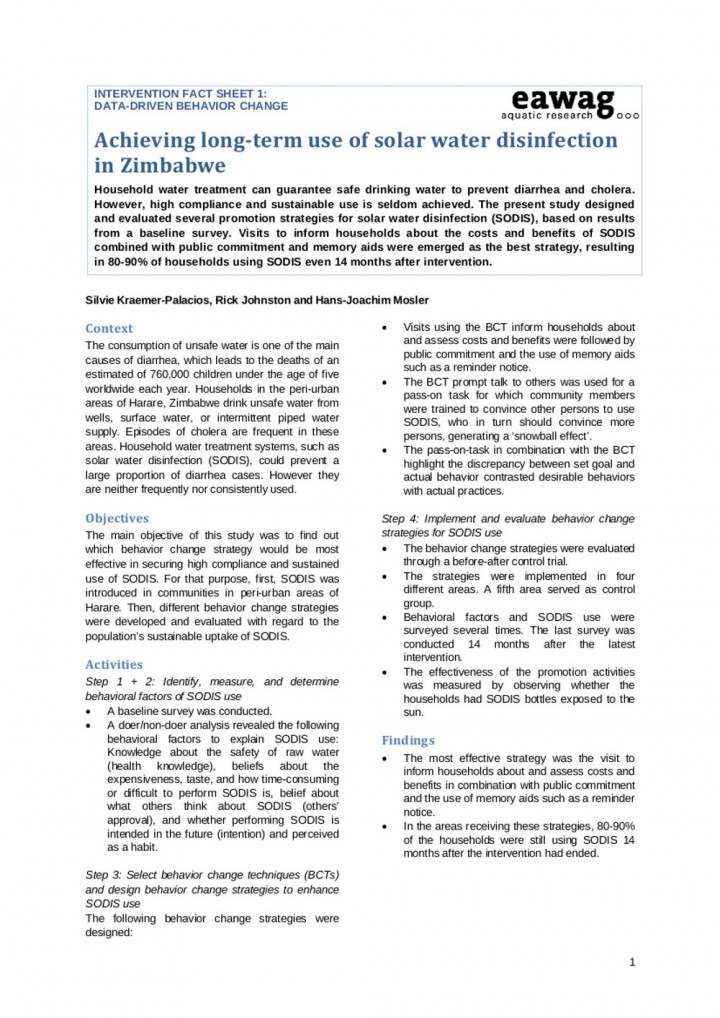
Mosler, H.-J. et al (2015) RANAS (Risks, Attitudes, Norms, Abilities, and Self‐regulation) intervention fact sheets 5 intervention fact sheets on data-driven behavior change
These five fact sheets about interventions present case studies from Zimbabwe, Ethiopia, and Uganda and show the effects of different strategies that were applied in order to achieve behavior changes. Intervention fact sheet 1: Achieving long-term use of solar water disinfection in Zimbabwe Household water treatment can guarantee safe drinking water to prevent diarrhea and cholera. However, high compliance and sustainable use is seldom achieved. The present […]
Online since: 04.01.2016
Views: 5234
Downloads: 484
Harada, H., Schoebitz, L., Strande, L. (2015) SFD Report - Danang, Vietnam SFD Promotion Initiative
Danang is located at the South Central Coast of Vietnam. It is the fourth most populated city in the country with approximately 1,007,400 inhabitants in 2014 (GSO 2015). The total land area of the city is 1,285 km2, including 65 km2 of residential area (GSO 2015). Sixty-two percent (62%) of the excreta flow was classified as unsafe management along the sanitation service chain (containment, emptying, […]
Online since: 29.12.2015
Views: 6333
Downloads: 796
Harada, H., Schoebitz, L., Strande, L. (2015) SFD Report - Nonthaburi, Thailand SFD Promotion Initiative
Nonthaburi City Municipality is the principal city of Nonthaburi province, located to the north of Bangkok. It has a registered population of 256,457 in the area of 38.9 km2 (NCM 2015a). Most of the houses have onsite sanitation systems such as septic tanks or cesspools. The city municipality is responsible for the collection, transportation and treatment of the generated faecal sludge according with the Public […]
Online since: 29.12.2015
Views: 6404
Downloads: 859
Gunawan, A., Schoebitz, L., Strande, L. (2015) SFD Report - Khulna, Bangladesh SFD Promotion Initiative
Khulna is located in the south-western part of Bangladesh, with a population of 1.5 million and a total area of 46 km2. Its National policy and strategy documents encourage both NGOs and the private sector to actively engage in providing sanitation services. However, the SFD assessment has shown that 100% of the excreta in Khulna is not contained and therefore unsafely managed. The Shit Flow Diagram […]
Online since: 29.12.2015
Views: 6367
Downloads: 1144
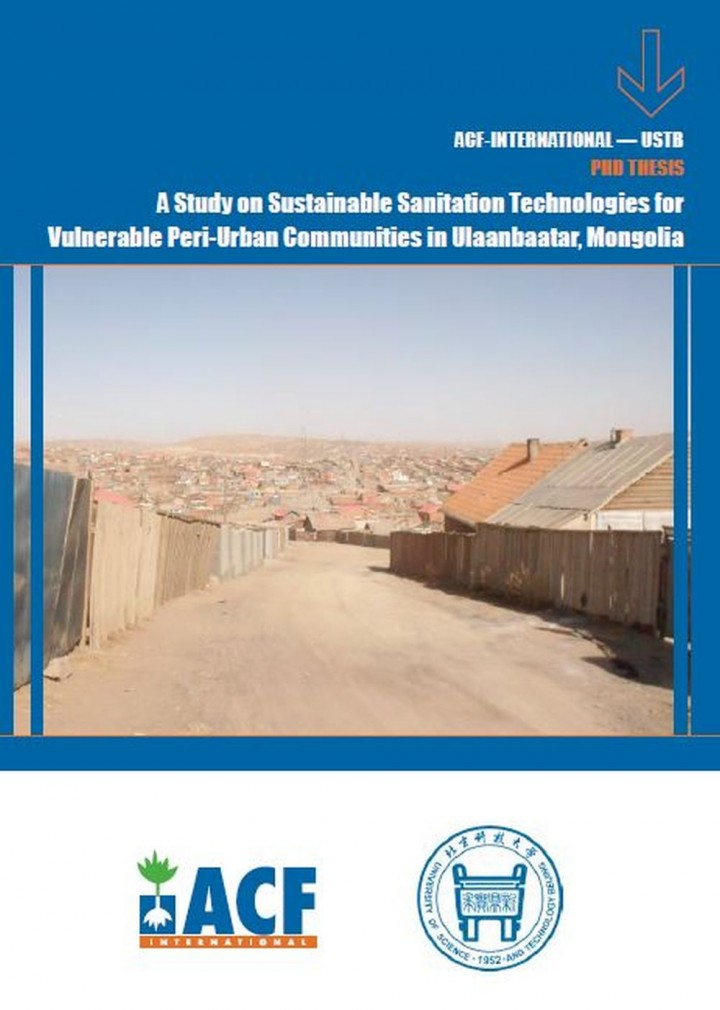
ACF & USTB (2015) A Study on Sustainable Sanitation Technologies for Vulnerable Peri-Urban Communities in Ulaanbaatar, Mongolia PhD Report
In many of the world’s undeveloped or partially-developed countries, and even in some developed ones, frequent outbreaks of various water, sanitation and hygiene (WASH)- and greywater-borne diseases are still prevalent due to lack/absence/failure of WASH system. As a result, poor sanitation accounts for the death of a child every 20 seconds which leads to 1.5 million preventable death each year. Therefore development of alternative sanitation […]
Online since: 16.12.2015
Views: 3816
Downloads: 383
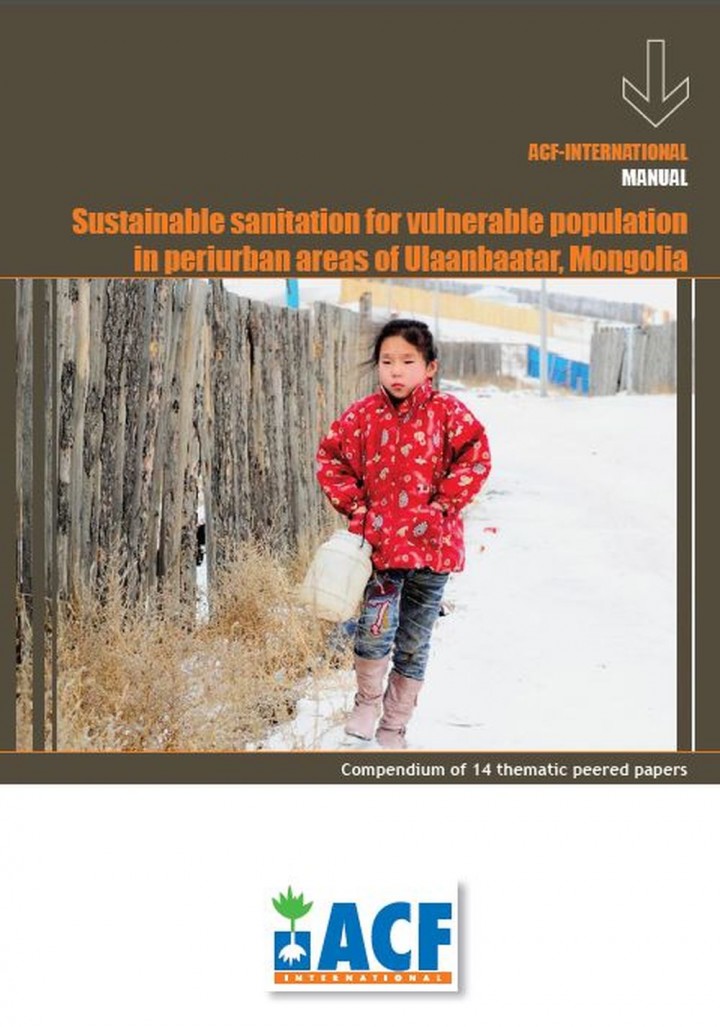
ACF (2015) Sustainable sanitation for vulnerable population in periurban areas of Ulaanbaatar, Mongolia Compendium of 14 thematic peered papers
Action contre la Faim (ACF) has been working in Mongolia since 2001; both in Ulaanbaatar Ger areas (urban formal and informal slums), and the western Bayan Ulgi (province), undertaking multiyear food security, WASH and nutrition programmes. Both water and sanitation sub sectors are a growing concern: the current method for excreta disposal is using basic, often poorly constructed unsealed pit latrines. The current system is causing […]
Online since: 16.12.2015
Views: 4203
Downloads: 406
Furlong, C. (2015) SFD Report - Nakuru, Kenya SFD Promotion Initiative
Nakuru is the fourth largest town in Kenya, lying within the Rift Valley and covering an area of 290 km2. Less than 30% of the population is served by the sewerage network, while the majority of the population use onsite sanitation services, predominantly in the form of basic or traditional pit latrines. Formal emptying services for fecal sludge has limited coverage, with the fecal sludge […]
Online since: 15.12.2015
Views: 6127
Downloads: 1017
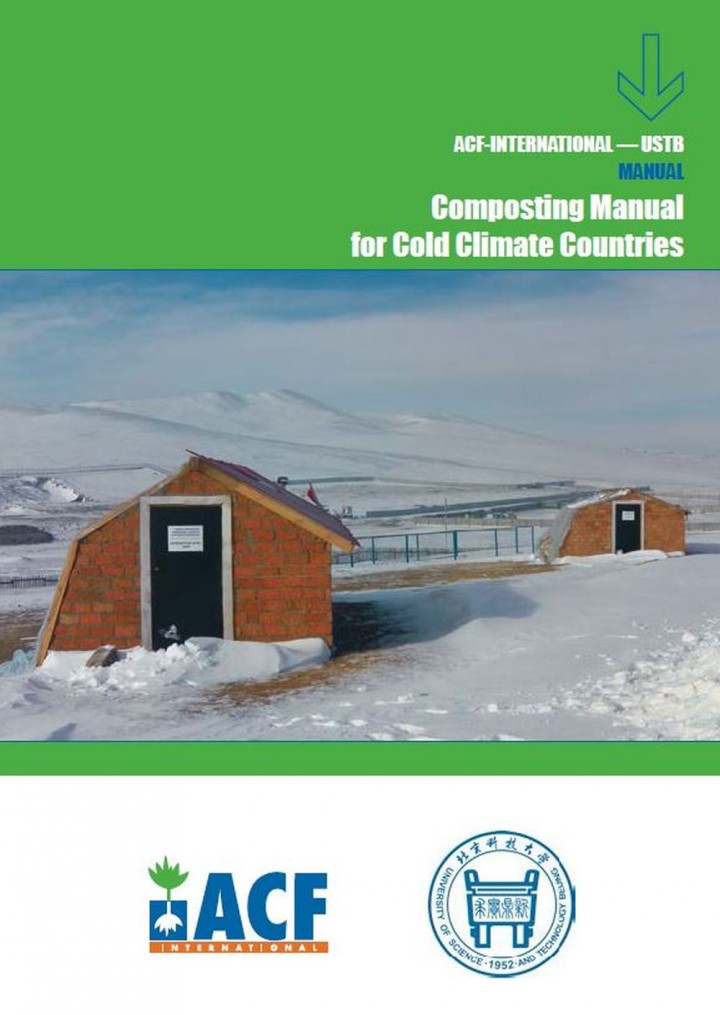
ACF & USTB (2015) Composting Manual for Cold Climate Countries Manual 2015
Composting is defined as the controlled biological decomposition and stabilization of organic substrates under a set of factors (e.g., temperature, moisture content, carbon-nitrogen ratio, degree of aeration, pH level, and physical structure of the raw materials), which allow development of thermophilic conditions as a result of biologically produced heat. The final product should be stable, free of pathogens and plant seeds, and beneficial when applied […]
Online since: 15.12.2015
Views: 4867
Downloads: 884