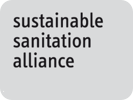
UNICEF, WaterAid (2021) Menstrual Hygiene in Schools in South Asia Country Snapshots
The Menstrual Hygiene in Schools in South Asia - Country Snapshots from UNICEF and WaterAid is divided into an 2018-2020 update including Key Observations, a country specific WASH in Schools (WinS) overview, a country specific MH Overview as well as the MH Journey in the countries Afghanistan, Bangladesh, Bhutan, India, Maldives, Nepal, Pakistan and Sri Lanka.
Online since: 18.05.2021
Views: 2995
Downloads: 6426
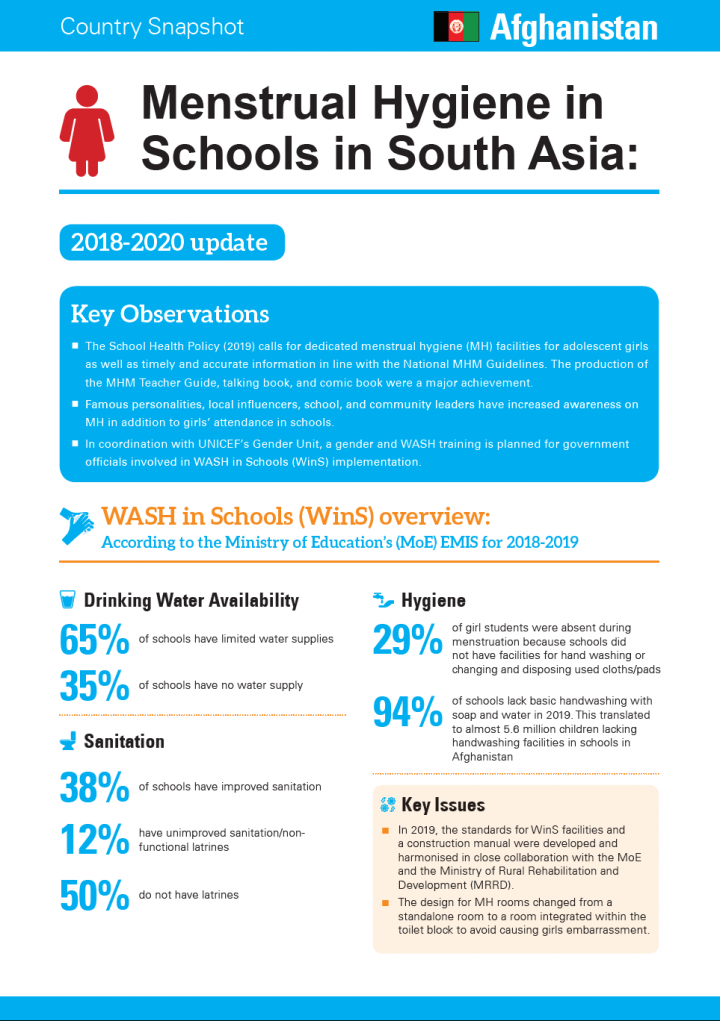
Srinivasan, S., Faithful, A. (2021) Technology Applicability Framework // Taf Assessment Washalot 3.0
130 WASHaLOTs placed in public schools, health care facilities, district offices and other public institutions in Kampala and West Nile (Uganda). In a participatory process, a technology implemented as a pilot is assessed through the perspective of three key stakeholder groups engaged with the implementation of the technology: user/buyer, producer/provider and regulator/ investor/facilitator. The three key stakeholder groups assess the six sustainability dimensions individually, resulting in […]
Online since: 14.01.2021
Views: 2894
Downloads: 298
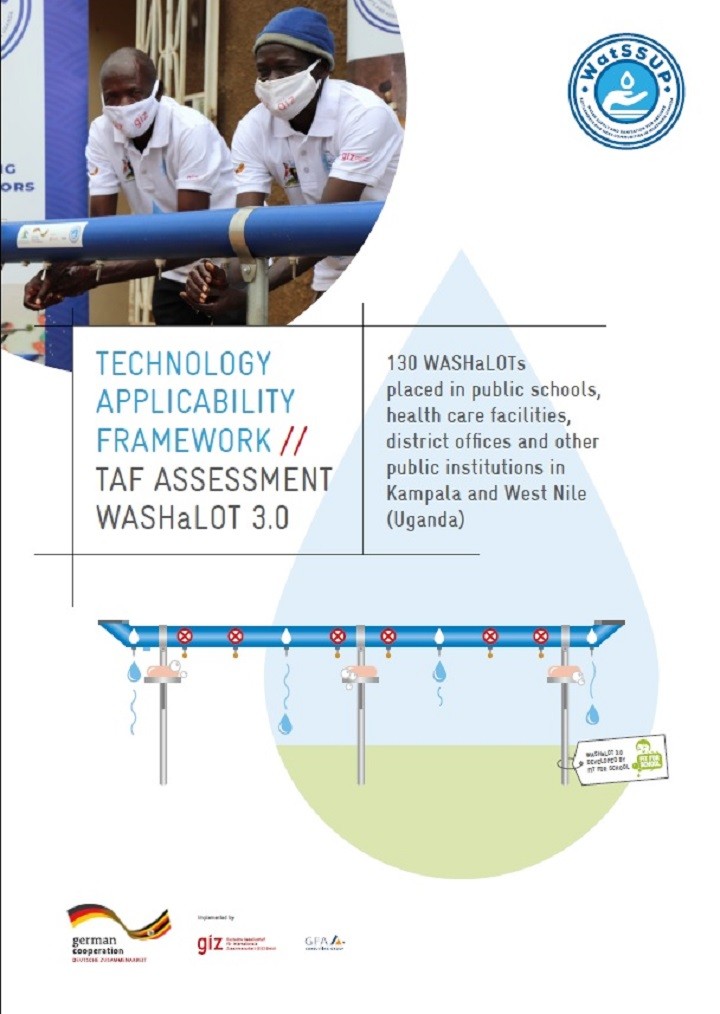
Madrid, F., Monse, B., Schlenk, J. (2021) WASHaLOT 3.0: User's Guide for Schools Installation, Operation and Maintenance
The WASHaLOT 3.0 is a low-cost and water-saving washing facility. For pandemic preparedness and response, the WASHaLOT 3.0 can be easily adjusted so that fewer water outlets are in use to ensure physical distancing. This user guide is produced to provide receiving schools with orientation on the WASHaLOT installation, guidance on operation & maintenance as well as recommendations for pandemic adjustments. The school community needs to be […]
Online since: 14.01.2021
Views: 1529
Downloads: 518
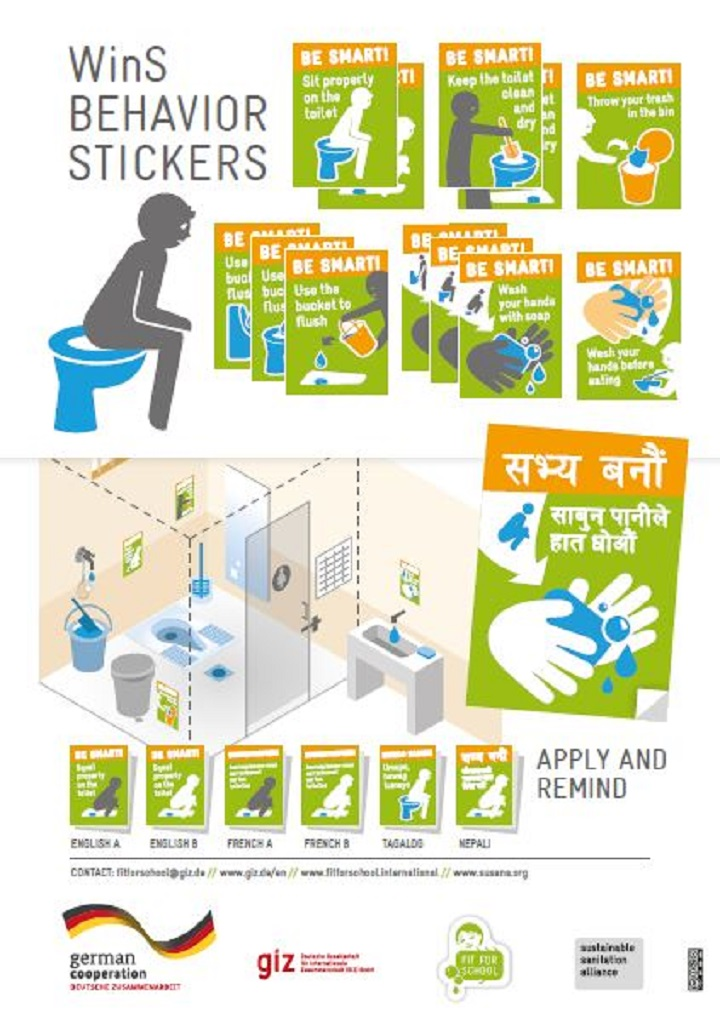
GIZ (2020) WinS Behavior Stickers Apply and Remind
Behavior stickers for WASH in schools (WinS) interventions to be used for applying and reminding users of hygienic habits.
Online since: 11.01.2021
Views: 3860
Downloads: 6577
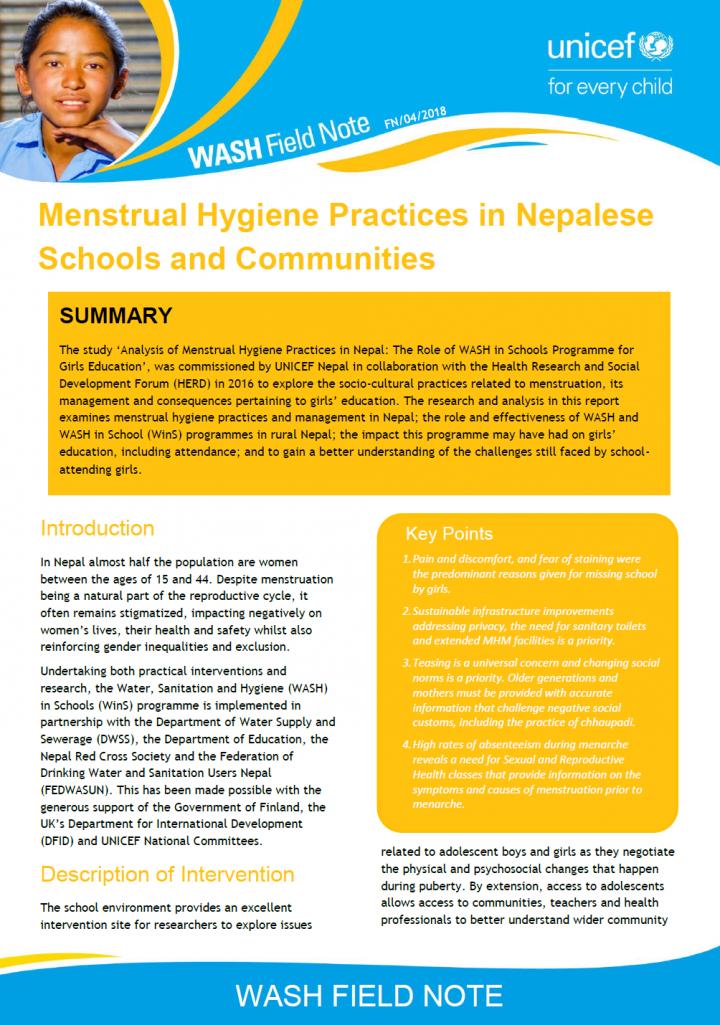
Sah, N., Shrestha, S., Dhakal, S., Ahmad, T. (2018) Menstrual Hygiene Practices in Nepalese Schools and Communities
The study ‘Analysis of Menstrual Hygiene Practices in Nepal: The Role of WASH in Schools Programme for Girls Education’, was commissioned by UNICEF Nepal in collaboration with the Health Research and Social Development Forum (HERD) in 2016 to explore the socio-cultural practices related to menstruation, its management and consequences pertaining to girls’ education. The research and analysis in this report examines menstrual hygiene practices and […]
Online since: 21.12.2020
Views: 1321
Downloads: 313
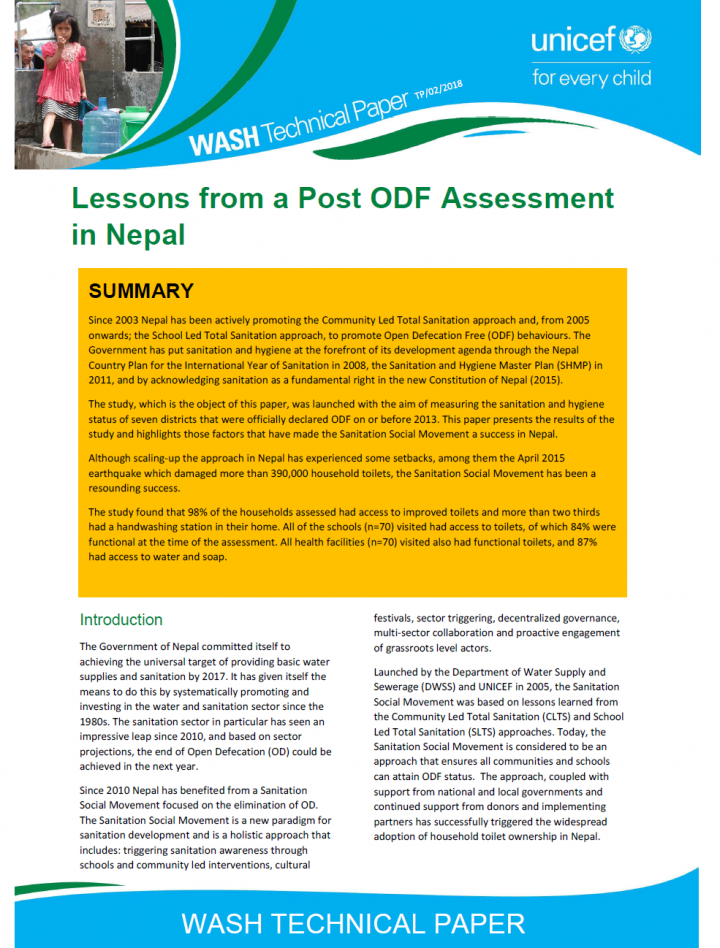
Shrestha, P., Shrestha, S., Dhakal, S., Ahmad, T. (2018) Lessons from a Post ODF Assessment in Nepal
Since 2003 Nepal has been actively promoting the Community Led Total Sanitation approach and, from 2005 onwards; the School Led Total Sanitation approach, to promote Open Defecation Free (ODF) behaviours. The Government has put sanitation and hygiene at the forefront of its development agenda through the Nepal Country Plan for the International Year of Sanitation in 2008, the Sanitation and Hygiene Master Plan (SHMP) in […]
Online since: 21.12.2020
Views: 1414
Downloads: 461
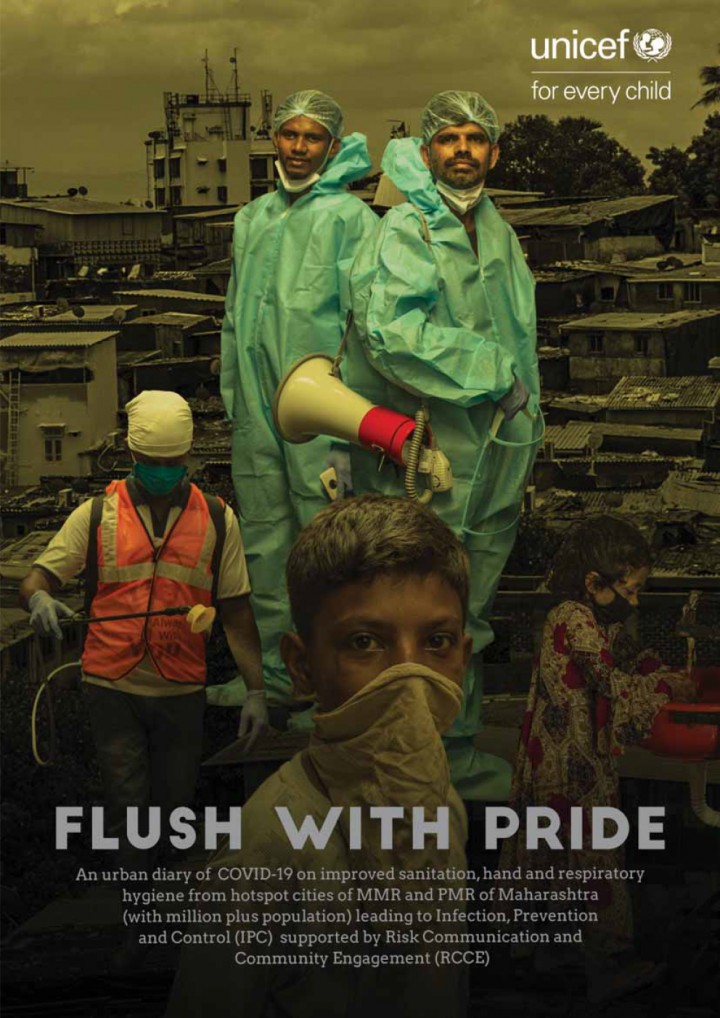
Godke, A., Kabir, Y. (2020) Flush With Pride An urban diary of COVID-19 on improved sanitation, hand and respiratory hygiene
The document covers the impact of WASH intervention in families, communities and institutions with a balance between demand and supply, highlighting both child and gender lens. Innovations like cost effective, simple, scalable pedal operated hand washing stations, augmentation of operation and maintenance of community toilets with identification of community touch points, school readiness for COVID-19 while retrofitting simple taps to elbow operated taps, promoting one […]
Online since: 16.12.2020
Views: 1065
Downloads: 396
Pizzacalla, K. & Nantume, G. (2020) Sanitation For Millions - WinS Models that Work Step-by-Step Actions to reach the National Standards for WASH in Schools (WinS) in Line with the Three Star Approach (TSA)
The Ministry of Education and Sports recognizes that Water, Sanitation and Hygiene (WASH) programs in schools (WinS) are a key priority area and that improved hygiene practices and a clean school environment are contributory factors to ensuring that learners can enjoy an acceptable standard of health. The need for a clean school environment is highlighted in the 2016 School WASH mapping report. The report pointed […]
Online since: 09.10.2020
Views: 3002
Downloads: 490
Nuwagaba, F.; Köberlein, M.; Mass, P.; Semiyaga, S. & Madrid, F. (2020) Sanitation For Millions - WASHaLOT 3.0 An innovative handwashing technology in Uganda
UNICEF/WHO reports that 1.7 million children die annually of diarrhea and pneumonia. Handwashing with soap under running water can prevent the majority of infectious diseases, such as COVID-19, influenza, cold, cholera, dysentery, and contagious eye disease. Several studies have reported reduced incidences of pneumonia and diarrheal diseases by over 40% to 50% through handwashing. However, many people in Uganda, like in other low- and middle-income […]
Online since: 09.10.2020
Views: 2272
Downloads: 377
WASH in Schools Network (2020) Using Environmental Nudges to improve Handwashing with Soap among School Children A Resource Guide for rapidly deployable Interventions for use as an interim Measure during School Reopenings
This resource guide by Watson, J. & Drebelbis, R. provides an overview of the science behind nudge-based handwashing interventions and the evidence supporting the use of environmental nudges for handwashing in schools in low-resource settings. Resources and tools for planning and implementing nudge-based interventions in schools are also provided.
Online since: 02.10.2020
Views: 2496
Downloads: 901
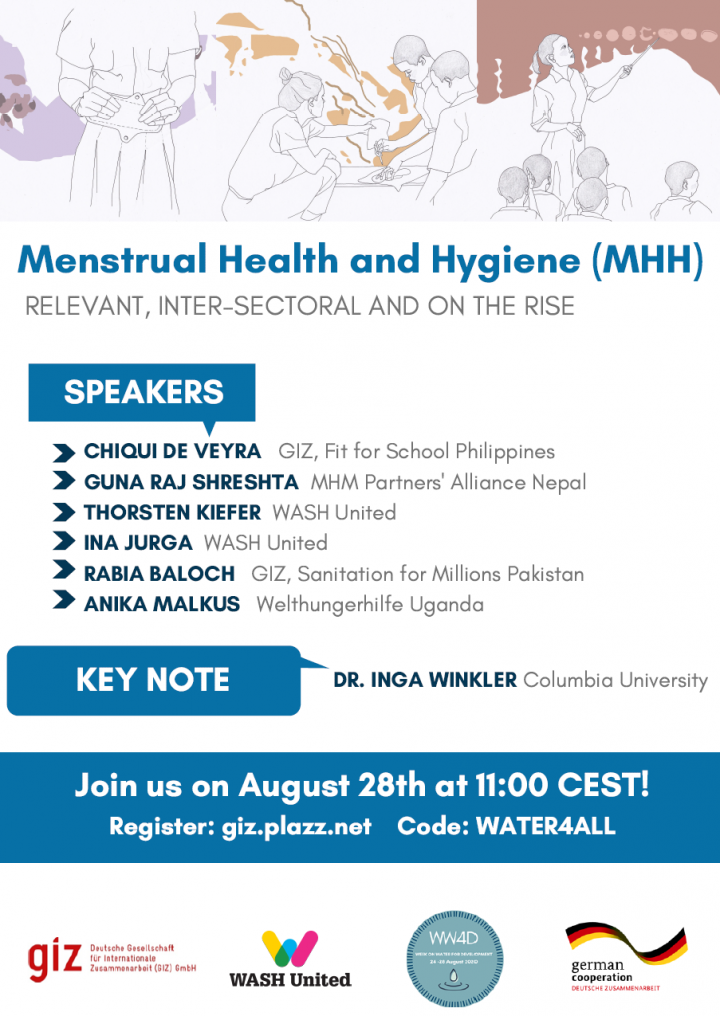
Various Authors (2020) Session Summary: Menstrual Health and Hygiene (MHH) - Relevant, Inter-sectoral and on the Rise Session hosted in the course of the 30th SuSanA Meeting and Week on Water for Development 2020
MHH contributes to gender equality, better education and employment, and the realization of sexual and reproductive health and rights. In this session progress and success stories of MHH globally and within the German Development Cooperation were presented and opportunities for sustaining and scaling the momentum were discussed. The menstrual movement has made progress in the recent years, with the WASH sector providing an entry point. German […]
Online since: 08.09.2020
Views: 2960
Downloads: 5477
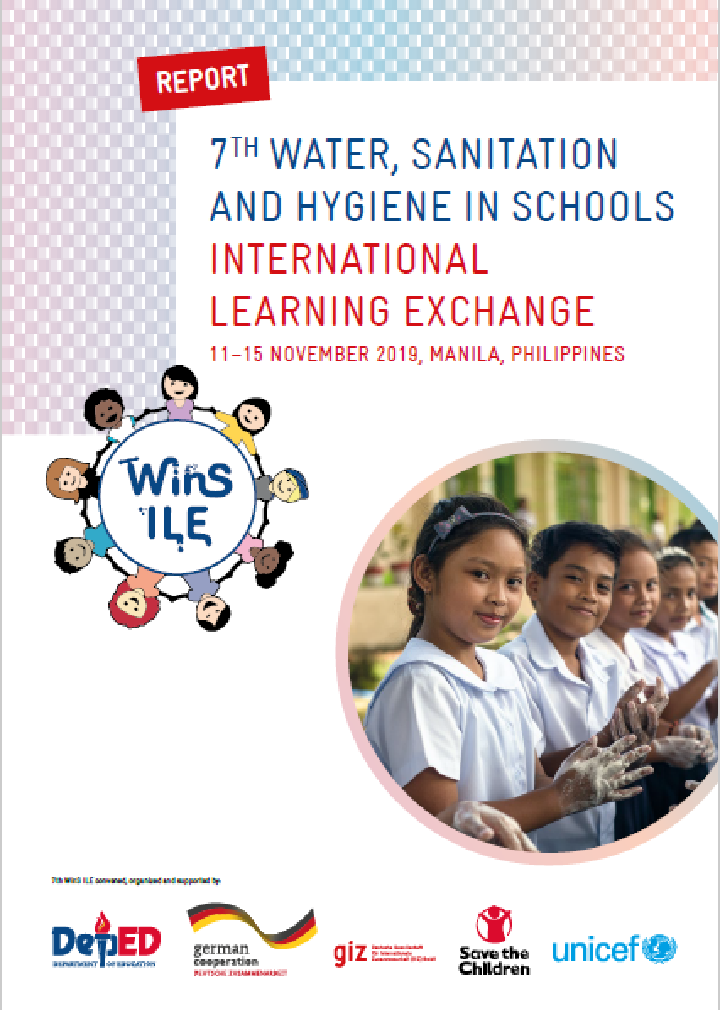
WASH in Schools Network (2019) 7th Water, Sanitation and Hygiene in Schools International Learning Exchange in Manila, 11-15 November 2019
WASH in Schools (WinS) is a key element of universal access to both Education for All and WASH for All as defined in the Sustainable Development Goals (SDGs). Schools are important settings to provide environments where children learn and acquire essential hygiene skills for life; and where their health growth and overall development thrive in dignity.
Online since: 28.08.2020
Views: 2125
Downloads: 440
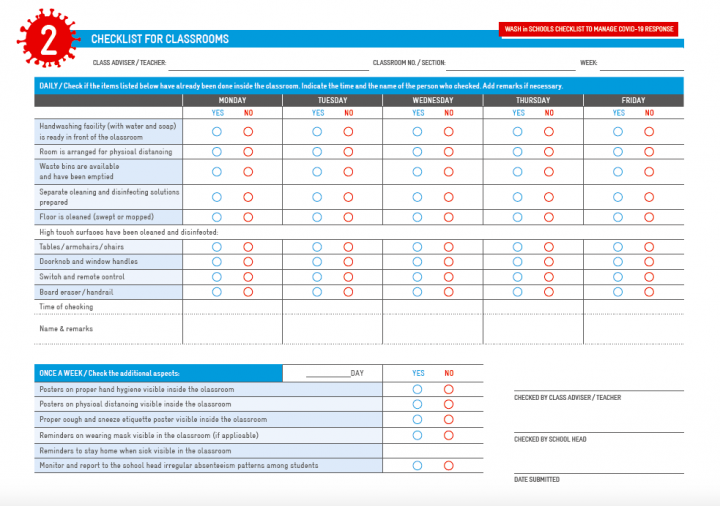
WASH in Schools Network (2020) WASH in Schools Checklists to Manage COVID-19 Response Checklists for school entrances, classrooms & toilets
WASH in Schools Checklists to Manage COVID-19 Response - Checklists for school entrances, classrooms & toilets
Online since: 30.06.2020
Views: 7456
Downloads: 1432
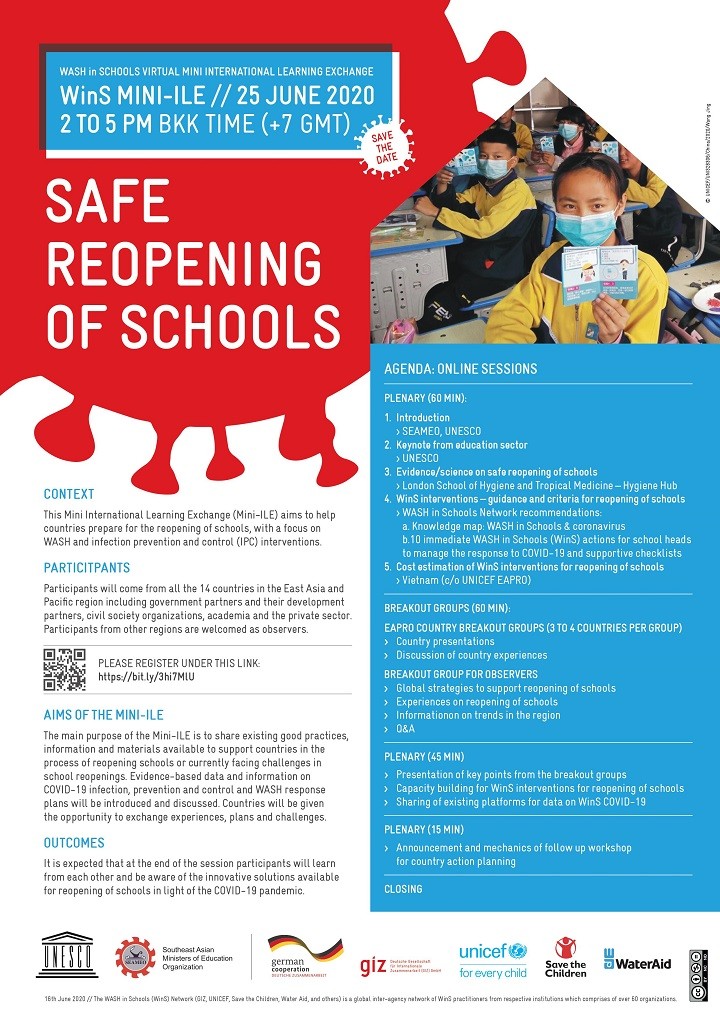
WASH in Schools Network (2020) The Mini International Learning Exchange (ILE) on WASH and Schools Re-opening Virtual Conference
An overview of, as well as the presentations from the Mini ILE can be found following the first external link below "Resources and Overview of the ILE Virtual Conference". Additional resources are provided following the other external links as well as in the provided PDF "WASH in Schools Checklist to Manage COVID-19 Response".
Online since: 23.06.2020
Views: 4737
Downloads: 518
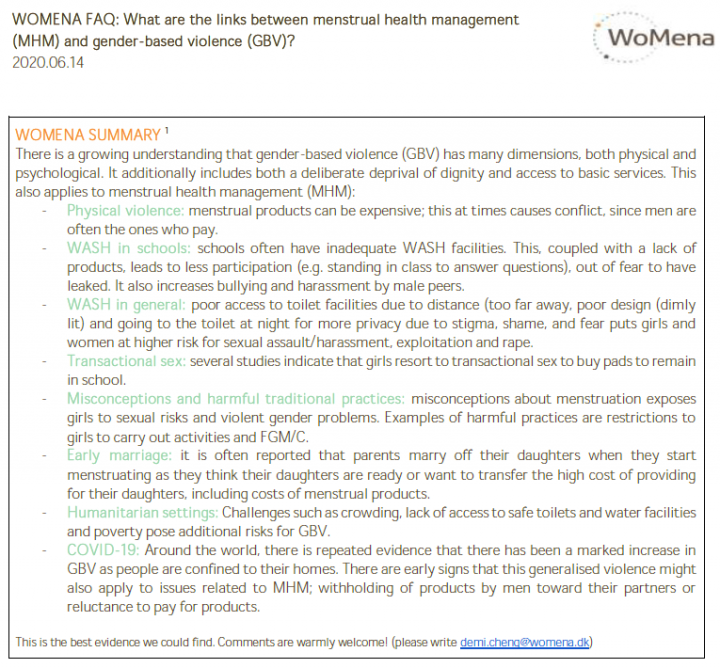
WoMena (2020) What are the links between Menstrual Health Management & Gender-Base Violence?
WoMena SUMMARY [1] There is a growing understanding that gender-based violence (GBV) has many dimensions, both physical and psychological. It additionally includes both a deliberate deprival of dignity and access to basic services. This also applies to menstrual health management (MHM): Physical violence: menstrual products can be expensive; this at times causes conflict since men are often the ones who pay. WASH in schools: schools often have inadequate […]
Online since: 21.06.2020
Views: 3392
Downloads: 417
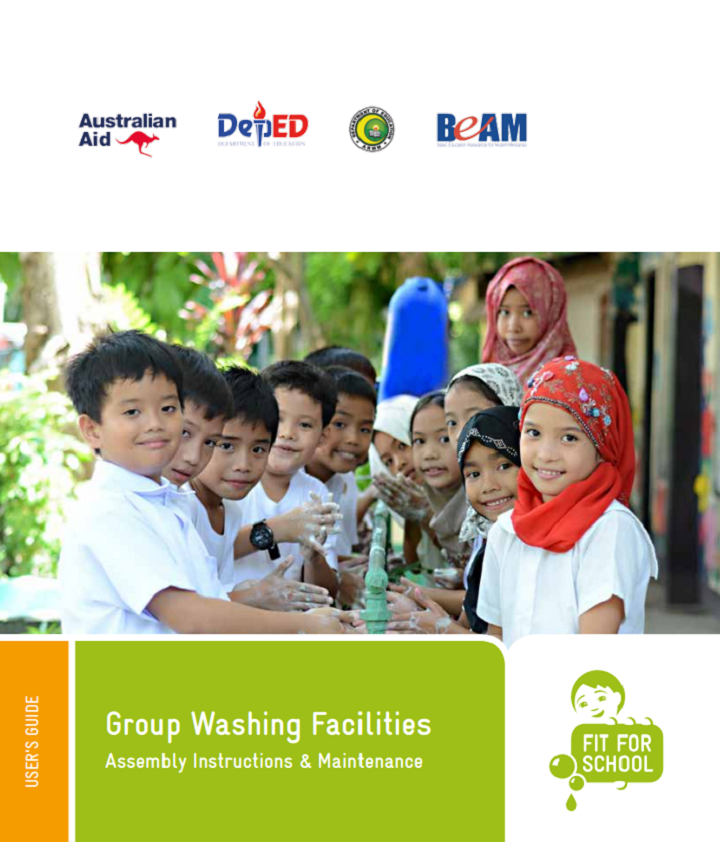
Madrid, F., Holmer, R., Siewert, M., Larano, L., Chilvers, M., Calonzo, R. (2016) Group Washing Facilities - Assembly Instructions & Maintenance
In the Philippines, GIZ is providing technical assistance to the Department of Education in the Autonomous Region in Muslim Mindanao (DepEd ARMM) to improve WASH in Schools. GIZ’s support forms Component 2 of the Australian Embassy’s Basic Education Assistance to Muslim Mindanao (BEAM ARMM) program. Additional support is provided by the German government through the Federal Ministry for Economic Cooperation and Development (BMZ). As part of […]
Online since: 18.06.2020
Views: 1990
Downloads: 264
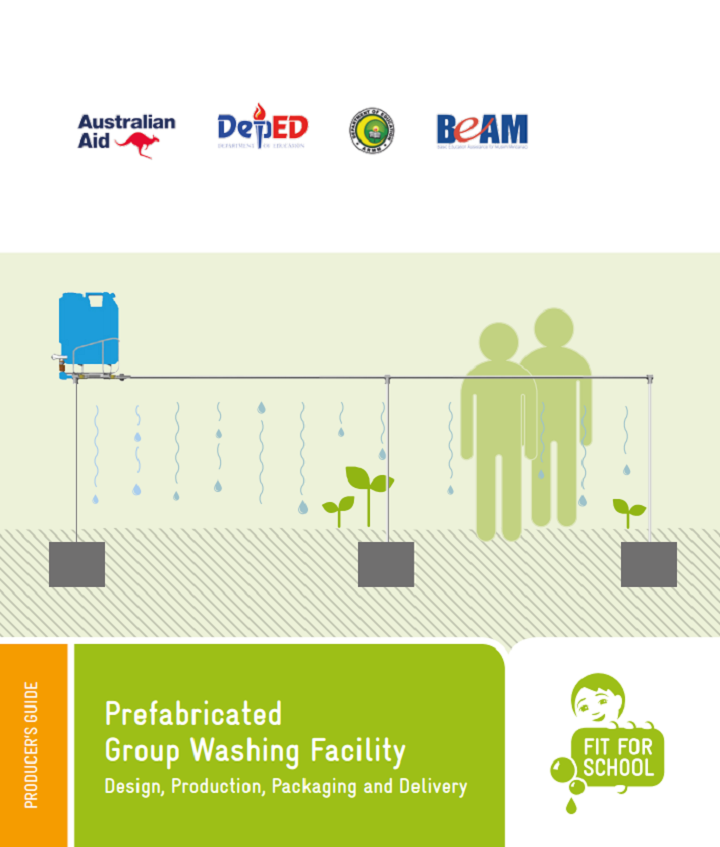
Holmer, R., Schappert, J., Siewert, M., Larano, L., Madrid, F., Chilvers, M. (2016) Prefabricated Group Washing Facility - Design, Production, Packaging and Delivery
Schools across ARMM have constructed their own group washing facilities. Simple affordable materials, like used plastic bottles, can be used to make tippy taps, for example, which can make handwashing facilities accessible for all. However, when building more durable structures, many schools struggle to ensure the functionality of their facilities over time. In some cases, schools may lack the technical expertise or financial resources to […]
Online since: 18.06.2020
Views: 1212
Downloads: 288
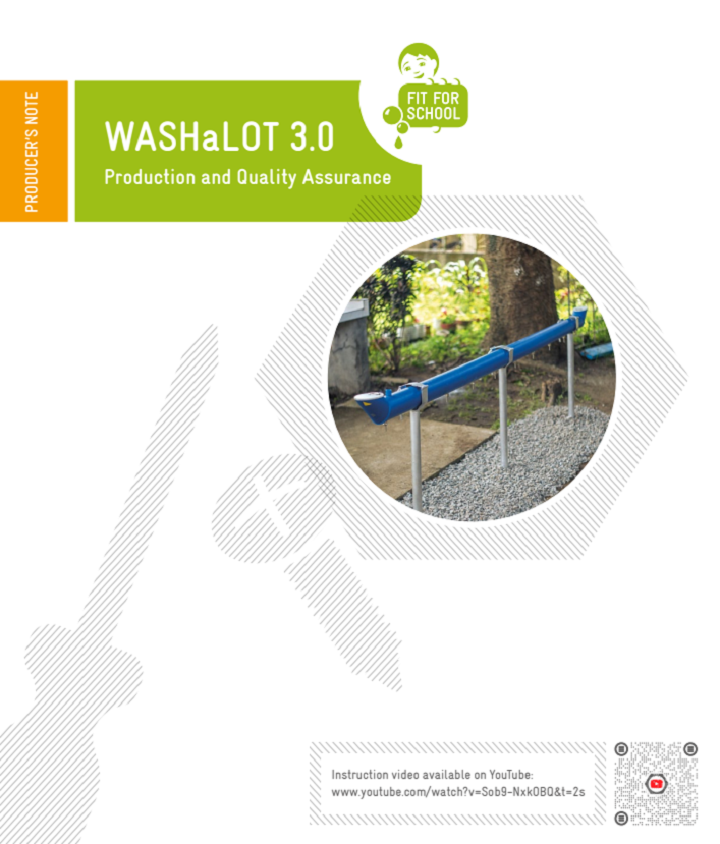
Madrid, F., Schlenk, J., Freundel, M., Monse, B. (2019) WASHaLOT 3.0 Production and Quality Assurance
Access to functional and clean group washing facilities in schools allow for WASH activities for a larger number of children at various times throughout the day. Group washing facilities, which need to be water-saving, are designed to enable both group handwashing and individual handwashing. Based on this there is a demand for durable and scalable infrastructure which are long-lasting, low cost and can be mass […]
Online since: 18.06.2020
Views: 1691
Downloads: 339
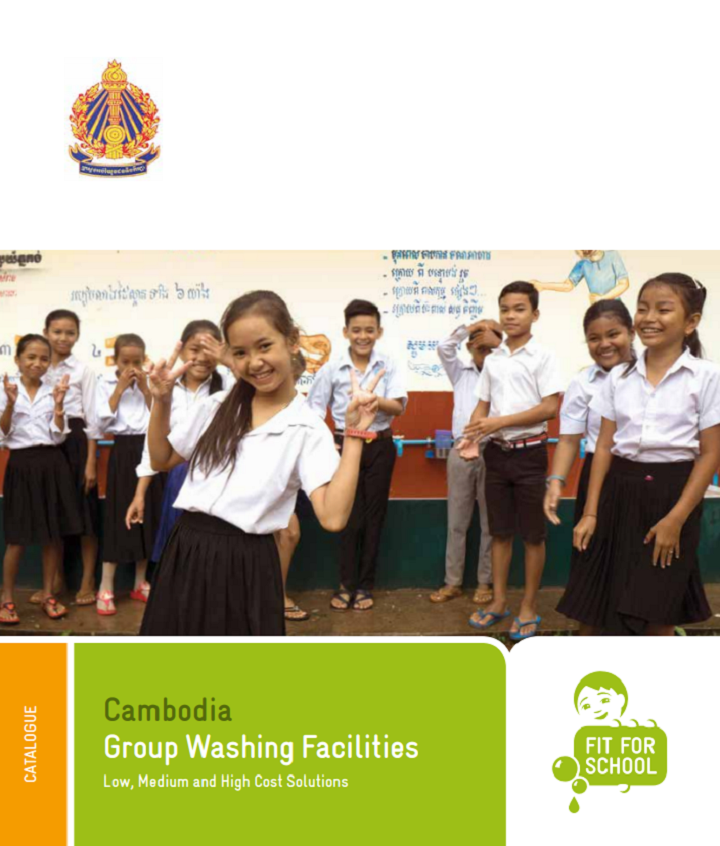
GIZ Fit for School (2017) Cambodia Group Washing Facilities - Low, Medium and High Cost Solutions
In 2016, the Ministry of Education, Youth and Sport in Cambodia published the ”Guidelines for Minimum Requirements for WASH in Schools“. The guidelines are designed for stepwise improvements of WASH (Water, Sanitation and Hygiene) infrastructure and hygiene behavior in schools to reach the national goal of water and sanitation access for all in 2025. This group washing facility catalogue supports the implementation of the guidelines for […]
Online since: 18.06.2020
Views: 1284
Downloads: 457
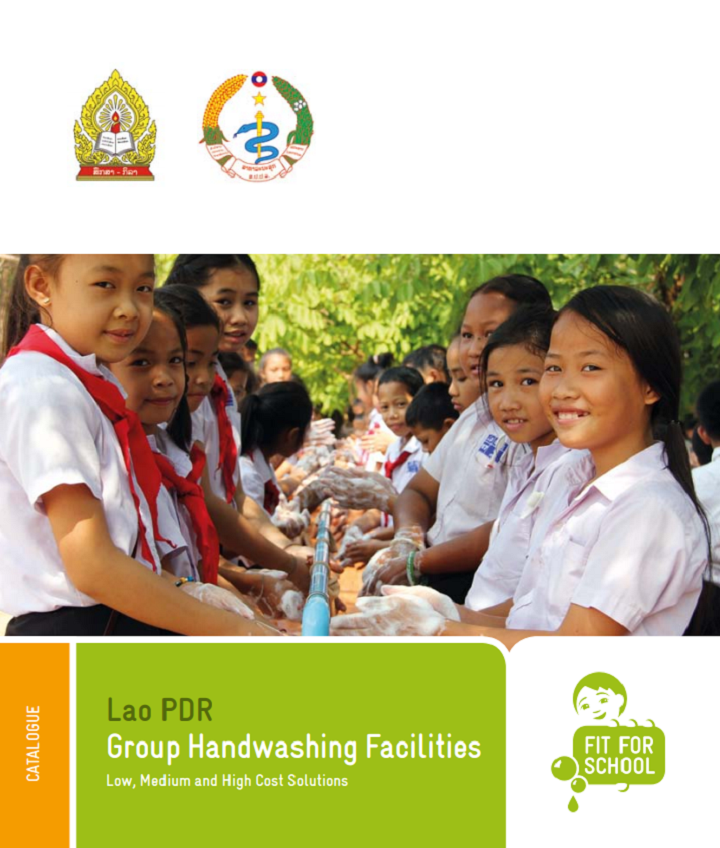
GIZ Fit for School (2016) Lao PDR Group Handwashing Facilities - Low, Medium and High Cost Solutions
Schools are the heart of a community where children spend half of their day. They play a unique role in creating healthy learning environments. The social norms and habits developed in children will stay with them all their lives. Thus, by providing a healthy learning environment and promoting healthy practices, schools act as an equalizer for all children from varied economic backgrounds. The Fit for School […]
Online since: 18.06.2020
Views: 1399
Downloads: 617