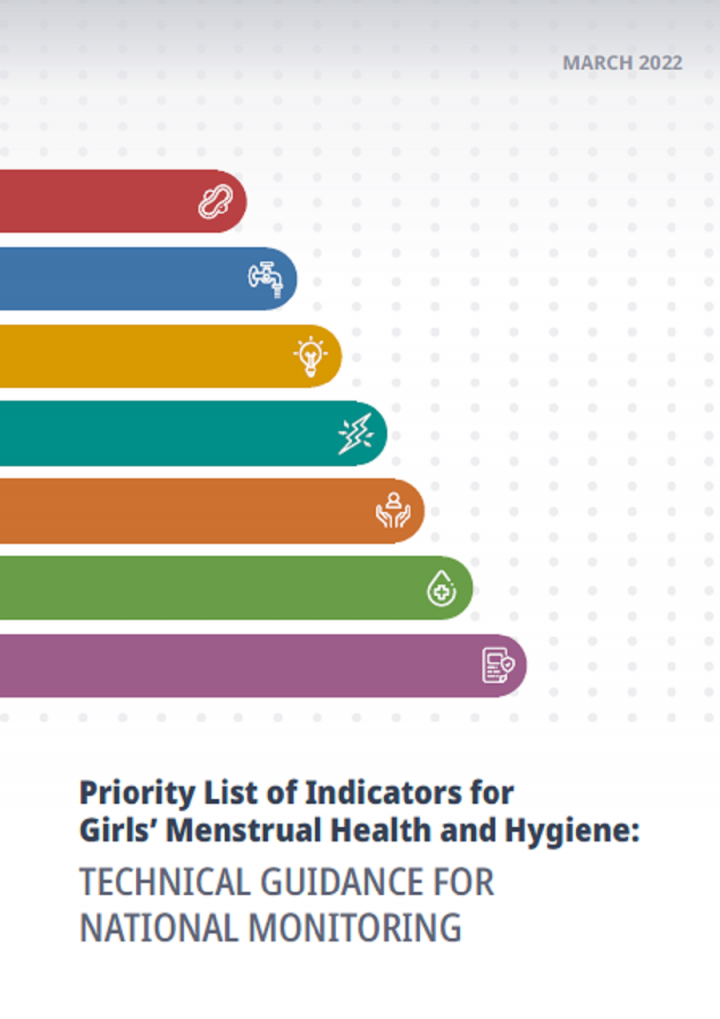
Global MHH Monitoring Group (2022) Priority List of Indicators for Girls’ Menstrual Health and Hygiene: TECHNICAL GUIDANCE FOR NATIONAL MONITORING
There is growing global recognition of menstrual health and hygiene (MHH) as an important health, education, rights, and gender equality issue. As efforts to support MHH gain momentum globally, the lack of adequate validated indicators with related measures is a critical barrier to progress. At national level, the absence of standardized indicators and related measures limits understanding MHH circumstances across populations and over time. It […]
Online since: 11.04.2022
Views: 2160
Downloads: 3735
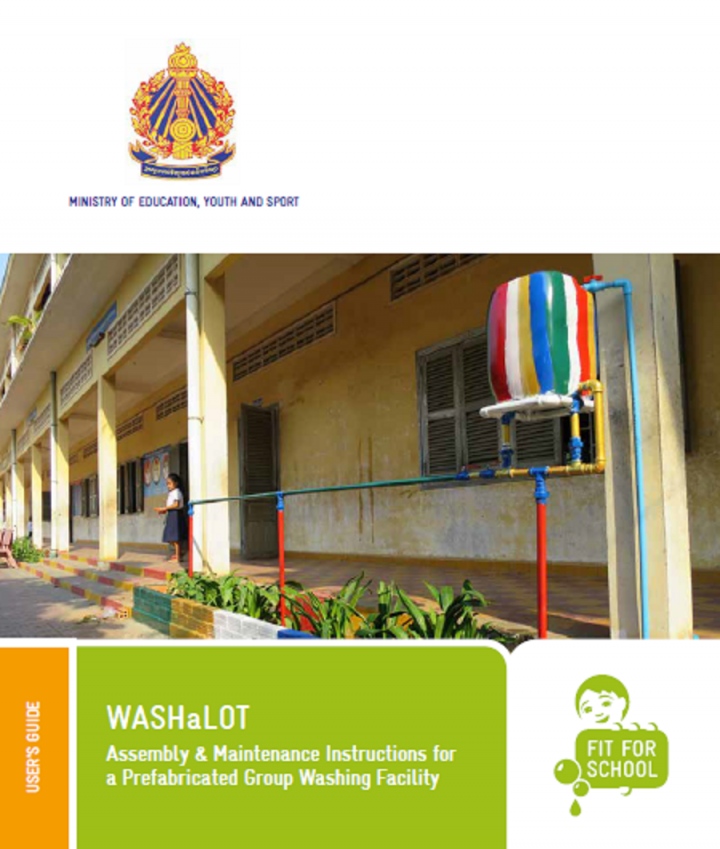
FIT FOR SCHOOL (2015) WASHaLot User´s Guide Assembly & Maintenance Instructions for a Prefabricated Group Washing Facility
This users guide provides information on the installation, operation and maintenance of the WASHaLOT for schools and communities. It was produced jointly under a collaboration between MoEYS, GIZ and UNICEF in Cambodia.
Online since: 11.03.2022
Views: 1035
Downloads: 568
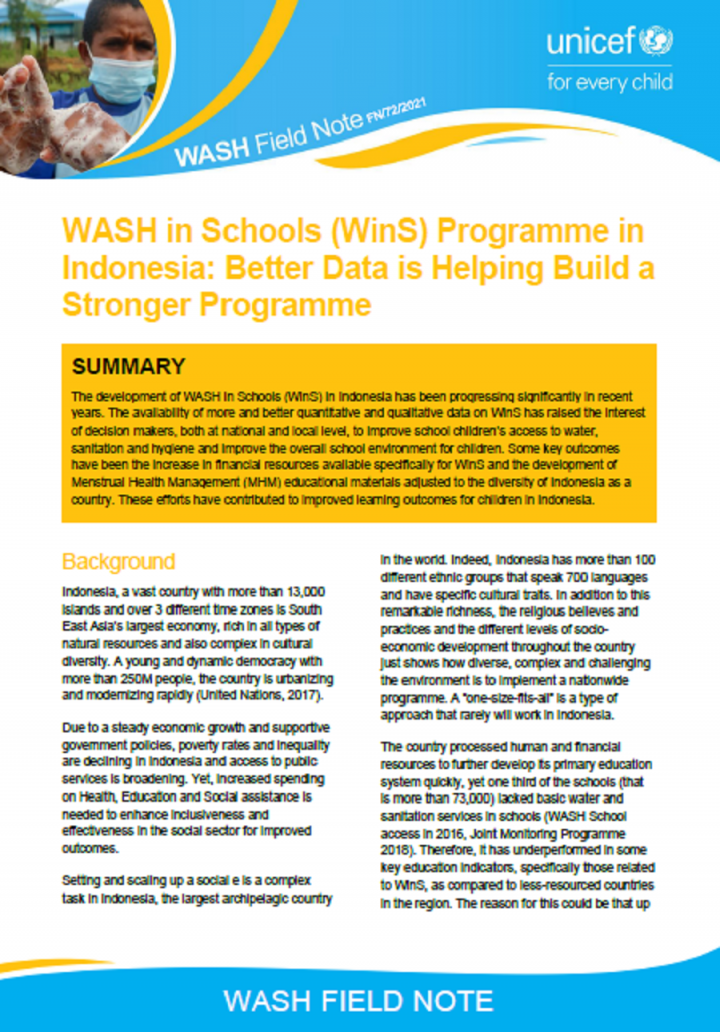
R. Hendrawan, A. Thomas, I. Amongin, S. Gaya, J. Figueras (2022) WASH in Schools (WinS) Programme in Indonesia Better Data is Helping Build a Stronger Programme
The development of WASH in Schools (WinS) in Indonesia has been progressing significantly in recent years. The availability of more and better quantitative and qualitative data on WinS has raised the interest of decision makers, both at national and local level, to improve school children’s access to water, sanitation and hygiene and improve the overall school environment for children. Some key outcomes have been the […]
Online since: 08.03.2022
Views: 1518
Downloads: 1425
R. Hendrawan (2022) Transformative Progress on Water, Sanitation and Hygiene in Schools Programme in Indonesia
Since 2016, significant progress has been made in ensuring Water Sanitation and Hygiene services (WinS) in Indonesia. The Ministry of Education (MoEC) published a WinS SDG profile and WinS Roadmap in 2017. The WinS SDG profile set the baseline for some of the indicators of SDG target 4.a.1: proportion of school with access to: (e) basic drinking water; (f) single-sex basic sanitation facilities; and (g) […]
Online since: 08.03.2022
Views: 1516
Downloads: 816
J. Ward, E. Rand (UNICEF Vanuatu) (2022) Building Capacity for Quality WASH in Schools Construction in Vanuatu
On 7 April 2020, Tropical Cyclone (TC) Harold caused major infrastructure damage to 43% (128/298) of schools and 47% (164/349) of ECCE (early childhood care and education) centres in Vanuatu’s Sanma, Malampa and Penama provinces1. Pentecost, in Penama province, was among the hardest hit with all of the 23 schools in central and southern zones reported as majorly damaged. Along with efforts to rehabilitate school WASH infrastructure to ensure […]
Online since: 08.03.2022
Views: 1274
Downloads: 277
J. M. Villaseñor, L. Maule, I. Amongin, S. Gaya, J. Figueras (2022) WASH FIELD NOTE WASH in Schools (WinS) Programme in the Philippines: Better Alignment of Policy and Management Changed the WinS Landscape.
A very centralized Department of Education (DepED) in the Philippines adopted a decentralized approach by giving all the responsibilities to school principals to adjust the school’s needs and implement a phased approach of the WASH in Schools programme. Since Typhoon Haiyan’s emergency response, addressing water, sanitation and hygiene (WASH) needs has become a priority for the Education Officials at division, province and national levels. The […]
Online since: 08.03.2022
Views: 862
Downloads: 2086
J. Ward, E. Rand (UNICEF Vanuatu) (2022) Innovative Use of Social Media Taking WASH in Schools to Scale in Vanuatu
Social media has become a surprisingly useful and effective tool in advancing Vanuatu’s national WASH in Schools (WinS) program. In late 2019, Vanuatu’s Ministry of Education and Training (MoET) created the WASH in Schools Vanuatu - WOSH insaet long ol Skul Vanuatu Facebook group as a tool for schools to showcase their WASH activities. With increasing access to low-cost or free Facebook data and internet […]
Online since: 08.03.2022
Views: 1031
Downloads: 1752
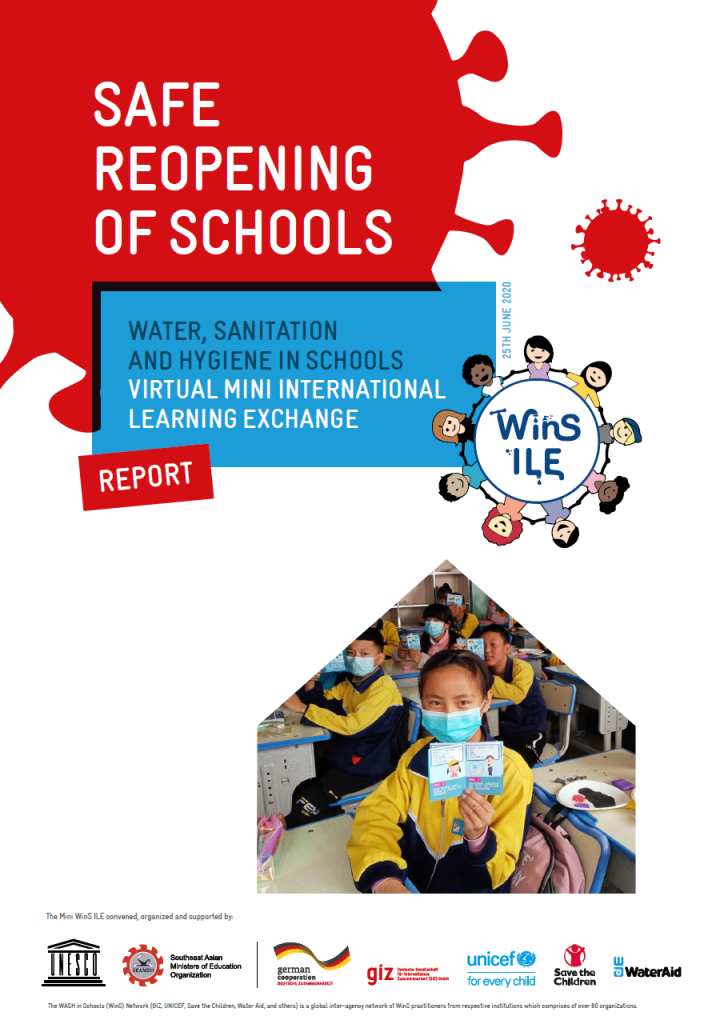
Engel, L. and Monse, B. (2021) VIRTUAL MINI WinS-ILE REPORT 2021
The COVID-19 pandemic has impacted our lives since early 2020. Children suffer especially under the outbreak, as it is estimated that, globally, over one billion school children are staying home (as at June 2020) with a high number of children not continuing their education online. Nevertheless, the COVID-19 outbreak has been addressed and controlled in some countries, and gradually workplaces, public spaces and schools are […]
Online since: 28.02.2022
Views: 1193
Downloads: 400
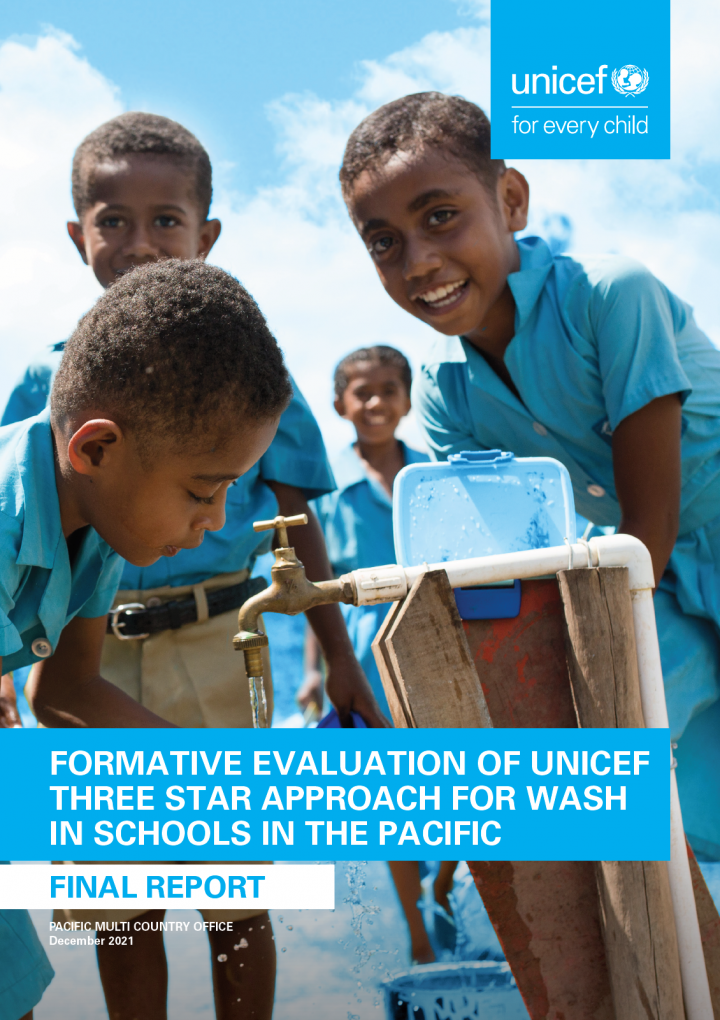
UNICEF Pacific Multi Country Office (2021) Formative Evaluation of UNICEF Three Star Approach for WASH in Schools in the Pacific
The WASH in Schools (WinS) Three Star Approach (TSA) has been adopted in Fiji (from a pilot in 2015 but now is at scale), Kiribati (atoll island first implementation from 2015 to 2018), Solomon Islands (since 2016), in Vanuatu (since 2017) and 2018 introduction in the Federated States of Micronesia (FSM). The evaluation aims to understand whether WinS TSA is achieving the intended results and […]
Online since: 04.02.2022
Views: 1693
Downloads: 2898
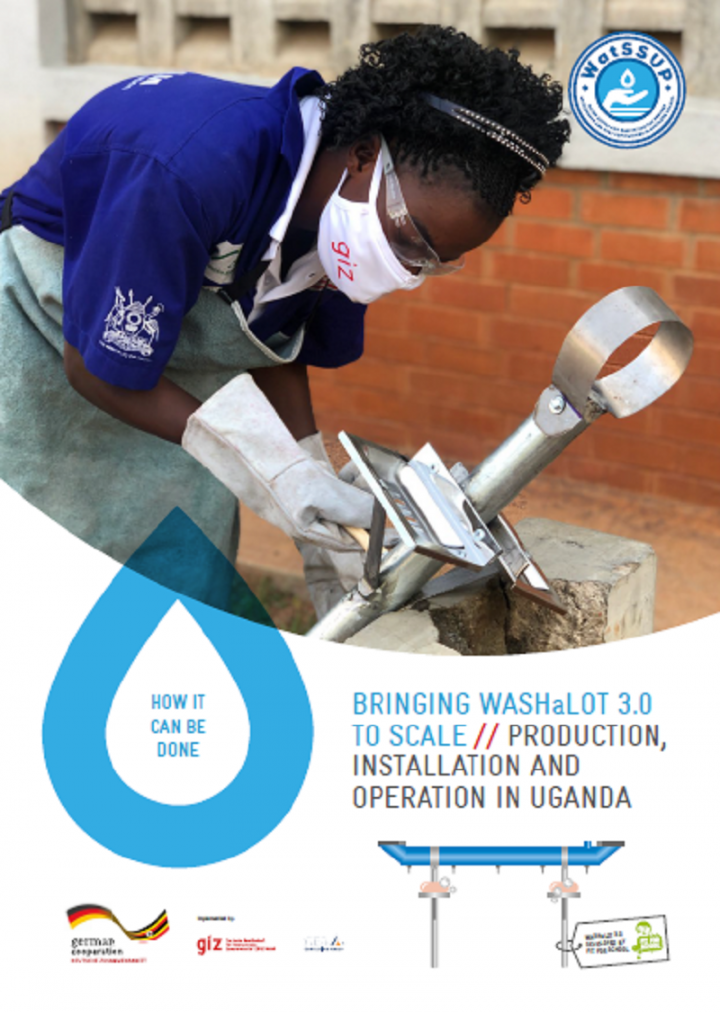
Salian, P., Bucovineanu, A. (2022) Bringing WASHaLOT 3.0 to scale // Production, Installation and Operations in Uganda
The COVID-19 pandemic highlighted the need for regular hand hygiene at a global level. Although the urgency of this context cannot be denied, the benefits from streamlining hand hygiene at a global scale are immense and go beyond the current pandemic response. WASHaLOT is an innovative group handwashing facility that has been adapted for the Ugandan context. It is a durable, cost effective, water-saving alternative to […]
Online since: 02.02.2022
Views: 1780
Downloads: 3378
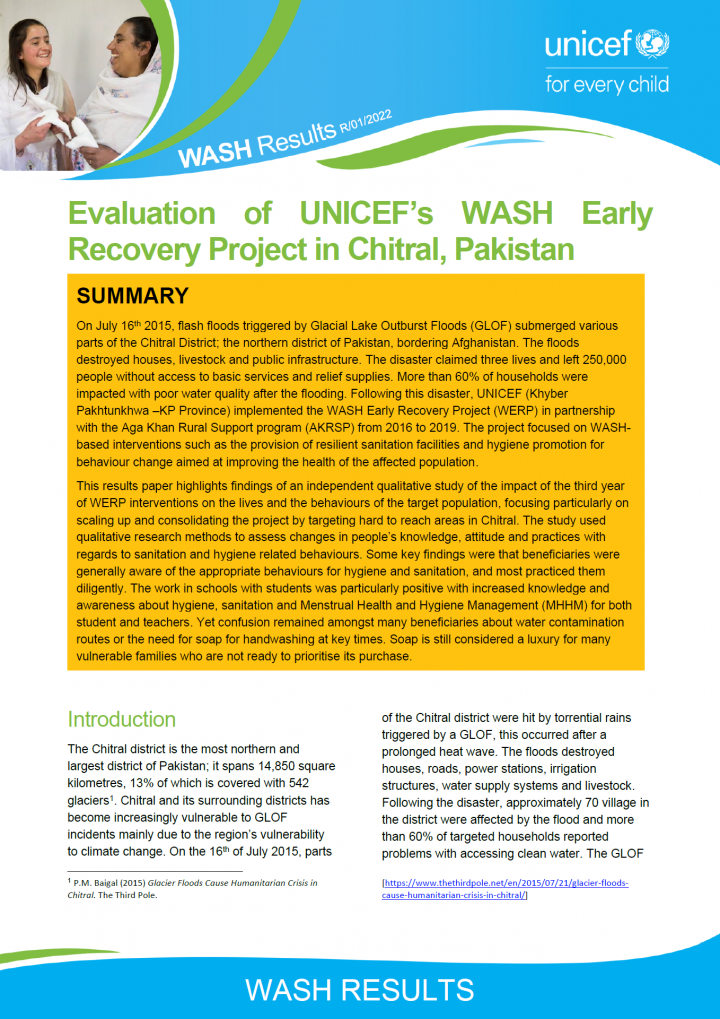
UNICEF (2022) Evaluation of UNICEF’s WASH Early Recovery Project in Chitral, Pakistan
On July 16th 2015, flash floods triggered by Glacial Lake Outburst Floods (GLOF) submerged various parts of the Chitral District; the northern district of Pakistan, bordering Afghanistan. The floods destroyed houses, livestock and public infrastructure. The disaster claimed three lives and left 250,000 people without access to basic services and relief supplies. More than 60% of households were impacted with poor water quality after the […]
Online since: 31.01.2022
Views: 2518
Downloads: 546
FIT FOR SCHOOL (2022) WASH in Schools massive open Online Course - Orientation Guide
This guide will provide insights on preconditions and principles for developing a national WinS MOOC based on the Philippines’ WinS MOOC experience, practical examples on structure, content and course outline of a typical WinS MOOC, and recommendations for adapting these processes in your institution’s context.
Online since: 26.01.2022
Views: 2667
Downloads: 533
Sahin, M. (2011) Water, Sanitation and Hygiene for School Children in Emergencies. A Guidebook for Teachers. UNICEF.
WASH in Schools aims to support the provision of safe drinking water and improved sanitation facilities, and promotes lifelong health for children and their families. Ensuring access to water, sanitation and hygiene (WASH) in every school for every child can be a huge challenge, especially during emergencies. When disaster strikes, education is often disrupted as families become primarily focused on survival. Schools become shelters for […]
Online since: 13.01.2022
Views: 1572
Downloads: 358
Pizzacalla, K., Nantume, G. (2019) Guide to WASH in Schools. WinS Models that Work.
Government reports from 2016 and 2017 identified that Ugandan schools are not meeting the national standards for water, sanitation and hygiene (WASH) in schools (WinS). For this reason, in 2017, the Ministry of Education and Sports adopted the Three Star Approach for WASH in Schools. The Three Star Approach (TSA) was developed by GIZ and UNICEF and has been implemented in countries around the globe. […]
Online since: 13.01.2022
Views: 1118
Downloads: 381
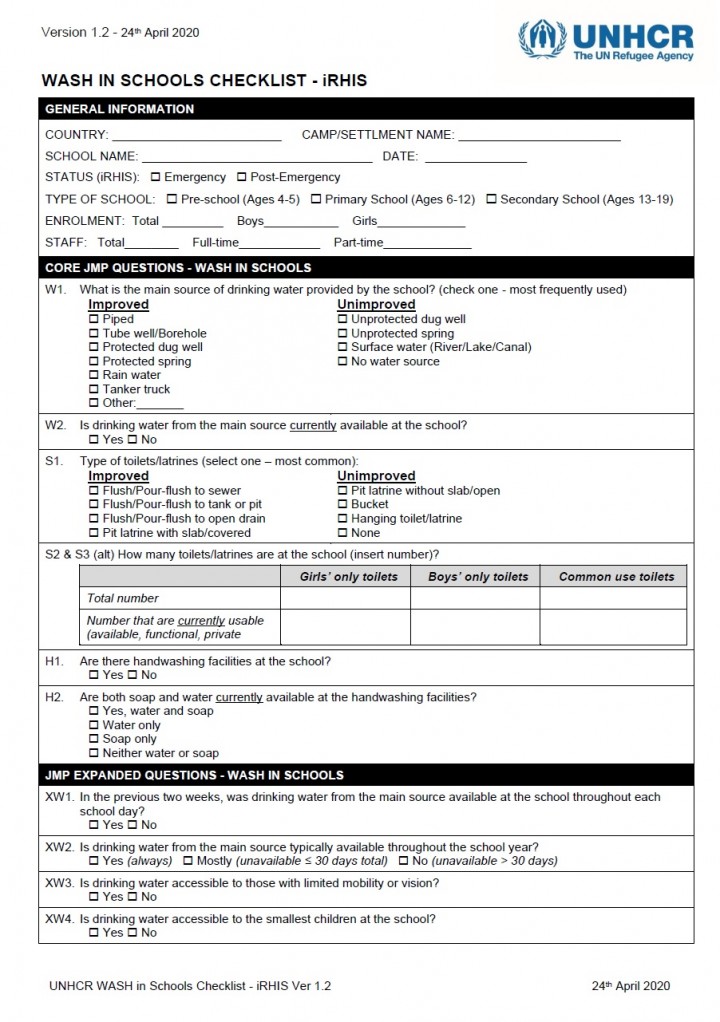
UNHCR (2020) WASH in Schools Checklist iRHIS
The UNHCR WASH Monitoring System includes monitoring of refugee schools following the Joint Monitoring Program (JMP) guidelines, model questions and standard indicators. All refugee schools should be surveyed at least once a year. Indicators are tracked on the Refugee WASH in Schools Dashboard.
Online since: 12.01.2022
Views: 2301
Downloads: 998
UNICEF (0) Sanitary Survey Checklists. WASH Safety Planning Technical Toolkit for Kiribati Schools
This Sanitary Survey Checklist Guide provides a methodical way to identify the factors or features of the existing school WASH system that contribute to an increased risk to the health of school children and teachers. It should be possible for the school community, with a assistance from the facilitator and possibly a health inspector, to answer the checklist questions and see the weaknesses and strengths […]
Online since: 12.01.2022
Views: 1344
Downloads: 351
UNICEF, GIZ (2016) Scaling Up Group Handwashing in Schools Compendium of Group Washing Facilities Across the Globe
Online since: 12.01.2022
Views: 1044
Downloads: 336
Philippines Department of Education (2020) Wins Monitoring Results. School Year 2017/18 to School Year 2019/2020
This report provides an overview of the WinS situation in the Philippines over three years of program implementation from SY 2017/18 to SY 2019/20, and the big progress DepEd has made in improving the Water, Sanitation and Hygiene (WASH) situation in schools.
Online since: 08.01.2022
Views: 1738
Downloads: 373
Akvo (2017) Emergency Support to WASH in Schools
Tropical Cyclone Winston hit Fiji from 19 to 20 February as a Category 5 system with winds of 220 kmph, gusting up to 325 kmph, and this time through much more populated islands. TC Winston not only was the first Category 5 tropical cyclone of record to hit Fiji, but the strongest tropical cyclone of record in the Southern Hemisphere. The program of activities will […]
Online since: 07.01.2022
Views: 1165
Downloads: 1661
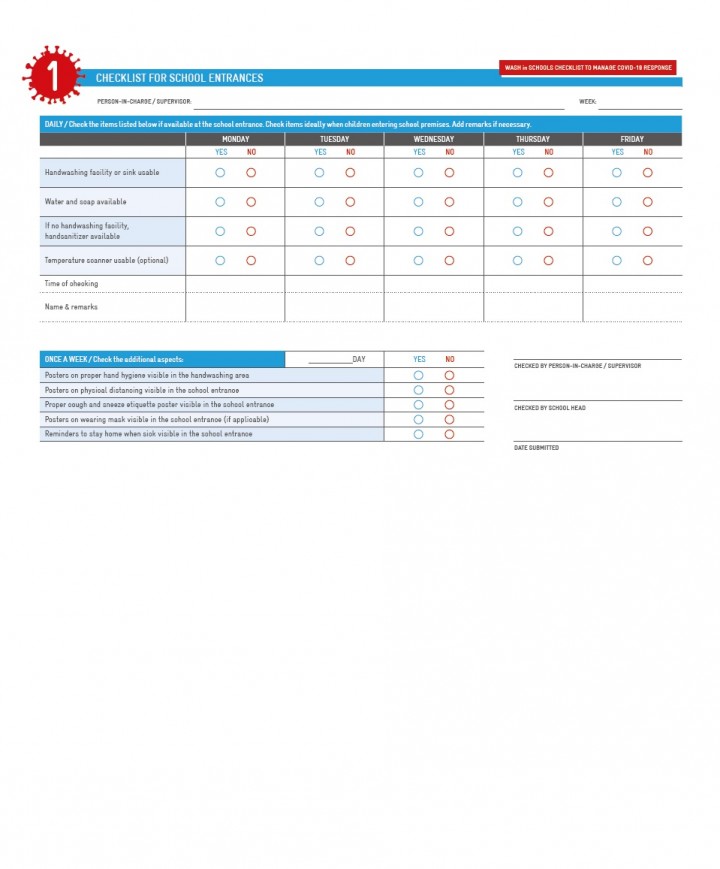
WASH in Schools Network (2020) WASH in Schools Checklists to Manage COVID-19 Response Checklists for School Entrances, Classrooms and Toilets
Online since: 06.01.2022
Views: 956
Downloads: 290