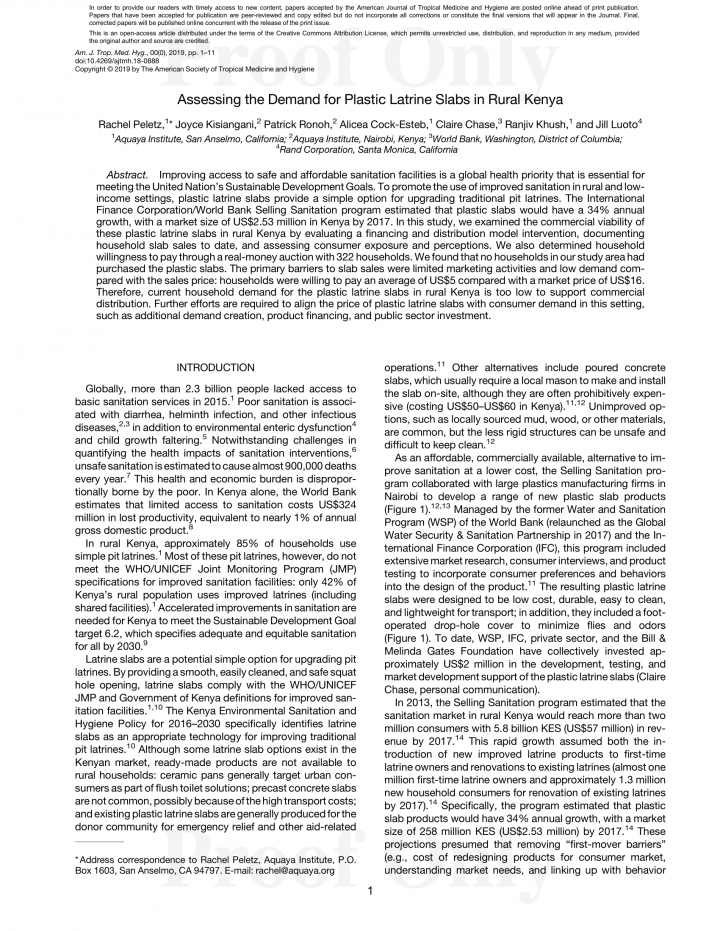
Peletz, R., Kisiangani, J., Ronoh, P., Cock-Esteb, A., Chase, C., Khush, R., and Luoto, J. (2019) Assessing the Demand for Plastic Latrine Slabs in Rural Kenya
Improving access to safe and affordable sanitation facilities is a global health priority that is essential for meeting the United Nation’s Sustainable Development Goals. To promote the use of improved sanitation in rural and low-income settings, plastic latrine slabs provide a simple option for upgrading traditional pit latrines. The International Finance Corporation/World Bank Selling Sanitation program estimated that plastic slabs would have a 34% annual growth, […]
Online since: 14.08.2019
Views: 2206
Downloads: 488
Brinkman, A. (2019) Marketing of compost in emerging markets A guidance document for compost producers
The recycling of organic residues into compost has a number of advantages. It avoids the wasting valuable organic material to landfills and reduces associated emissions to water, soil and air. It generates a product that contributes to long-term soil quality, as compost contains a high amount of stabilised organic matter. Finally, compost may also reduce the need for artificial fertilisers, as it can (at least […]
Online since: 30.07.2019
Views: 1921
Downloads: 669
GWC (2019) Guidance on Market Based Programming For Humanitarian WASH Practitioners
The purpose of this document is to provide practical guidance in preparedness, assessment, program design, implementation and monitoring related to Market-Based Programming (MBP) in humanitarian WASH assistance, and more specifically on: • How to identify linkages between markets and WASH services & goods; • How market based programming can complement and improve WASH programming; • How to conduct a WASH market assessment; • The key implementation steps & considerations […]
Online since: 29.07.2019
Views: 3084
Downloads: 367
Al Saleh, T. (2019) Faecal Sludge Management Operational Manual
Due to the lack of investment in a proper sanitation system in the Philippines - including sewage collection and treatment - close to 20% of the population (approx. 20 million) suffer from inadequate access to sanitation and 9 million rely on unsafe water sources. Additionally, a significant portion of the population is resorting to open defecation (6 million) as a negative coping mechanism, further contributing […]
Online since: 26.06.2019
Views: 2216
Downloads: 872
Badu, E., Owusu-Manu, G., Donkor-Hyiaman, K. A., Conway, C., Edwards, D. J. (2015) Innovative Financing Mechanisms for Delivering Sanitation Infrastructure
The study identifies four traditional sanitation financing methods through the use of debt, budgetary allocations, donor funds and community-based organizations. Essentially, public private partnerships (PPPs) and private finance initiatives (PFIs) are the most significant innovative financing approaches among fifteen instruments studied. Subsidies, grants and guarantees were also observed to rank as being important and could be useful in enhancing market efficiency. The application of microfinance […]
Online since: 24.06.2019
Views: 1295
Downloads: 260
OECD (2010) Innovative Financing Mechanisms for the Water Sector
This report examines innovative financing mechanisms that can help attract new financial resources into water and sanitation services (WSS ). A particular focus is placed on mobilising market-based repayable financing (such as loans, bonds and equity) as a way of bridging the financial gap to meet the Millennium Development Goals and other crucial sector objectives. The Camdessus and Gurria reports, published in 2003 and 2006 […]
Online since: 17.06.2019
Views: 1400
Downloads: 297
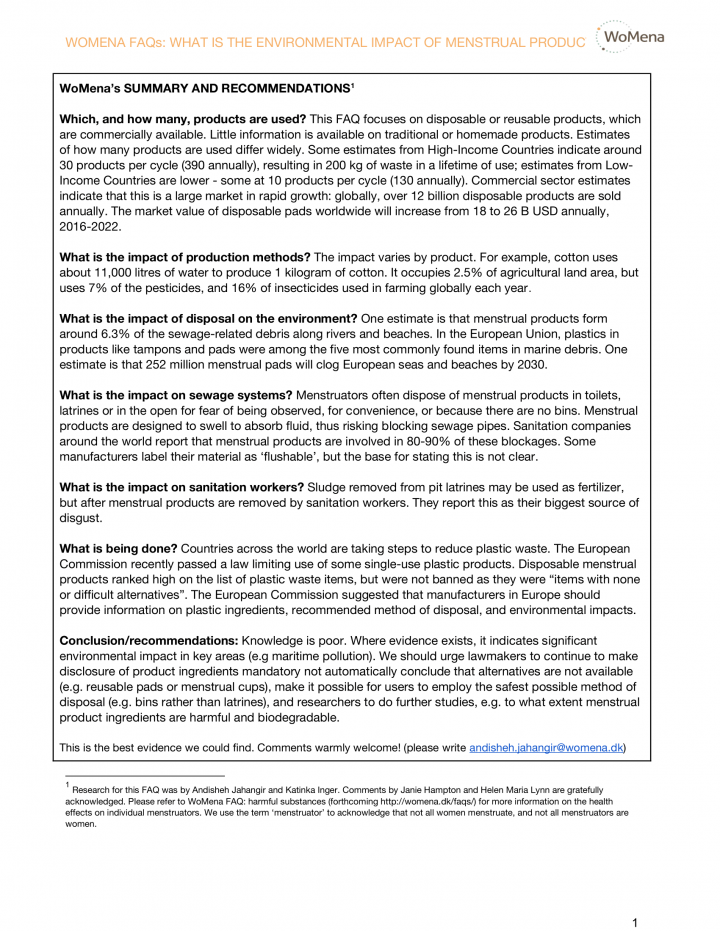
WoMena (2019) WoMena FAQ: What is the environmental impact of menstrual products?
WoMena’s SUMMARY AND RECOMMENDATIONS Which, and how many, products are used? This FAQ focuses on disposable or reusable products, which are commercially available. Little information is available on traditional or homemade products. Estimates of how many products are used differ widely. Some estimates from High-Income Countries indicate around 30 products per cycle (390 annually), resulting in 200 kg of waste in a lifetime of use; estimates […]
Online since: 06.03.2019
Views: 2148
Downloads: 5348
WoMena (2018) WoMena FAQs: Does the use of menstrual cups increase the risk of toxic shock syndrome?
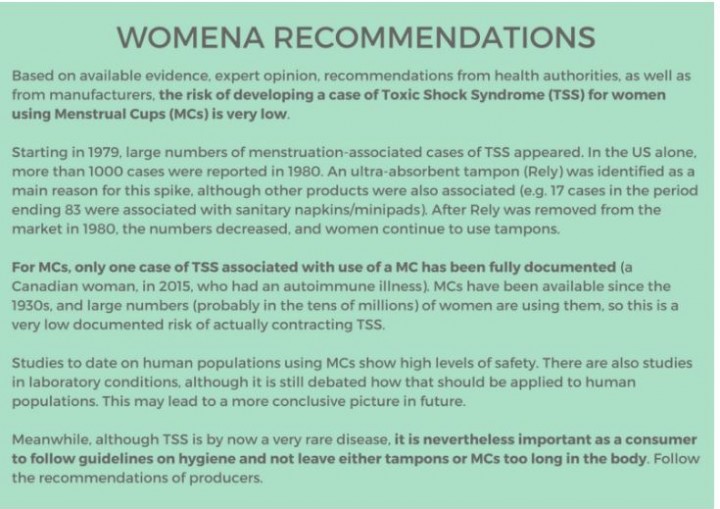
WOMENA RECOMMENDATIONS The risk of developing Toxic Shock Syndrome (TSS) for women using Menstrual Cups (MCs) is very low. In 1979-80, large numbers of menstruation-associated cases of TSS appeared. In the US alone, more than 1000 cases were reported in 1980. An ultra-absorbent tampon (Rely) was identified as a main reason for this spike, but many other products were also associated, for example 17 cases were associated with […]
Online since: 22.02.2019
Views: 2003
Downloads: 648
SuSanA (2017) Communications Plan of SuSanA
This SuSanA Communications Plan is based on the CAWST Sector Knowledge Management Study which was funded as part of a grant by the Bill & Melinda Gates Foundation (see link below). The Communications Plan was written mainly by Arno Rosemarin and subsequently endorsed by the SuSanA secretariat and core group It has 9 Appendices which are provided for download below. The following were the components of the market […]
Online since: 10.12.2018
Views: 3182
Downloads: 3827
Various Authors (2018) Emergency WASH papers from the 2018 WEDC Conference
WEDC conference papers are an important source for learning about WASH innovations and lessons learned in the field and more than 150 papers were accepted for the 2018 WEDC conference. Below are titles of the Emergency WASH papers (for the link see below): - Designing evidence-based and context-specific hygiene programs in emergencies: could there be an app for that? - Shedding light on humanitarian sanitation - Surface water […]
Online since: 25.10.2018
Views: 1422
Downloads: 0
WHO (2018) Alternative drinking-water disinfectants Bromine, iodine and silver
Disinfection of water has greatly contributed to reducing risks to public health from microbiologically contaminated drinking water. Numerous disinfection techniques have been developed over the centuries that are used in a wide range of applications, ranging from large and small public drinking-water plants to point-of-entry and point-of-use (POU) treatment devices.1 Although chlorine has been used for more than 100 years, and several other disinfectants have […]
Online since: 24.10.2018
Views: 1191
Downloads: 217
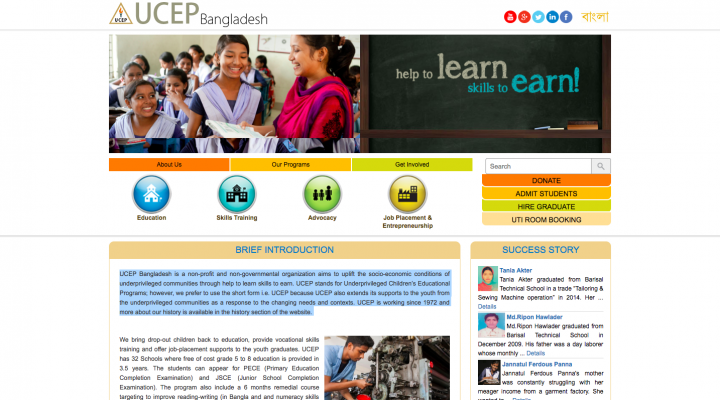
UCEP Bangladesh (2018) UCEP TVET (Technical and Vocational Education and Training): Plumbing
UCEP Bangladesh is a non-profit and non-governmental organization aims to uplift the socio-economic conditions of underprivileged communities through help to learn skills to earn. UCEP stands for Underprivileged Children’s Educational Programs; however, we prefer to use the short form i.e. UCEP because UCEP also extends its supports to the youth from the underprivileged communities as a response to the changing needs and contexts. UCEP is […]
Online since: 07.08.2018
Views: 8033
Downloads: 0
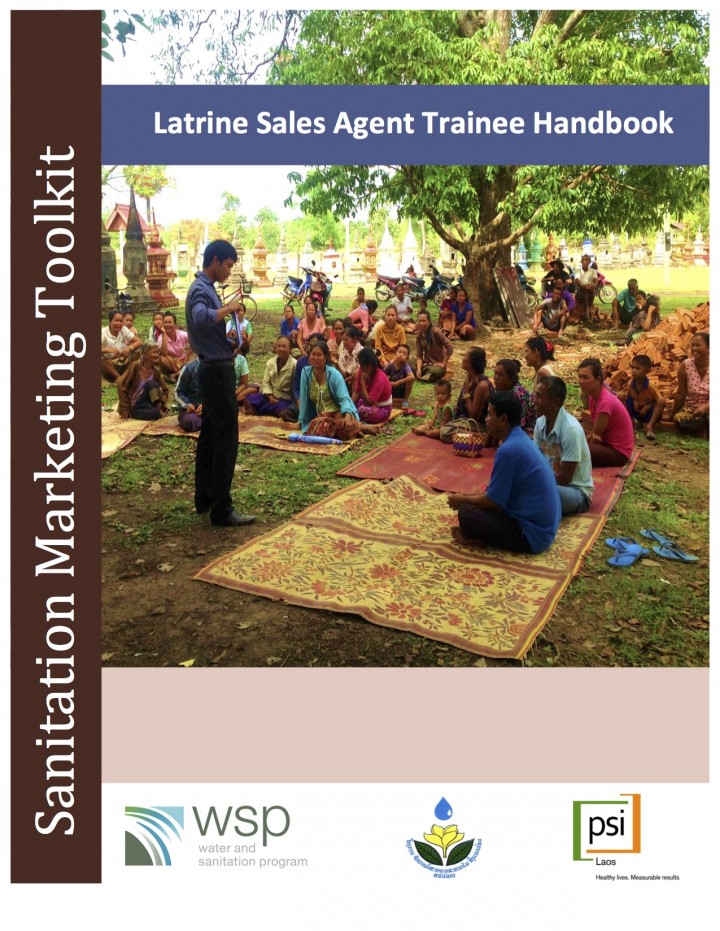
WSP, PSI (2018) Sanitation Marketing in Lao PDR - Book 8 Latrine Sales Agent Trainee Handbook
This manual provides the responsibilities of all sales agents and the tools, strategies and information you need to do so. This manual may be revised occasionally to reflect new policies or procedures. Sales agents will receive revised sections or amendments to the manuals as they are made.
Online since: 31.07.2018
Views: 1965
Downloads: 0
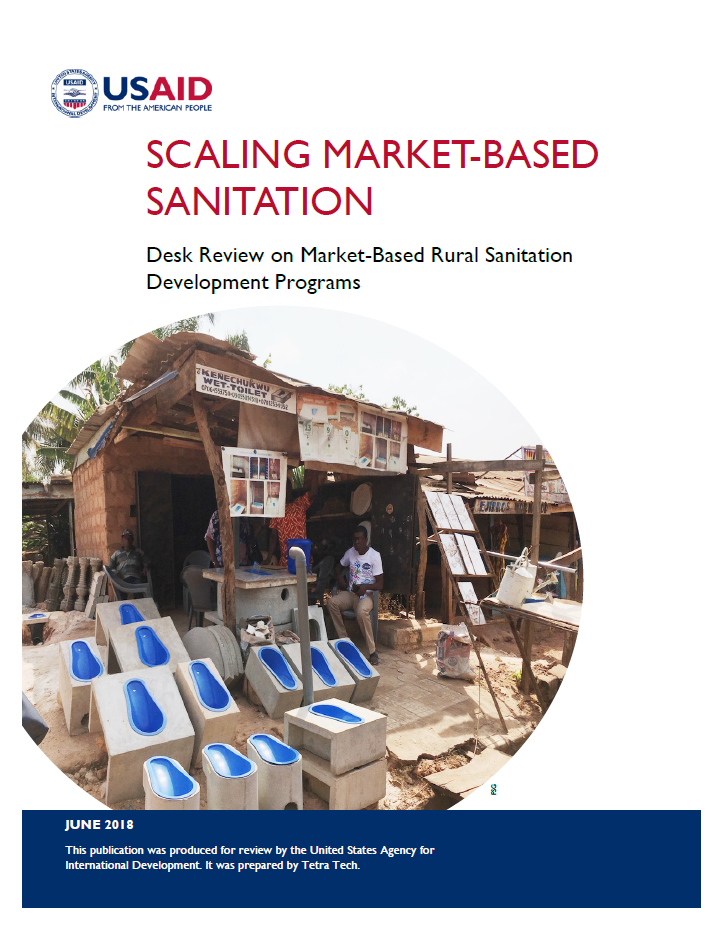
USAID (2018) Scaling Market-Based Sanitation: Desk Review on Market-Based Rural Sanitation Development Programs
Inadequate access to sanitation remains a significant problem globally and is linked to the transmission of numerous communicable diseases with a disproportionately large effect on children. The scale of investment required to deliver sanitation goods and services to those who lack access is beyond the capacity of public finance alone. The private sector has already proven itself a key player in the financing, construction, and […]
Online since: 11.07.2018
Views: 4599
Downloads: 7868
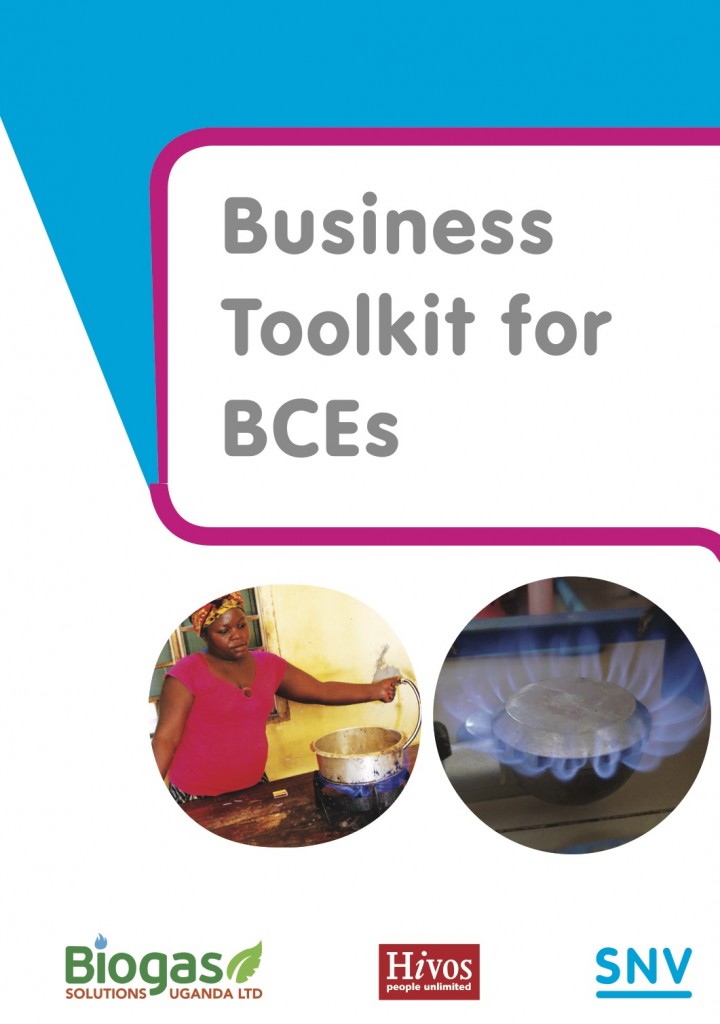
BSU (2015) Business Toolkit for BCEs (Biogas Construction Enterprises)
It is hoped that the hand book will guide Biogas Construction Enterprises (BCEs) in developing appropriate business and marketing plans in order to increase the revenue as well as guiding BCEs in management and operational issues. The Hand Book will guide BCEs on key issues of financial procedures and internal controls. The Hand Book will also serve as a guide for any small to medium size […]
Online since: 05.06.2018
Views: 2222
Downloads: 0
CS WASH (2016) Webinar: CSOs engaging local government for market-based sanitation
This webinar led by Topic Expert Associate Professor Juliet Willetts focuses on Civil Society Organisations (CSOs) and market-based sanitation approaches. It addresses the question, How can CSOs also work with local government or other local actors to facilitate market-based approaches?
Online since: 23.05.2018
Views: 1479
Downloads: 0
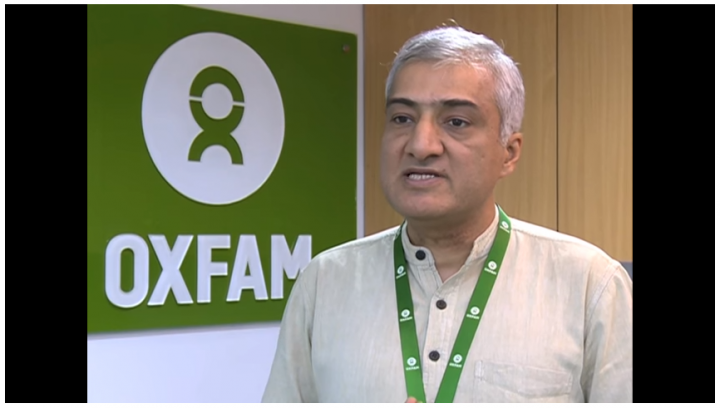
Oxfam (2018) E-voucher programming for flood responses in Bangladesh
Oxfam in Bangladesh implemented an iinovative approach in emergency response through WASH-related market interventions using three models: mobile money transfer, debit card and pre-paid card.
Online since: 30.04.2018
Views: 1928
Downloads: 0
Oxfam (2018) Market Based Flood Preparedness in Jakarta
There were many issues emerged when the flood happened, such as the needs of water, sanitation, latrine and other water and sanitation related needs. To mitigate these problems, Oxfam in partnership with LDMA (Local Disaster Management Agency) DKI Jakarta, are collaborating to find the options for the flood preparedness in WASH sector as well as WASH response options that are giving more role to the […]
Online since: 30.04.2018
Views: 1424
Downloads: 0
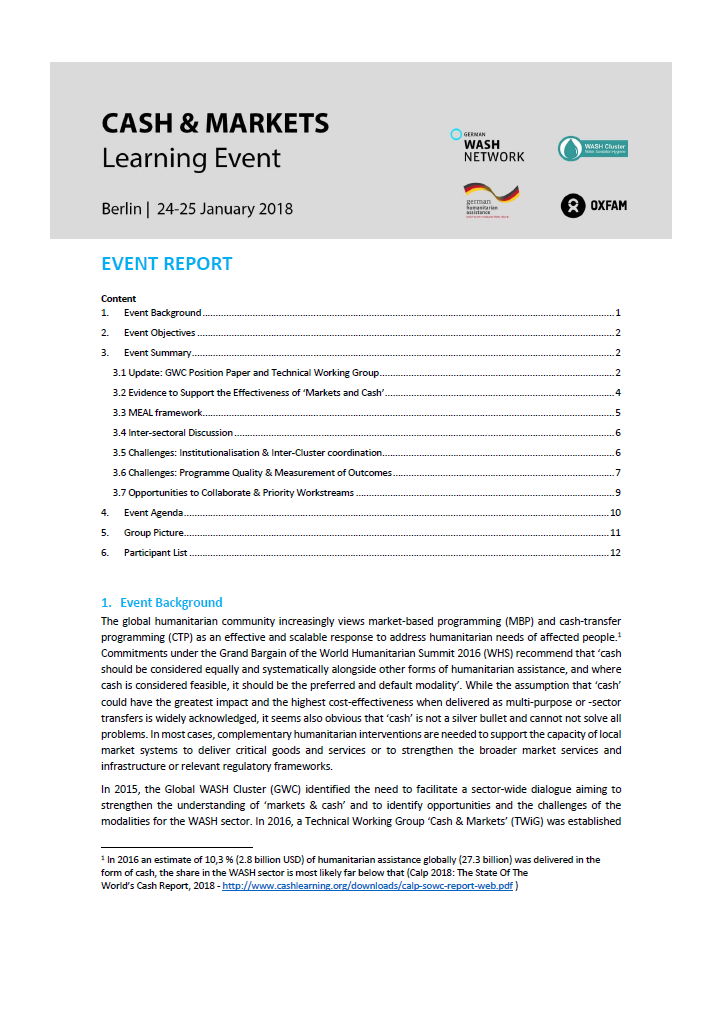
German WASH Network (2018) Cash & Markets Learning Event Event Report
The use of cash has undergone significant changes at the field level with the uptake of mulit‐purpose‐cash grants (MPGs). In particular the formation of diverse technical cash working groups (CWGs) raises questions around how the clusters and its partners can provide technical and strategic support to the use of cash modalities in humanitarian response and what structures are needed to facilitate these outcomes. In early […]
Online since: 30.04.2018
Views: 2630
Downloads: 369
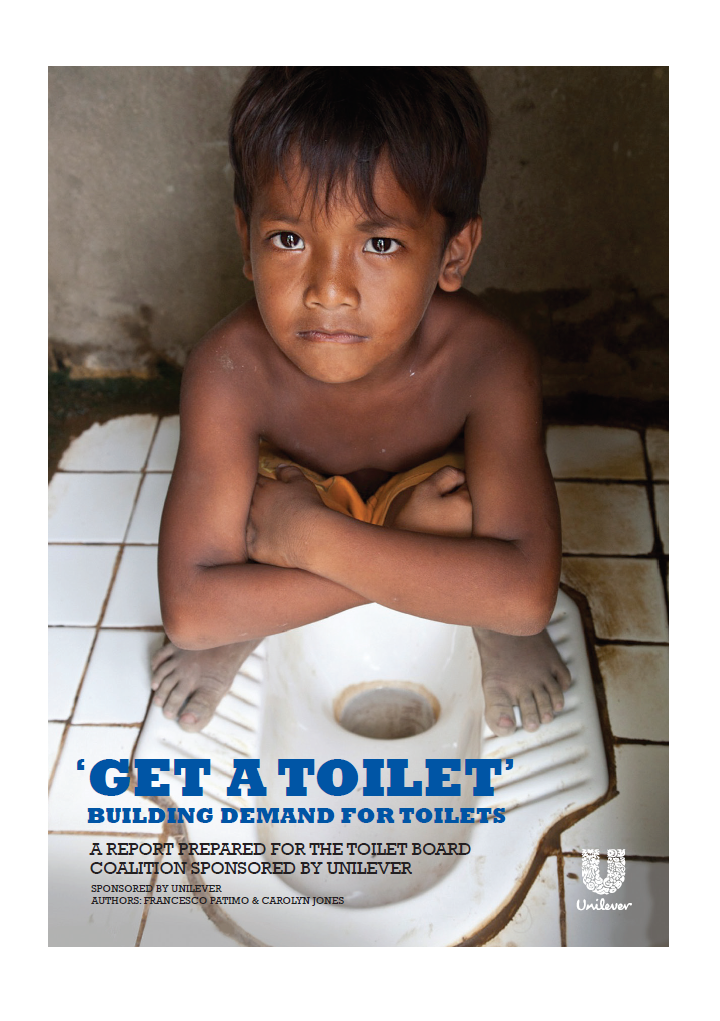
Patimo, F., Jones, C. (2016) 'Get a Toilet' Building Demand for Toilets
Unilever convened a group of like-minded companies, NGO’s and research professionals, with expertise in sanitation and marketing and a desire to take immediate action to address this issue. The focus has been on households having access to their own toilet, either inside or outside the home. In particular the low LSM consumer, whose basic needs for food & shelter are met and who have some disposable […]
Online since: 30.04.2018
Views: 2871
Downloads: 304