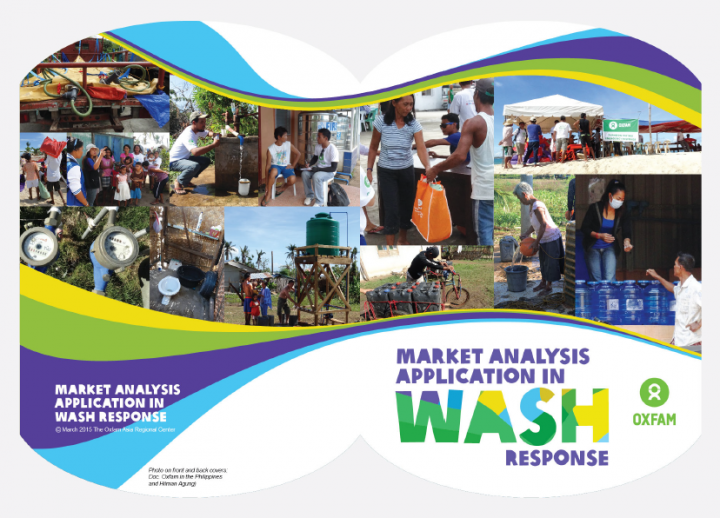
Oxfam (2015) Market Analysis Application in WASH Response
Online since: 06.01.2022
Views: 688
Downloads: 1280
Nzioki, M.N., Korir, A (2020) Effective Methods for Community Sanitation and Hygiene Promotion in the Developing World: A Scoping Review
World Health Organization data on the burden of disease shows that approximately 3.1% of deaths (1.7 million) and 3.7% (54.2 million) of disability-adjusted-life-years (DALYs) worldwide are attributable to unsafe water, sanitation and hygiene. In Africa and developing countries in South East Asia 4-8% of all disease burdens are attributable to poor hygiene and sanitation. Over 99.8% of all deaths in developing world are attributable to […]
Online since: 05.01.2022
Views: 1629
Downloads: 669
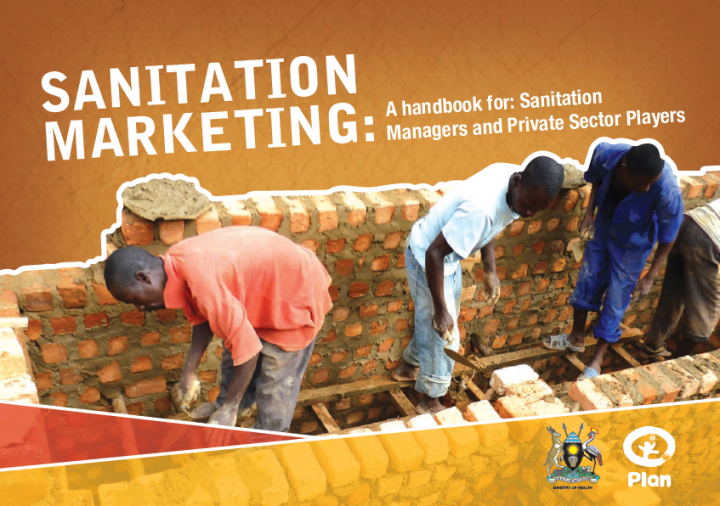
Nabembezi, D., Nabunya, H. (0) Sanitation Marketing: A Handbook for Sanitation Managers and Private Sector Players
In order to address sanitation challenges, accelerate access and sustained use of latrines coupled with good hygiene practices such as hand washing Uganda’s Ministry of Health, together with Plan Uganda, has produced handbooks on sanitation marketing. The aim is to increase awareness and harness momentum for uptake of Sanitation Marketing among stakeholders such as government at policy making level, line ministries, district local government structures […]
Online since: 04.01.2022
Views: 1137
Downloads: 333
Lügo, T. (2017) How to Use Social Media to Better Engage People Affected by Crises. A Brief Guide for Those Using Social Media in Humanitarian Organizations
What's in this guide? Online communication platforms have become a lifeline for millions of people affected by natural disasters and armed conflicts: social media and messaging apps help maintain contact with family and friends, and provide access to information, such as where to find food, shelter or medical assistance. This information can directly influence how people prepare for, respond to and recover from different types […]
Online since: 04.01.2022
Views: 932
Downloads: 1620
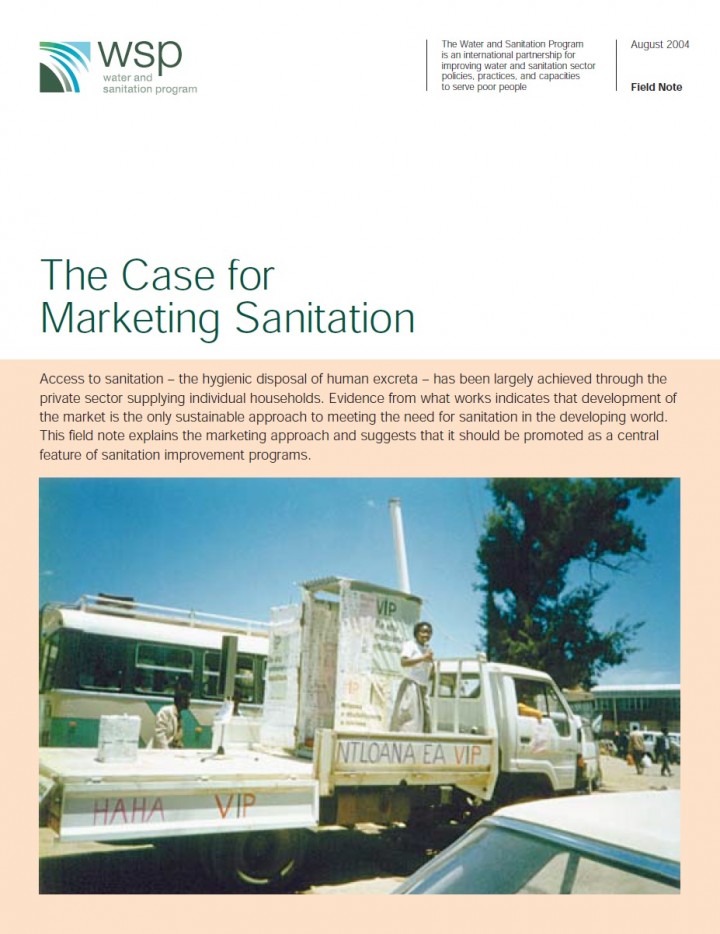
World Bank Water and Sanitation Program (2004) The Case for Marketing Sanitation
Access to sanitation – the hygienic disposal of human excreta – has been largely achieved through the private sector supplying individual households. Evidence from what works indicates that development of the market is the only sustainable approach to meeting the need for sanitation in the developing world. This field note explains the marketing approach and suggests that it should be promoted as a central feature […]
Online since: 30.12.2021
Views: 763
Downloads: 311
Smith, W.A., Strand, J. (2008) Social Marketing Behavior: A Practical Resource for Social Change Professionals
Online since: 29.12.2021
Views: 1133
Downloads: 430
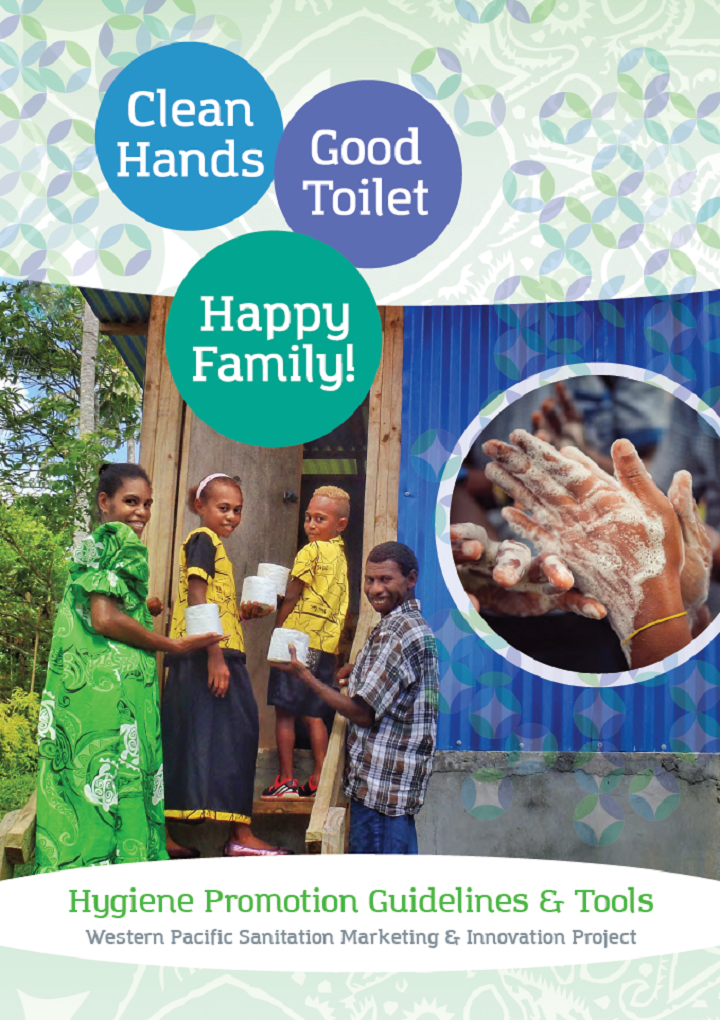
Abel, M. (2017) Clean Hands, Good Toilet, Happy Family! Hygiene Promotion Guidelines and Tools. Western Pacific Sanitation Marketing and Innovation Project
It feels good to be clean. It feels good to live in a beautiful environment. It feels good not to get sick. Influencing health behaviour change seems like it should be simple. Present the logical evidence (information) for why changing a behaviour is worthwhile (washing hands kills germs) and the need for change should be obvious. But logic isn’t the only basis for making decisions […]
Online since: 29.12.2021
Views: 1333
Downloads: 322
Global WASH Cluster (GWC) (2016) Cash and Markets in the WASH Sector A GWC Position Paper
Market based programming is increasingly heralded as having a critical place in the future of humanitarian programming. The proposed benefits of working through existing market systems include improvements to speed, efficiency and effectiveness of programming and increased beneficiary dignity and choice. Advocates for market based approaches claim that, where feasible, they promote economic recovery, resilience, acceptance and sustainability2. Implementing market based approaches is not new to […]
Online since: 23.12.2021
Views: 607
Downloads: 351
Allen, J., Brown, J. (2021) Market-Based Programming in WASH. Technical Guidance for Humanitarian Practitioners. 2nd Edition
Online since: 22.12.2021
Views: 1520
Downloads: 299
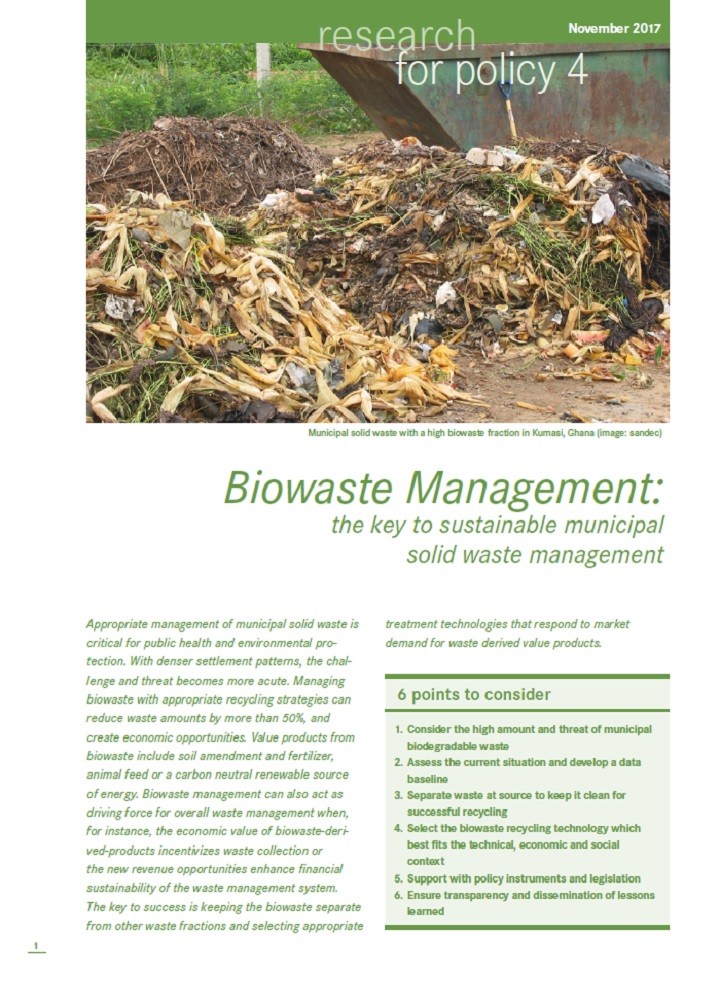
Zurbrügg, C. (2017) Biowaste Management: The Key to Sustainable Municipal Solid Waste Management
Appropriate management of municipal solid waste is critical for public health and environmental pro tection. With denser settlement patterns, the chal lenge and threat becomes more acute. Managing biowaste with appropriate recycling strategies can reduce waste amounts by more than 50%, and create economic opportunities. Value products from biowaste include soil amendment and fertilizer, animal feed or a carbon neutral renewable source of energy. Biowaste […]
Online since: 21.12.2021
Views: 1850
Downloads: 396
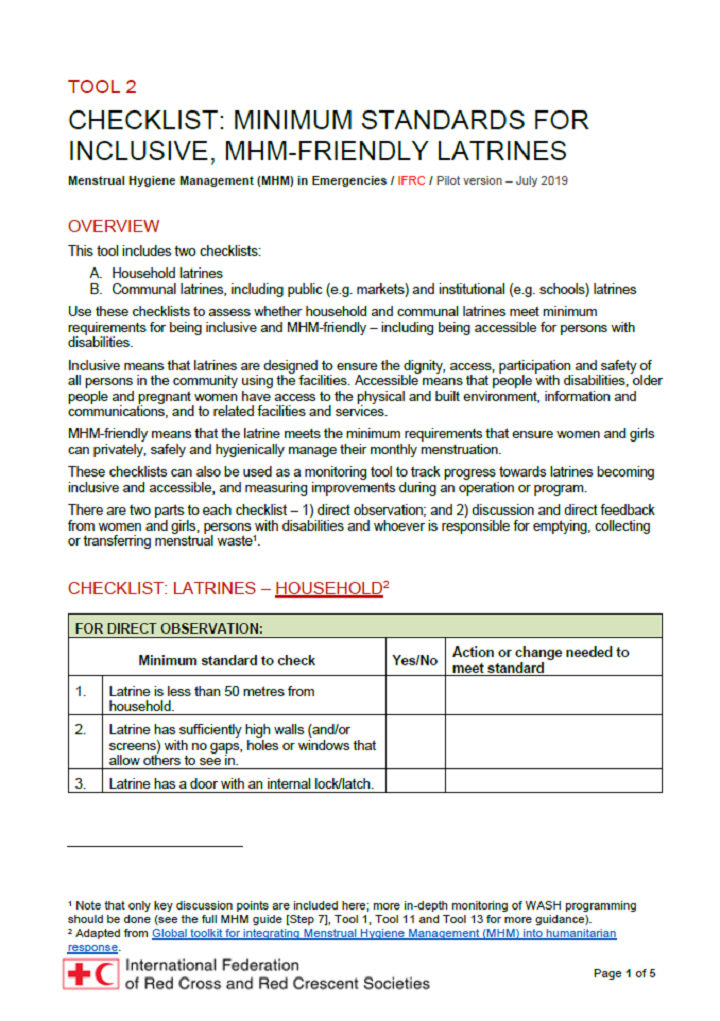
IFRC (2019) Checklist: Minimum Standards for Inclusive, MHM-Friendly Latrines
This tool includes checklists for (1) household latrines, (2) communal latrines, including public (e.g. markets) and institutional (e.g. schools) latrines to assess whether household and communal latrines meet minimum requirements for being inclusive and MHM-friendly – including being accessible for persons with disabilities.
Online since: 21.12.2021
Views: 1140
Downloads: 348
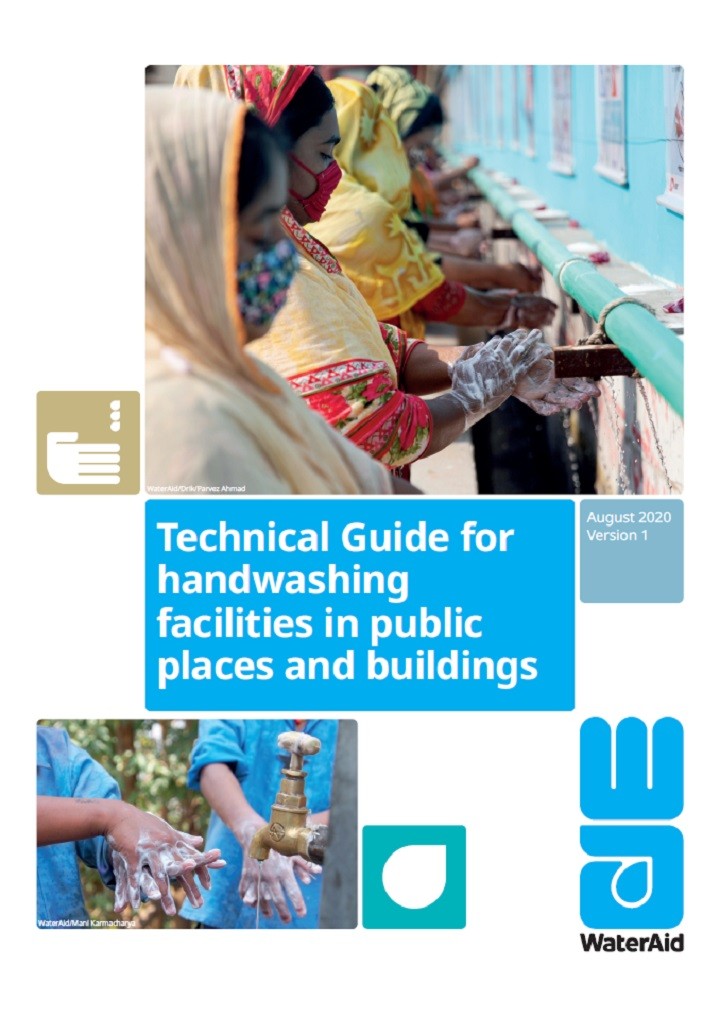
Knight, J., Kontos, L., Da Cunha Forte, J., Muktadir, G., Gautam, O. P. (2020) Technical Guide for Handwashing Facilities in Public Places and Building
In response to the COVID-19 pandemic, the World Health Organization (WHO) has recommended that all member states provide universal access to public handwashing facilities. Consequently, WaterAid and other organisations have been working with governments to install handwashing facilities in a wide range of public places and buildings, to support improved handwashing practices and reduce transmission of the virus. Locations include markets, public transport hubs, public/ […]
Online since: 21.12.2021
Views: 1304
Downloads: 375
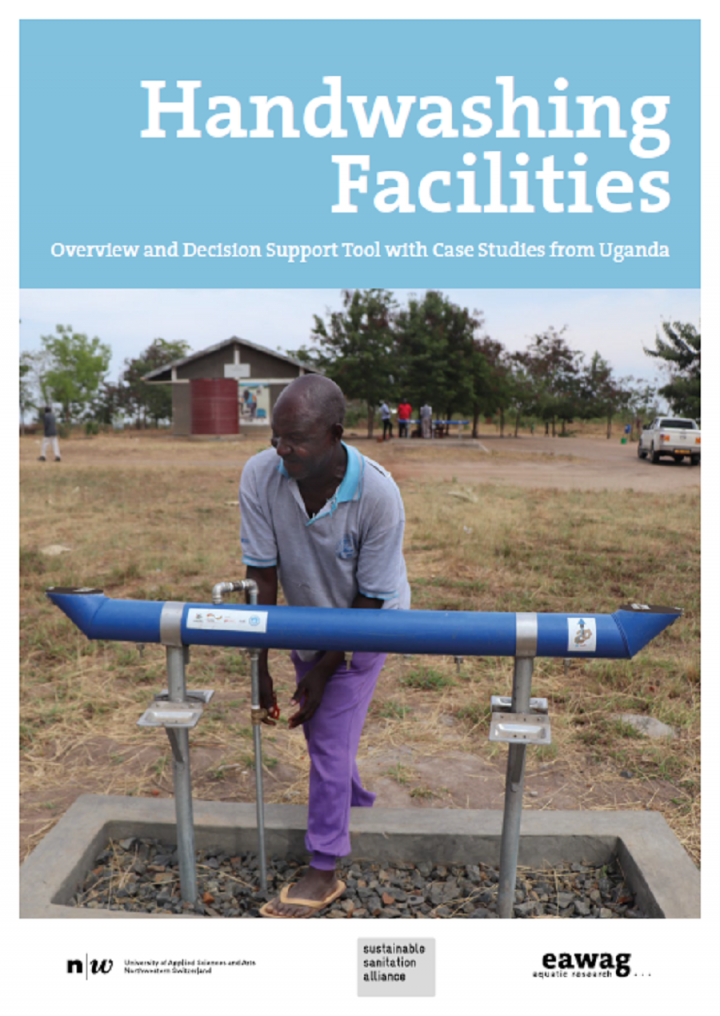
M. Peter, V. Misev, V. Schelbert, C. Lüthi, A. Panesar, J.C. Schlenk, N. Stauf, S. Semiyaga (2022) Handwashing Facilities Overview and Decision Support Tool with Case Studies from Uganda
Handwashing Facilities - Overview and Decision Support Tool with Case Studies from Uganda The objectives of this publication are twofold. The first objective is to give an overview of common types of handwashing facilities with a number of key aspects that need to be considered during the planning stage. Focus is placed on handwashing facilities that are generally suitable for installation at public and commercial buildings […]
Online since: 21.12.2021
Views: 5621
Downloads: 1626
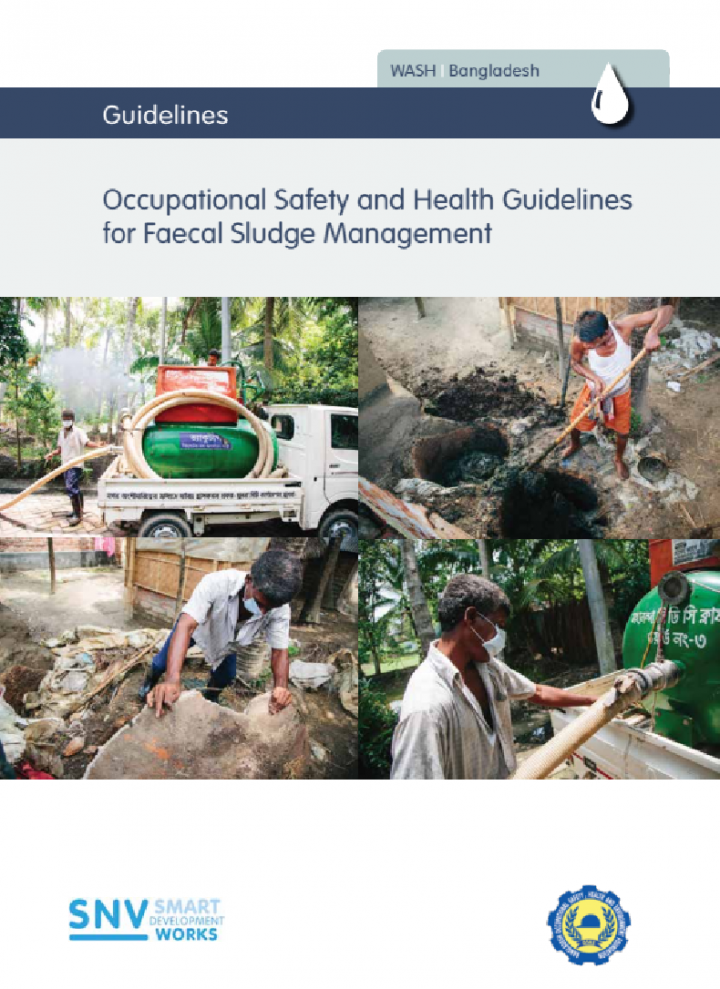
Repon, A. C., Faruq, O., Mamtaz, R. (2015) Occupational Safety and Health Guidelines for Faecal Sludge Management
Demonstration of Pro-poor Market-based Solutions for Faecal Sludge Management in Urban Areas of Southern Bangladesh is a project implemented by SNV Netherlands Development Organisation in partnership with Khulna City Corporation, Jhenaidah and Kushtia Paurashavas. Improvement of working conditions in sludge emptying and transportation is identified as a major area of action under the project. In line with this commitment, the initiative has been taken to […]
Online since: 01.06.2021
Views: 2689
Downloads: 1207
Global WASH Cluster (2016) Cash and Markets In The WASH Sector A Global WASH Cluster Position Paper
Market based programming is increasingly heralded as having a critical place in the future of humanitarian programming. The proposed benefits of working through existing market systems include improvements to speed, efficiency and effectiveness of programming and increased beneficiary dignity and choice. Advocates for market based approaches claim that, where feasible, they promote economic recovery, resilience, acceptance and sustainability. This paper seeks to: locate CTP within the […]
Online since: 18.05.2021
Views: 1160
Downloads: 295
Juillard, H., Sloane, E. (2016) Revised Pre-Crisis Market Analysis (PCMA)
This document provides guidance for practitioners on conducting market analysis before the onset of an anticipated crisis using an adaptation of existing post-crisis market assessment tools. Recommendations stemming from this analysis could be used to inform preparedness and DRR programming decision making as well as future emergency responses. This guidance focuses on markets, with the objective to improve programming. As with any humanitarian initiative, the […]
Online since: 12.05.2021
Views: 784
Downloads: 227
Keener, S., Luengo, M., Banerjee, S. (2010) Provision of Water to the Poor in Africa Provision of Water to the Poor in Africa
Standpipes that dispense water from utilities are the most common alternatives to piped water connections for poor customers in the cities of Sub-Saharan Africa. Fifty-five percent of the unconnected urban population relies on standpipes as their first water source. Other informal water providers include household resellers and a variety of water tankers and vendors, which are the first water source of 1 percent and 3 […]
Online since: 12.05.2021
Views: 1010
Downloads: 252
The World Bank (2019) Informal water markets in an urbanising world: Some unanswered questions
Delivering safe and sustainable water supplies presents a fundamental challenge for an urbanising planet. Approximately 1.5 million people migrate to cities and their peri-urban fringes each week, and the fastest growth occurs in small to intermediate sized cities where infrastructure and governance capacity lag (Birkmann et al., 2016). Piped water systems are struggling to keep pace. In this context formal water markets have languished, while […]
Online since: 13.04.2021
Views: 1548
Downloads: 900
Global WASH Cluster (2016) Guidance on Market Based Programming for Humanitarian WASH Practitioners
WASH markets are likely to be affected by a crisis. It can create disruption of both supply of and access to WASH-related goods and services. Both need to be considered and addressed by humanitarian responses to people’s needs. But if humanitarian agencies do not consider markets, interventions can accidentally harm these markets and the whole population depending on them. In the case of weak or […]
Online since: 06.04.2021
Views: 777
Downloads: 250
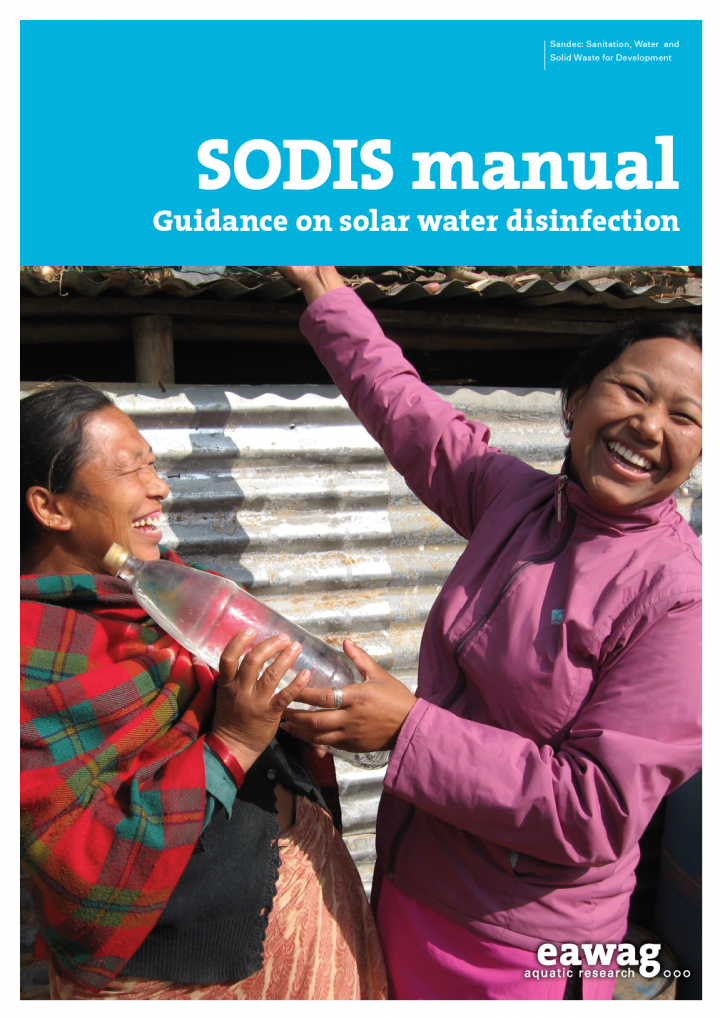
Eawag (2016) SODIS Manual Guidance on Solar Water Disinfection
The SODIS method is a water disinfection method, making use of the sun’s energy and using PET bottles. It exploits the germicidal effect of solar radiation – especially UV-A radiation - on diarrhoea causing pathogens. SODIS is recognized as one of several viable methods for household water treatment. It has been promoted, both as a stand-alone intervention and as one component in broader HWTS (Household Water […]
Online since: 01.04.2021
Views: 1685
Downloads: 398