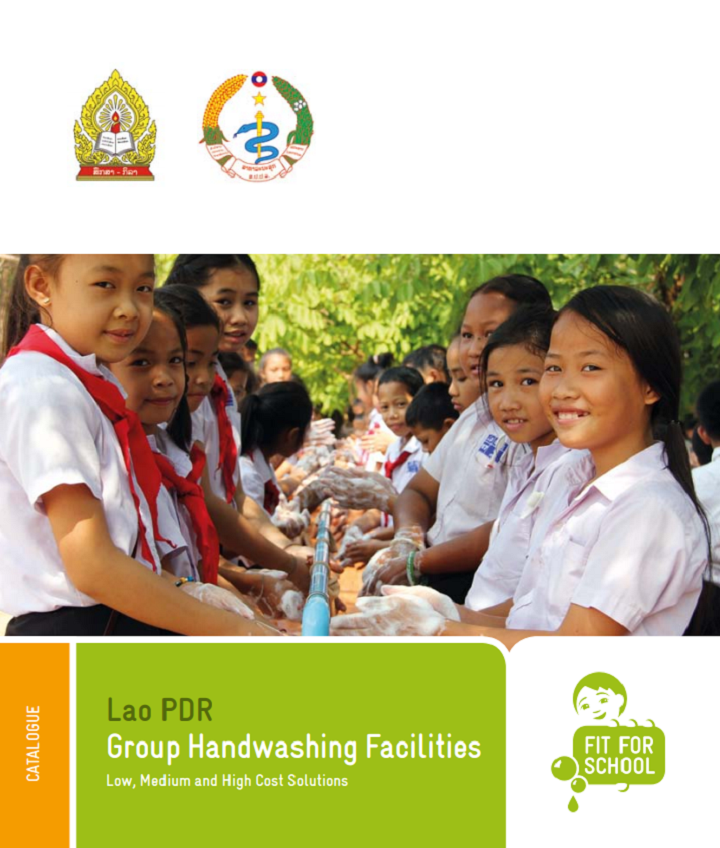
GIZ Fit for School (2016) Lao PDR Group Handwashing Facilities - Low, Medium and High Cost Solutions
Schools are the heart of a community where children spend half of their day. They play a unique role in creating healthy learning environments. The social norms and habits developed in children will stay with them all their lives. Thus, by providing a healthy learning environment and promoting healthy practices, schools act as an equalizer for all children from varied economic backgrounds. The Fit for School […]
Online since: 18.06.2020
Views: 1399
Downloads: 584
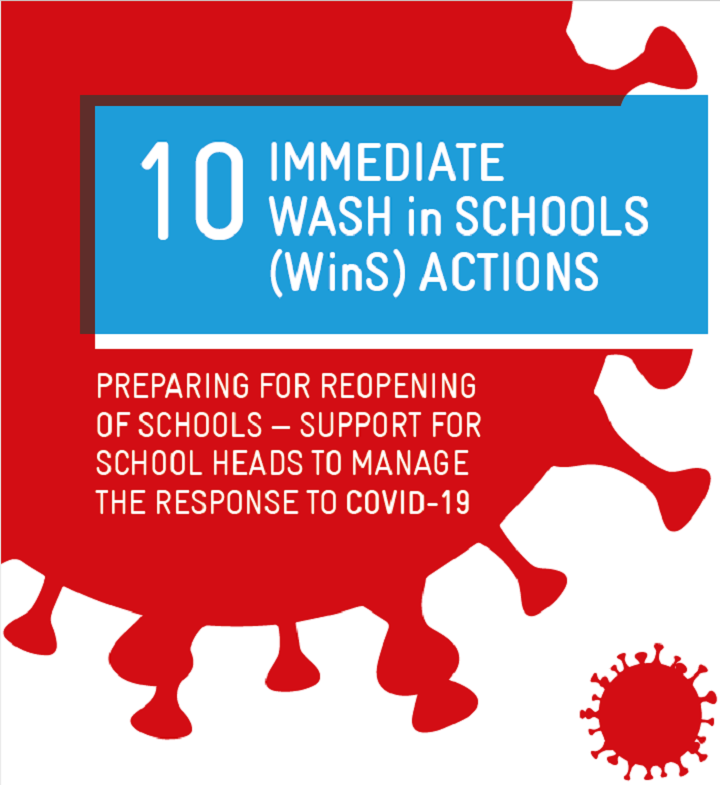
WASH in Schools Network (2020) 10 Immediate WASH in Schools (WinS) Actions - For School Heads to Manage the Response to COVID-19 (Various languages available)
10 immediate WASH in schools (WinS) actions; 1. Handwashing 2. Water availability 3. Supplies 4. Cleaning and disinfecting 5. Waste management 6. Physical distancing 7. Establish a monitoring team 8. Operation or training 9. Checklists 10. Hygiene culture
Online since: 14.05.2020
Views: 12676
Downloads: 4510
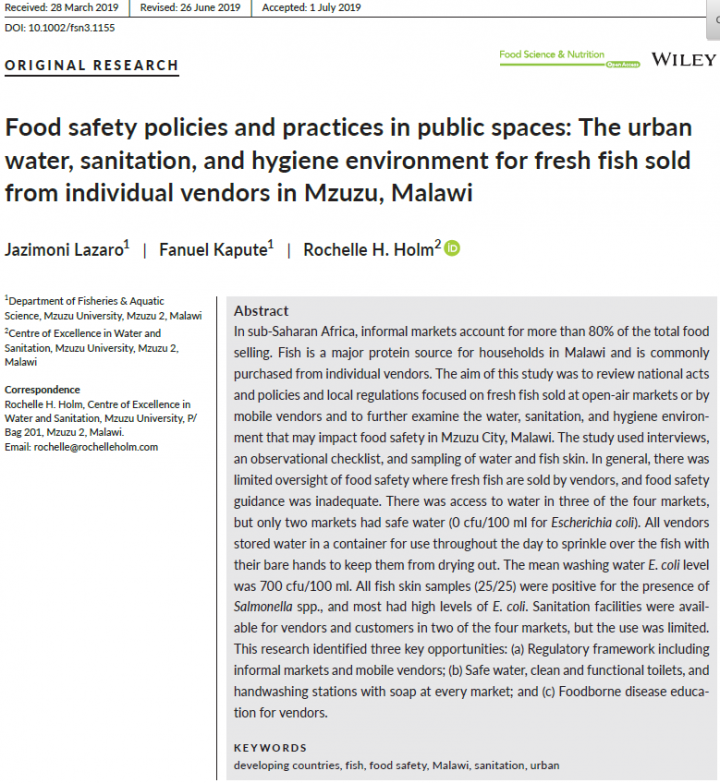
Lazaro, J., Kapute, F., Holm, R. H. (2019) Food safety policies and practices in public spaces: The urban water, sanitation, and hygiene environment for fresh fish sold from individual vendors in Mzuzu, Malawi
In sub‐Saharan Africa, informal markets account for more than 80% of the total food selling. Fish is a major protein source for households in Malawi and is commonly purchased from individual vendors. The aim of this study was to review national acts and policies and local regulations focused on fresh fish sold at open‐air markets or by mobile vendors and to further examine the water, […]
Online since: 06.05.2020
Views: 3066
Downloads: 693
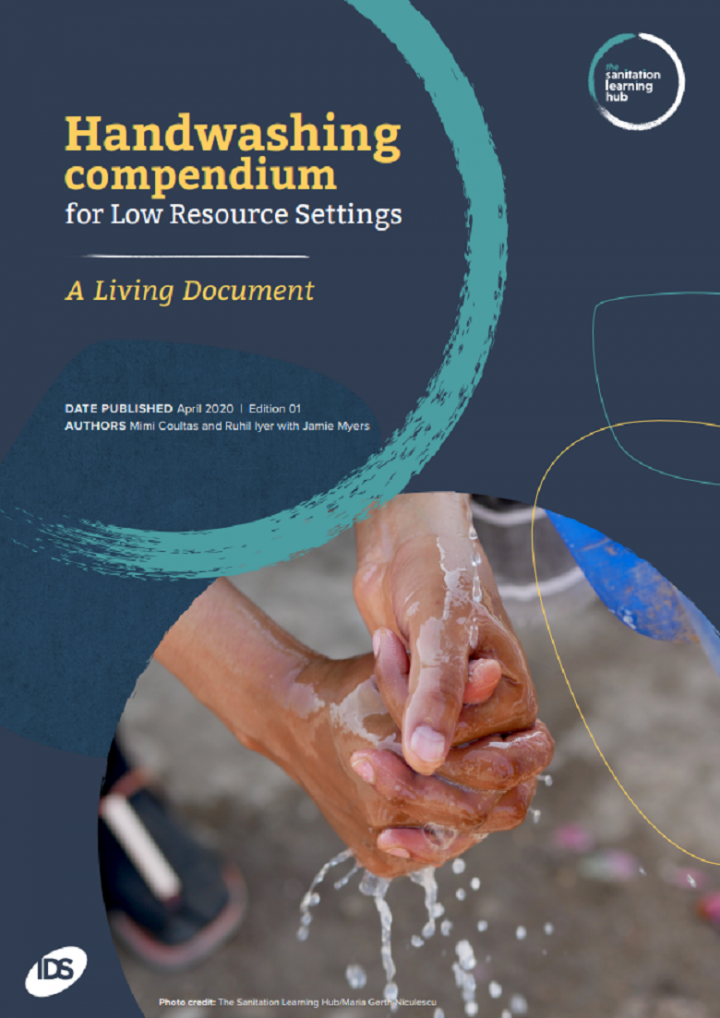
Coultas, M. and Iyer, R. with Myers, J. (2020) Handwashing Compendium for Low Resource Settings: A Living Document
Frequent and proper handwashing with soap is vital to prevent the spread of COVID-19. In response, we have developed this Handwashing Compendium for Low Resource Settings. Bringing existing information from different organisations into one place, the compendium provides guidance, local examples of and further resources on accessible low-cost handwashing facilities, environmental cues and physically distanced hygiene promotion. The compendium is a living document which will be updated […]
Online since: 28.04.2020
Views: 5800
Downloads: 719
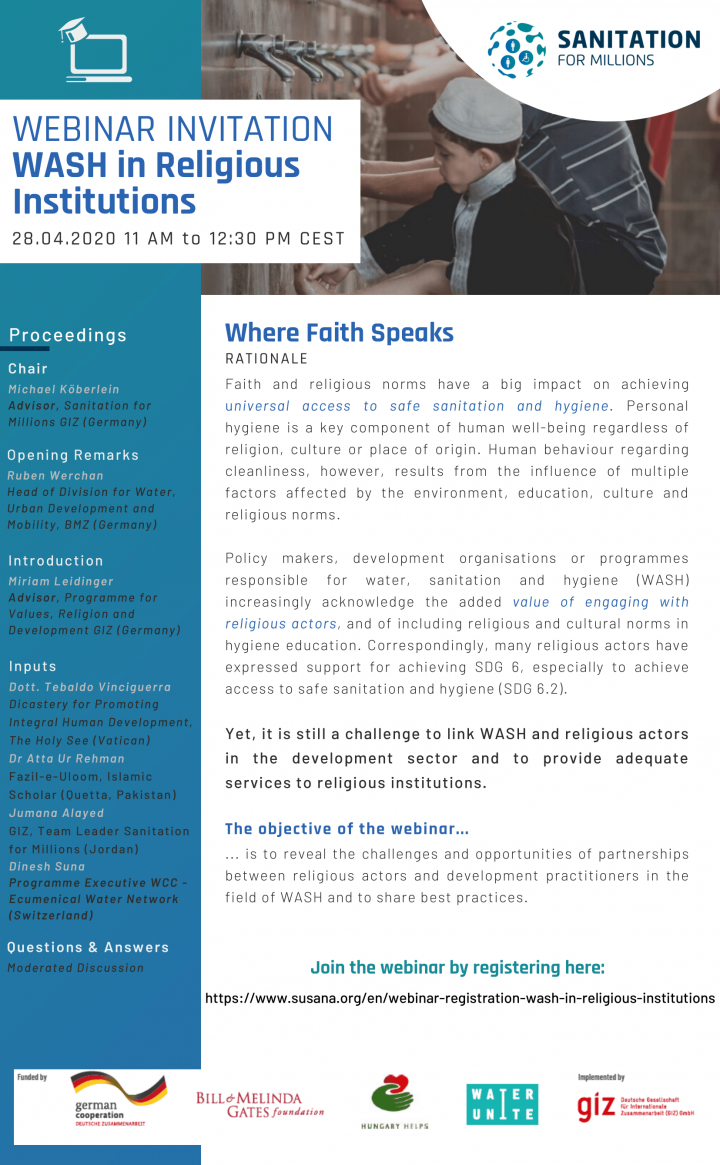
GIZ (2020) Webinar - Where Faith Speaks: WASH in Religious Institutions
In this webinar development practitioners and religious actors shared their experiences in collaborating to jointly achieve the fulfillment of SDG 6.2. . The speakers showcased best practices and innovative approaches and elaborate their view on the importance of religious actors on achieving universal access to water, sanitation and hygiene. Unfortunately there were technical difficulties towards the end of the webinar - the recordings of the missing […]
Online since: 28.04.2020
Views: 2276
Downloads: 1655
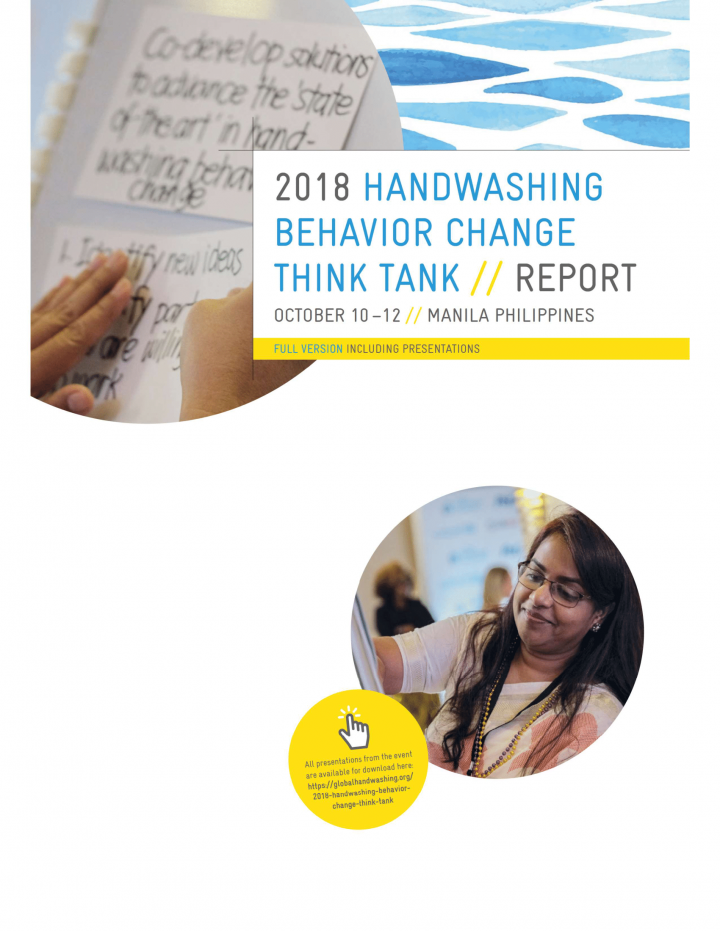
Moore, C., Evbuoma, E., Ariza, C., Pizzacalla, K., Monse, B. (2019) Handwashing Behavior Change Think Tank - Report & Presentations
The Global Handwashing Partnership Think Tank series brings together hygiene experts from civil society, government, research institutions, and the private sector to drive learning and action in handwashing behavior change. The 2018 Think Tank was hosted in Manila, Philippines, from October 10 – 12. The presentations can be found in the annex of the report.
Online since: 09.04.2020
Views: 2522
Downloads: 4202
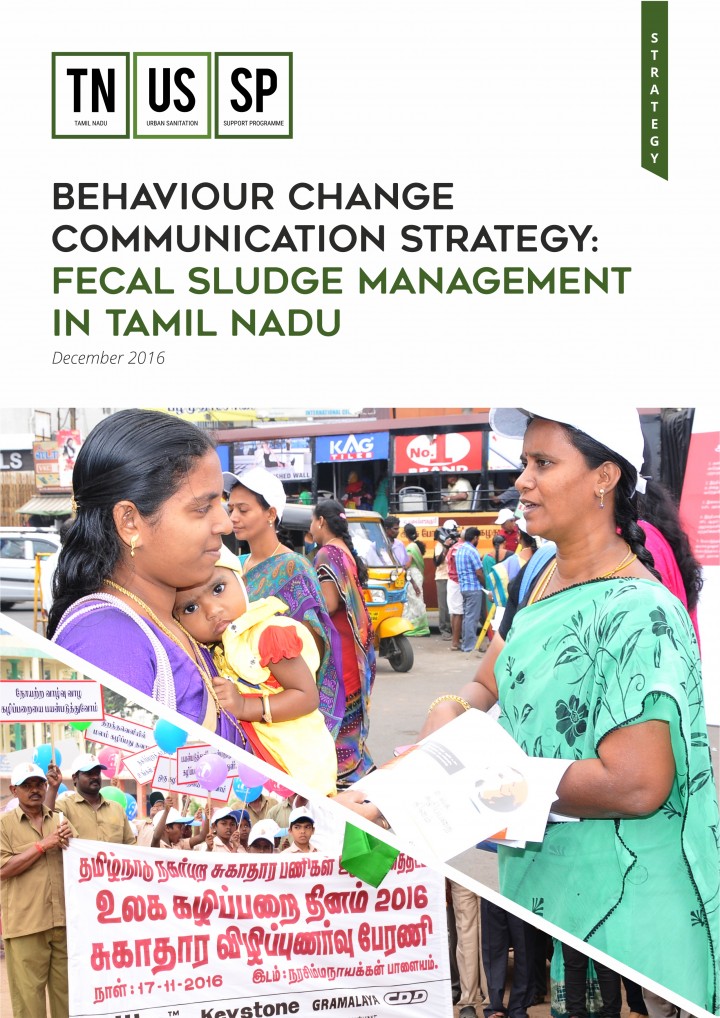
TNUSSP (2016) Behaviour Change and Communication Strategy
In Tamil Nadu, currently, a range of behaviour deficits exist along the full cycle of sanitation at the stages of access, containment, emptying, transport, treatment and re-use/disposal. However, communication strategies in the sanitation sector have been largely limited to promoting hygiene behaviours such as handwashing or stopping open defecation by promoting the use of toilets. While these efforts are important, there are several other behaviour […]
Online since: 28.02.2020
Views: 2025
Downloads: 261
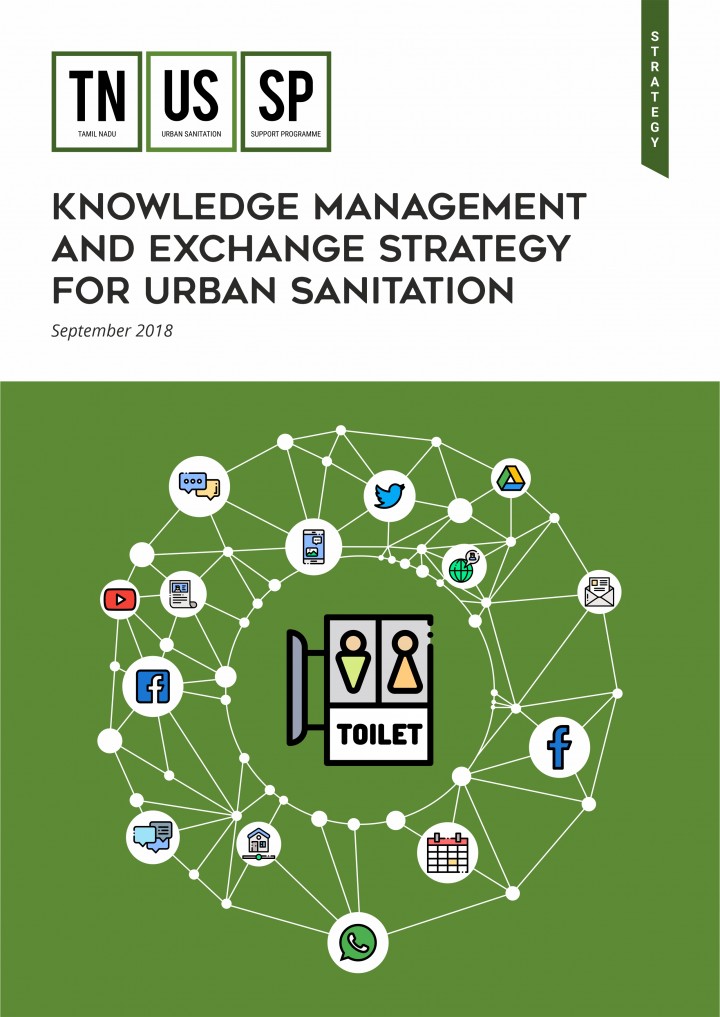
TNUSSP (2018) Knowledge Management and Exchange Strategy for Urban Sanitation
In Tamil Nadu, currently, a range of behaviour deficits exist along the full cycle of sanitation at the stages of access, containment, emptying, transport, treatment and re-use/disposal. However, communication strategies in the sanitation sector have been largely limited to promoting hygiene behaviours such as handwashing or stopping open defecation by promoting the use of toilets. While these efforts are important, there are several other behaviour […]
Online since: 12.02.2020
Views: 1688
Downloads: 240
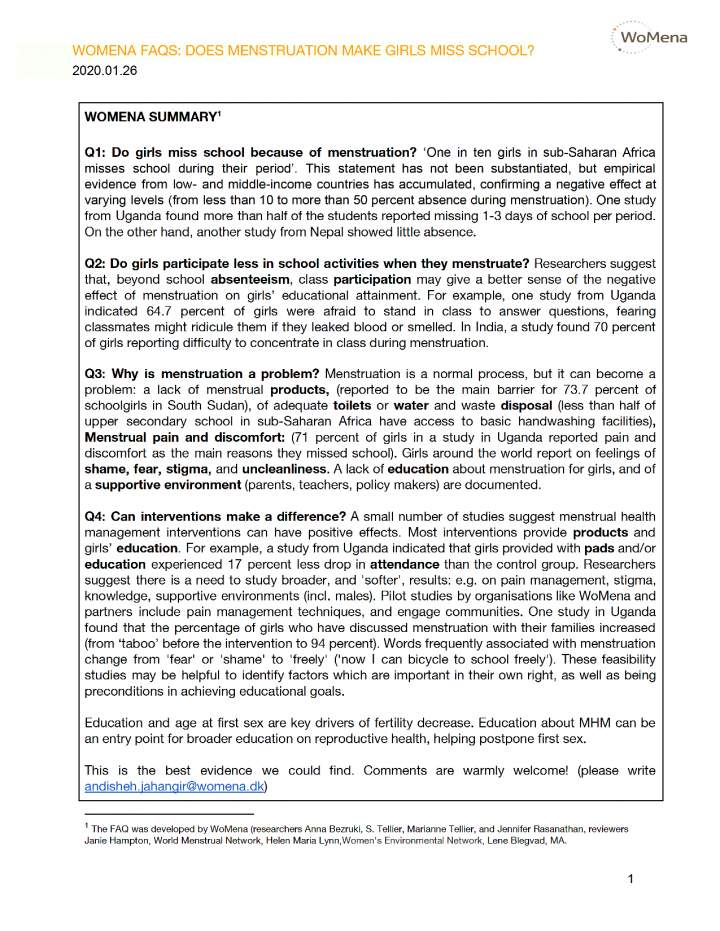
WoMena (2020) WoMena FAQS: Does menstruation make girls miss school?
Q1: Do girls miss school because of menstruation? ‘One in ten girls in sub-Saharan Africa misses school during their period’. This truism has not been substantiated, but empirical evidence from low- and middle-income countries has accumulated, confirming a negative effect at varying levels (from less than 10 to more than 50 percent absence during menstruation). One study from Uganda found more than half of the […]
Online since: 13.01.2020
Views: 1857
Downloads: 286
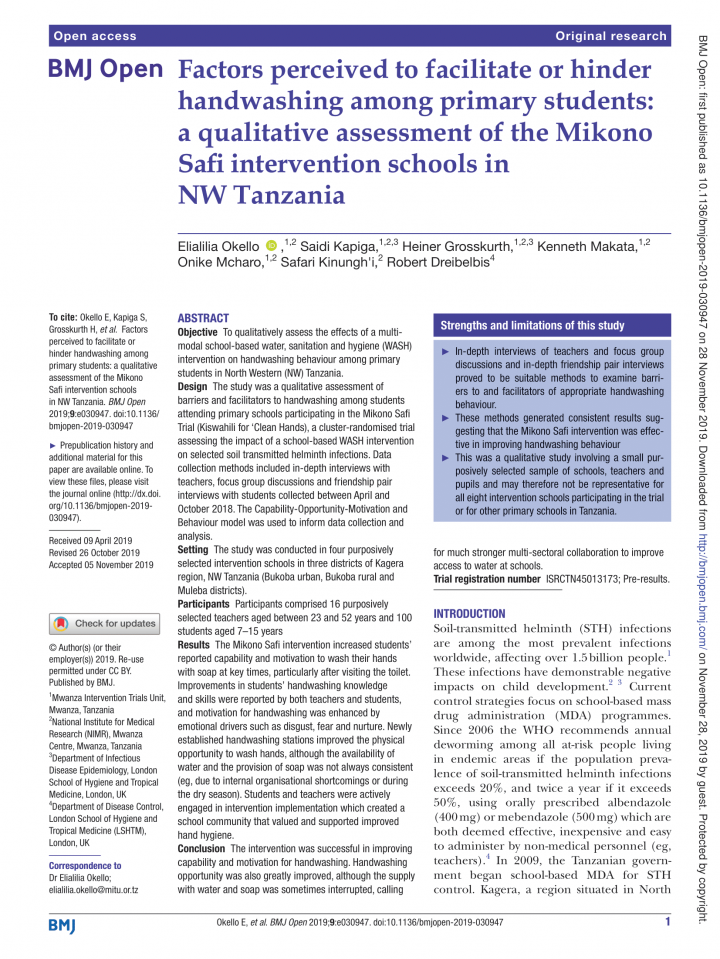
Okello E., Kapiga, S., Grosskurth, H., Makata, K., Mcharo, O., Kinungh'i, S., Dreibelbis, R. (2019) Factors perceived to facilitate or hinder handwashing among primary students: a qualitative assessment of the Mikono Safi intervention schools in NW Tanzania
The study used qualitative methods to assess the effects of a multi-modal school-based water, sanitation and hygiene (WASH) intervention on handwashing behaviour among primary students in North Western (NW) Tanzania. Barriers and facilitators to handwashing were explored in the students who participated in the Mikono Safi Trial (Kiswahili for ‘Clean Hands). The intervention increased students' reported capability and motivation to wash their hands with soap […]
Online since: 05.12.2019
Views: 2176
Downloads: 657
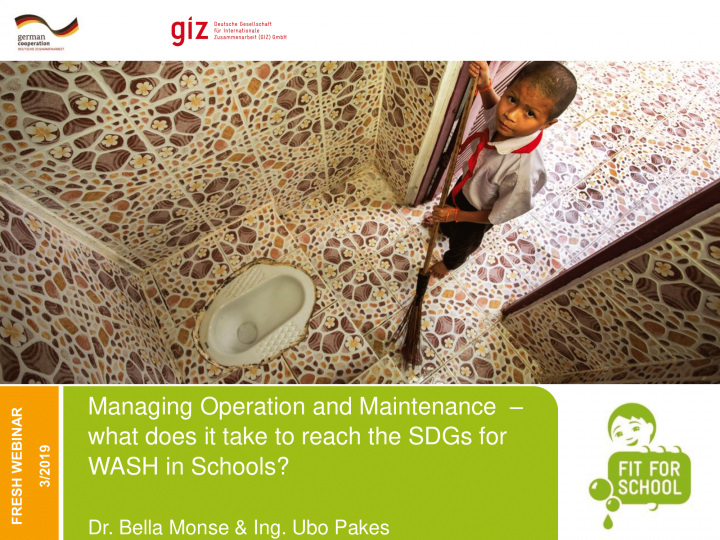
Monse, B., Pakes, U., Schlenk, J. (2019) Managing Operation and Maintenance – what does it take to reach the SDGs for WASH in Schools?
This FRESH webinar will Introduce a costing tool to calculate the budget need for schools to provide the basic service level for drinking water, usable sanitation, and handwashing with soap. The tool provides school heads with an easy to manage app, which calculates the annual cost per student depending on local condition and local prices. How much do they need to keep aside for consumables, […]
Online since: 09.08.2019
Views: 1470
Downloads: 331
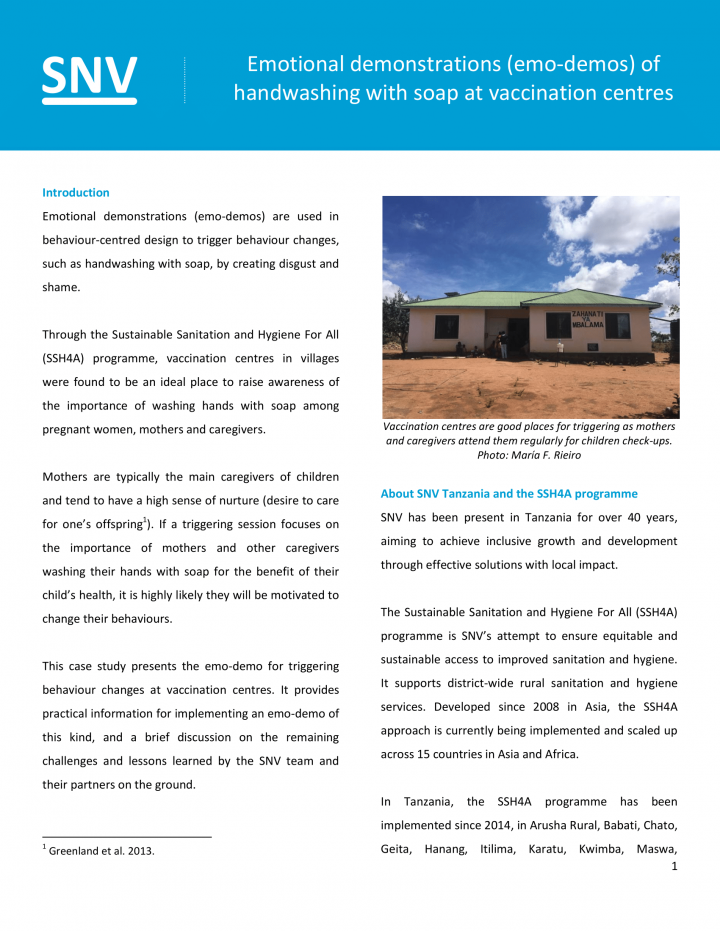
SNV (2019) Emotional demonstrations (emo-demos) of handwashing with soap at vaccination centres
Emotional demonstrations (emo-demos) are used in behaviour-centred design to trigger behaviour changes, such as handwashing with soap, by creating disgust and shame. Through the Sustainable Sanitation and Hygiene For All (SSH4A) programme, vaccination centres in villages were found to be an ideal place to raise awareness of the importance of washing hands with soap among pregnant women, mothers and caregivers. This case study presents the emo-demo for […]
Online since: 10.07.2019
Views: 1919
Downloads: 3194
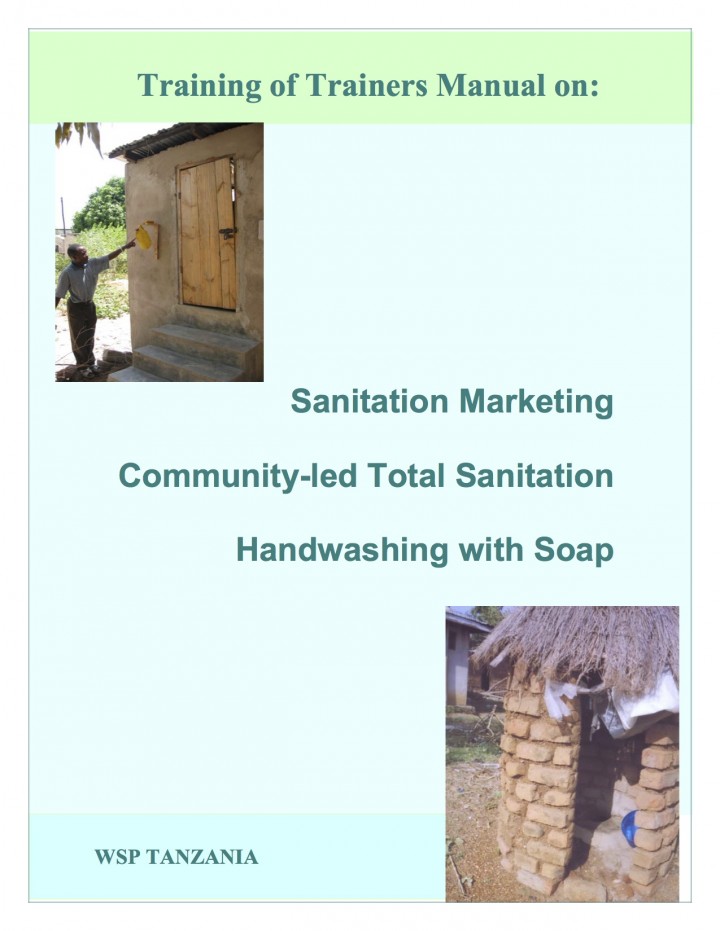
WSP Tanzania (2010) Training of Trainers Manual on: Sanitation Marketing Community-led Total Sanitation Handwashing with Soap
Key Messages: • Inadequate sanitation and hygiene adversely impacts human well-being. • In Tanzania basic latrine coverage is high but this still constitutes inadequate sanitation • Some families continue to defecate in the open • Handwashing with soap is not practiced consistently or at the key junctures. • WSP is implementing a project to scale up access to improved sanitation and hygiene in Tanzania
Online since: 24.05.2018
Views: 1465
Downloads: 0
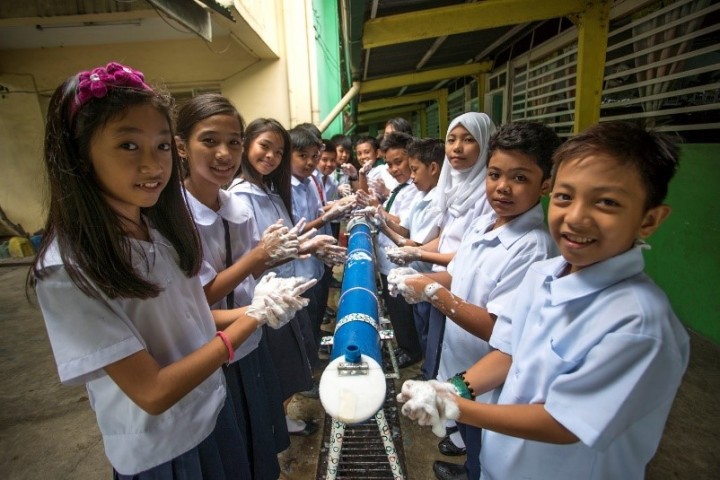
GIZ (2018) Webinar on the WASHaLOT 3.0 Webinar on the prefabricated (group-) handwashing facility WASHaLOT 3.0
The WASHaLOT 3.0 is a prefabricated handwashing facility that accommodate washing activities of 20 persons at a time. It is currently being used in public schools in the Philippines to address the need for schools to facilitate handwashing prior to eating and thereby establish daily hygiene practice in schools. The facility has the potential to be used in other contexts such as day care centers, […]
Online since: 24.05.2018
Views: 3547
Downloads: 0
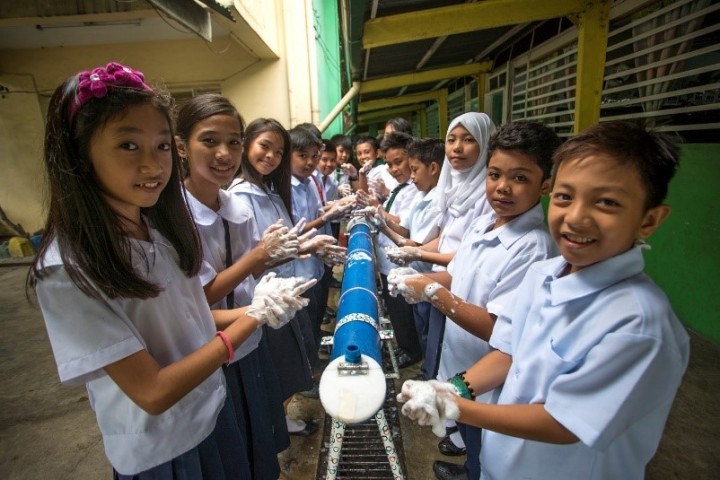
GIZ (2018) WASHaLOT 3.0 Webinar Presentation Presentation of Development and Technical Applicability Framework of the group-handwashing facility WASHaLOT
The WASHaLOT 3.0 is a prefabricated handwashing facility that accommodate washing activities of 20 persons at a time. It is currently being used in public schools in the Philippines to address the need for schools to facilitate handwashing prior to eating and thereby establish daily hygiene practice in schools. The facility has the potential to be used in other contexts such as day care centers, […]
Online since: 24.05.2018
Views: 2743
Downloads: 297
Ramos, M., Benelli, P., Irvine, E., Watson, J. (2016) WASH in Emergencies Problem Exploration Report Handwashing
Access to water, sanitation and hygiene promotion is one of the key aspects to securing the health status of populations affected by emergencies and humanitarian crises. The impact of hygiene promotion and washing of hands with soap has wider health implications, as hands are vectors that can transport disease agents from humans to humans, directly or indirectly. Furthermore, the ability to wash hands contributes to […]
Online since: 23.02.2018
Views: 2081
Downloads: 274
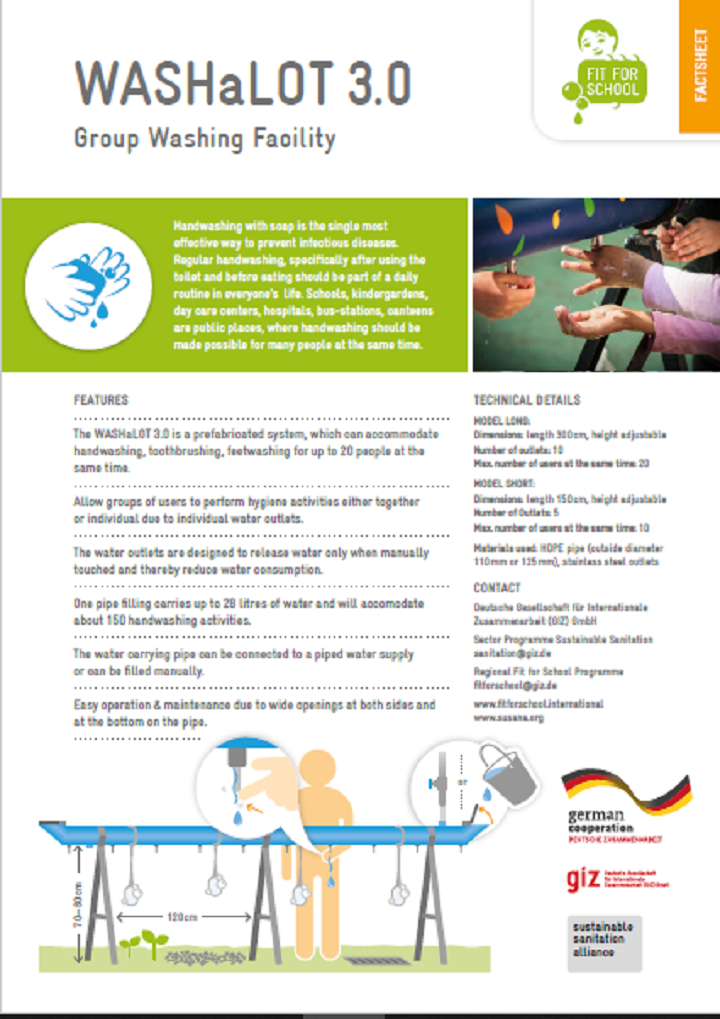
GIZ (2020) Group Washing Facility - WASHaLOT 3.0
Handwashing with soap is the single most effective way to prevent infectious diseases. Regular handwashing, specifically after using the toilet and before eating should be part of a daily routine in everyone’s life. Schools, kindergardens, day care centers, hospitals, bus-stations, canteens are public places, where handwashing should be made possible for many people at the same time. In the context of COVID-19, adjustments and recommendations […]
Online since: 07.12.2017
Views: 5833
Downloads: 1445
Ministry of Human Resource Development (2014) Clean India: Clean Schools A Handbook
Swachh Bharat: Swachh Vidyalaya is the national campaign driving ‘Clean India: Clean Schools’. A key feature of the campaign is to ensure that every school in India has a set of functioning and well maintained water, sanitation and hygiene facilities. Water, sanitation and hygiene in schools refers to a combination of technical and human development components that are necessary to produce a healthy school environment and to develop […]
Online since: 01.08.2017
Views: 5712
Downloads: 359
WHO and UNICEF (2017) Progress on Drinking Water, Sanitation and Hygiene - 2017 Update and SDG Baselines
The WHO/UNICEF JMP has published its first report of the SDG period, Progress on drinking water, sanitation and hygiene: 2017 update and SDG baselines. The report introduces and defines the new indicators of safely managed drinking water and sanitation services. Estimates of safely managed drinking water services, the indicator for SDG target 6.1, are presented for 96 countries, while estimates are provided for safely managed […]
Online since: 24.07.2017
Views: 10542
Downloads: 17739
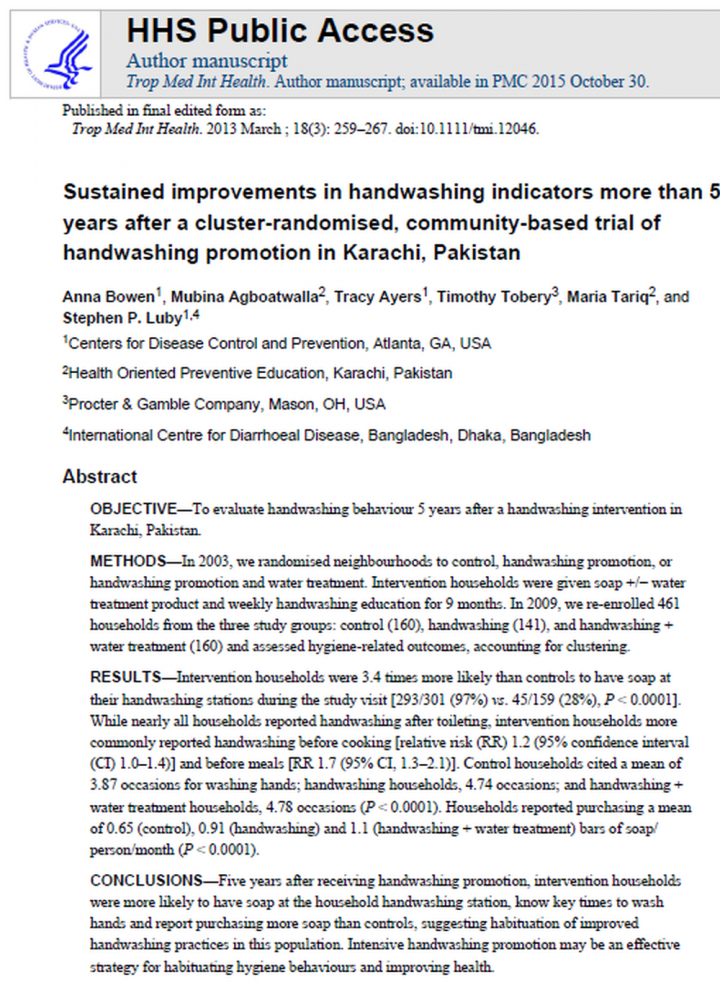
Bowen, A., et.al. (2015) Sustained improvements in handwashing indicators more than 5 years after a cluster-randomised, community-based trial of handwashing promotion in Karachi, Pakistan
Online since: 25.04.2017
Views: 2528
Downloads: 186