Hastie, R. (2019) We Must Do More to Make Emergency Sanitation Safer
Online since: 07.01.2022
Views: 802
Downloads: 1104
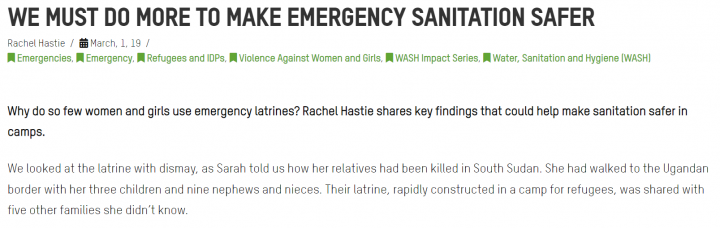
Farrington, M. (2019) Social and Feminist Design in Emergency Contexts: The Women’s Social Architecture Project, Cox’s Bazar, Bangladesh
The rapid influx of Rohingya refugees into Cox's Bazar, Bangladesh, has led to the formation of huge camps, built on difficult terrain, short of space and with high population density. All these factors present numerous challenges to agencies seeking to provide latrines, water points, and bathing facilities. Feedback gathered from women and girls highlighted significant challenges around access, safety, privacy, and dignity, including management of […]
Online since: 07.01.2022
Views: 988
Downloads: 0
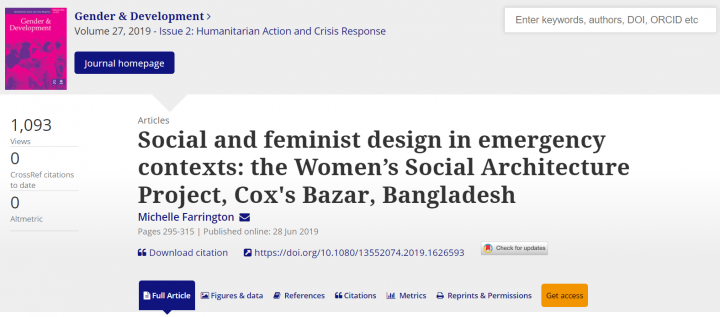
Akvo (2017) Emergency Support to WASH in Schools
Tropical Cyclone Winston hit Fiji from 19 to 20 February as a Category 5 system with winds of 220 kmph, gusting up to 325 kmph, and this time through much more populated islands. TC Winston not only was the first Category 5 tropical cyclone of record to hit Fiji, but the strongest tropical cyclone of record in the Southern Hemisphere. The program of activities will […]
Online since: 07.01.2022
Views: 1165
Downloads: 1661
Oxfam (2018) Mum’s Magic Hands. Global Story Board
Oxfam and Unilever’s Chief Sustainability Office carried out extensive research on handwashing practice in emergency contexts. We found nurture to be one of the most powerful motivators driving handwashing with soap among mothers. Even during a crisis, mothers continue to nurture their children to ensure they go onward in life and succeed in bringing fruition to their efforts and fulfillment to their lives. Handwashing fits […]
Online since: 07.01.2022
Views: 1198
Downloads: 288
Oxfam (2018) Mum’s Magic Hands. Asia Storyboard
Oxfam and Unilever’s Chief Sustainability Office carried out extensive research on handwashing practice in emergency contexts. We found nurture to be one of the most powerful motivators driving handwashing with soap among mothers. Even during a crisis, mothers continue to nurture their children to ensure they go onward in life and succeed in bringing fruition to their efforts and fulfillment to their lives. Handwashing fits […]
Online since: 07.01.2022
Views: 1397
Downloads: 271
Oxfam (2018) Mum’s Magic Hands. Africa Storyboard
Oxfam and Unilever’s Chief Sustainability Office carried out extensive research on handwashing practice in emergency contexts. We found nurture to be one of the most powerful motivators driving handwashing with soap among mothers. Even during a crisis, mothers continue to nurture their children to ensure they go onward in life and succeed in bringing fruition to their efforts and fulfillment to their lives. […]
Online since: 06.01.2022
Views: 892
Downloads: 246
Oxfam (2018) Mum’s Magic Hands. A Field Guide for Rapid Implementation of Handwashing Promotion in Emergencies
Handwashing promotion programmes in emergencies are important, as they significantly contribute to the reduction of diarrhoea-related diseases. These programmes traditionally focus on the health benefits of handwashing as a key motivator. Information – in the form of messages – is delivered to beneficiaries about the key times to wash hands and how doing this at certain times can reduce morbidity rates. However, over the years […]
Online since: 06.01.2022
Views: 1003
Downloads: 284
Oxfam (2012) Hygiene Promotion for Household Water Treatment and Safe Storage in Emergencies UK
It is now well accepted that despite source water being safe, water can be contaminated during transportation and storage and the hygienic handling of water during transport, storage and use is an important aspect of hygiene promotion in all WASH interventions In an emergency, it may not always be possible to ensure that the source water is clean (within the existing budget or time constraints) and […]
Online since: 06.01.2022
Views: 811
Downloads: 278
Oxfam (2018) An Introduction to Community Engagement in WASH
The overall aim of Oxfam’s WASH response in emergencies is to minimise public health risks in relation to water, sanitation and hygiene. This means working more directly with a wide range of people affected by the crisis to better understand them, to motivate them to make positive behaviour changes, and to strengthen their capacity to reduce/prevent public health risks and make their own decisions. We […]
Online since: 06.01.2022
Views: 1359
Downloads: 281
IFRC (2005) Guidelines for Emergency Assessment
1.1 Why is an assessment methodology necessary? Assessment is a vital element of the programme-planning process. Assessment provides the information on which decisions will be made. Whilst good information does not guarantee a good programme, poor information almost certainly guarantees a bad one. The use of a standard methodology means that information can be compared with data collected during previous assessments. 2.2 Who will use these guidelines? The […]
Online since: 05.01.2022
Views: 1051
Downloads: 262
Oxfam (2007) The Good Enough Guide. Impact Measurement and Accountability in Emergencies. Emergency Capacity Building Project.
What difference are we making? How do we know? The Good Enough Guide helps busy field workers to address these questions. It offers a set of basic guidelines on how to be accountable to local people and measure programme impact in emergency situations. Its 'good enough' approach emphasises simple and practical solutions and encourages the user to choose tools that are safe, quick, and easy to […]
Online since: 05.01.2022
Views: 1084
Downloads: 331
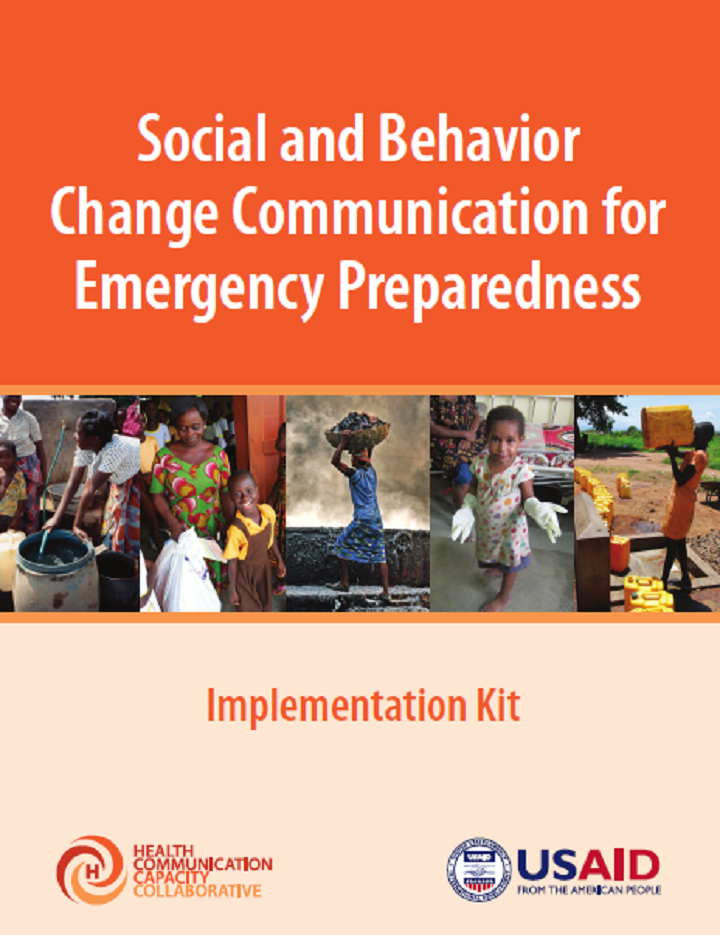
Health Communication Capacity Collaborative (2016) SBCC for Emergency Preparedness. Implementation Kit
In the wake of Ebola and in the throes of the Zika outbreak, more focus than ever is on the importance of strong and resilient1 health systems that serve and promote the well-being of individuals, households and communities. Engaging in social and behavior change communication (SBCC) preparedness efforts as part of strengthening a health system, and certainly prior to a critical incident, can bolster a […]
Online since: 05.01.2022
Views: 1296
Downloads: 250
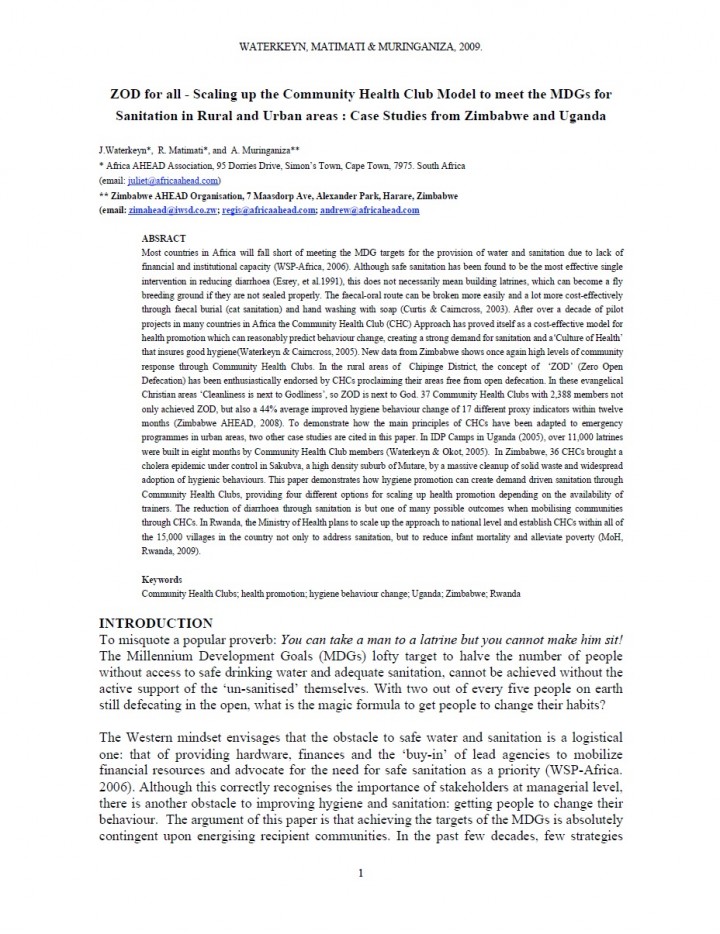
Waterkeyn, J., Matimati, R., Muringaniza, A. (2009) ZOD for all - Scaling up the Community Health Club Model to Meet the MDGs for Sanitation in Rural and Urban Areas Case Studies from Zimbabwe and Uganda
Most countries in Africa will fall short of meeting the MDG targets for the provision of water and sanitation due to lack of financial and institutional capacity (WSP-Africa, 2006). Although safe sanitation has been found to be the most effective single intervention in reducing diarrhoea (Esrey, et al.1991), this does not necessarily mean building latrines, which can become a fly breeding ground if they are […]
Online since: 04.01.2022
Views: 1323
Downloads: 302
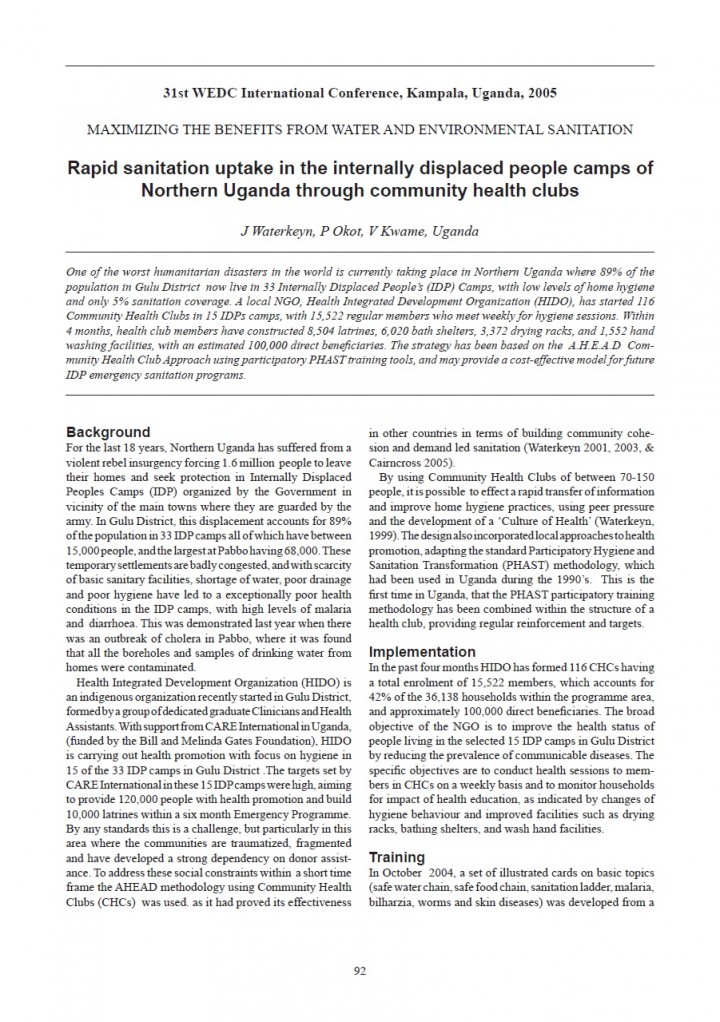
Waterkeyn, J., Okot, P., Kwame, V. (2005) Rapid Sanitation Uptake in the Internally Displaced People Camps of Northern Uganda Through Community Health Clubs
One of the worst humanitarian disasters in the world is currently taking place in Northern Uganda where 89% of the population in Gulu District now live in 33 Internally Displaced People’s (IDP) Camps, with low levels of home hygiene and only 5% sanitation coverage. A local NGO, Health Integrated Development Organization (HIDO), has started 116 Community Health Clubs in 15 IDPs camps, with 15,522 regular […]
Online since: 04.01.2022
Views: 1002
Downloads: 280
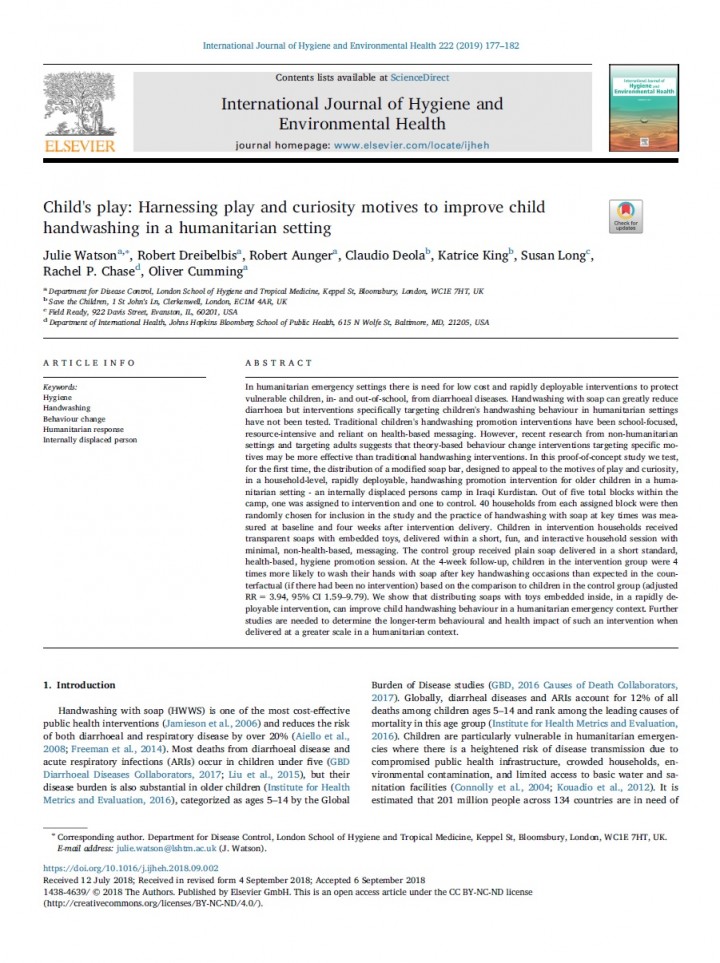
Watson, J., Dreibelbis, R., Aunger, R., Deola, C., King, K., Long, S., Chase, R. P., Cumming, O. (2018) Child's Play: Harnessing Play and Curiosity Motives to Improve Child Handwashing in a Humanitarian Setting
Abstract In humanitarian emergency settings there is need for low cost and rapidly deployable interventions to protect vulnerable children, in- and out-of-school, from diarrhoeal diseases. Handwashing with soap can greatly reduce diarrhoea but interventions specifically targeting children's handwashing behaviour in humanitarian settings have not been tested. Traditional children's handwashing promotion interventions have been school-focused, resource-intensive and reliant on health-based messaging. However, recent research from non-humanitarian settings […]
Online since: 04.01.2022
Views: 986
Downloads: 329
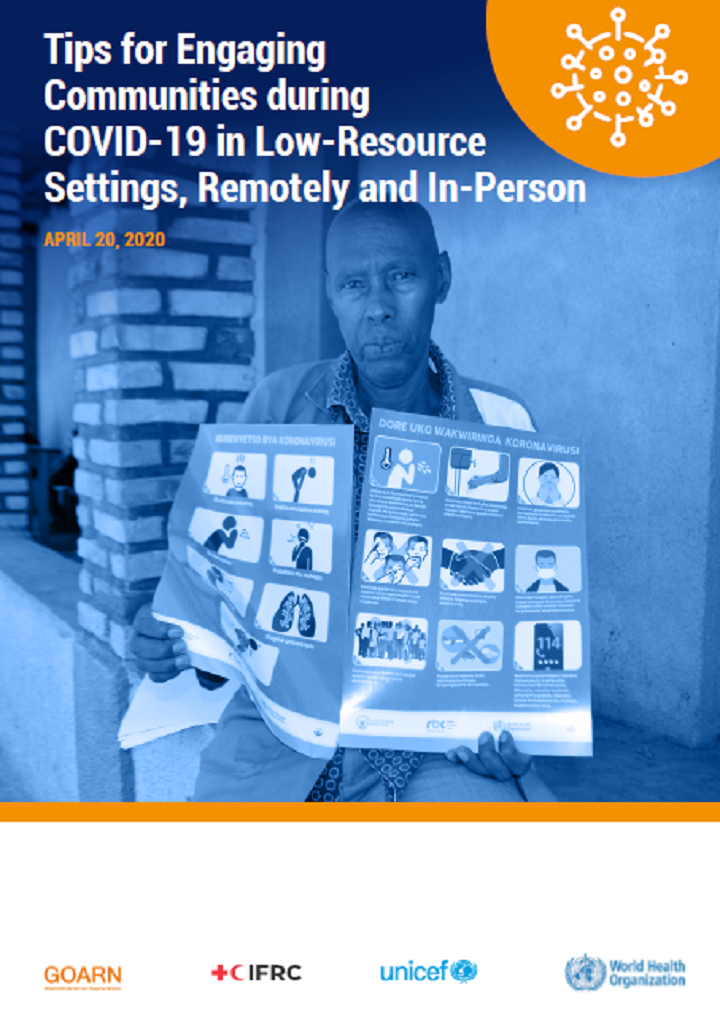
GOARN, IFRC, UNICEF, WHO (2020) Tips for Engaging Communities during COVID-19 in Low-Resource Settings, Remotely and In-Person
This brief provides key considerations for engaging communities on COVID-19 and tips for how to engage where there are movement restrictions and physical distancing measures in place, particularly in low-resource settings. It is designed for non-governmental organizations (NGOs), UN agencies, government agencies, and other humanitarian and implementing actors working on health promotion, risk communication, and community engagement for COVID-19. This document is an initiative of […]
Online since: 04.01.2022
Views: 860
Downloads: 288
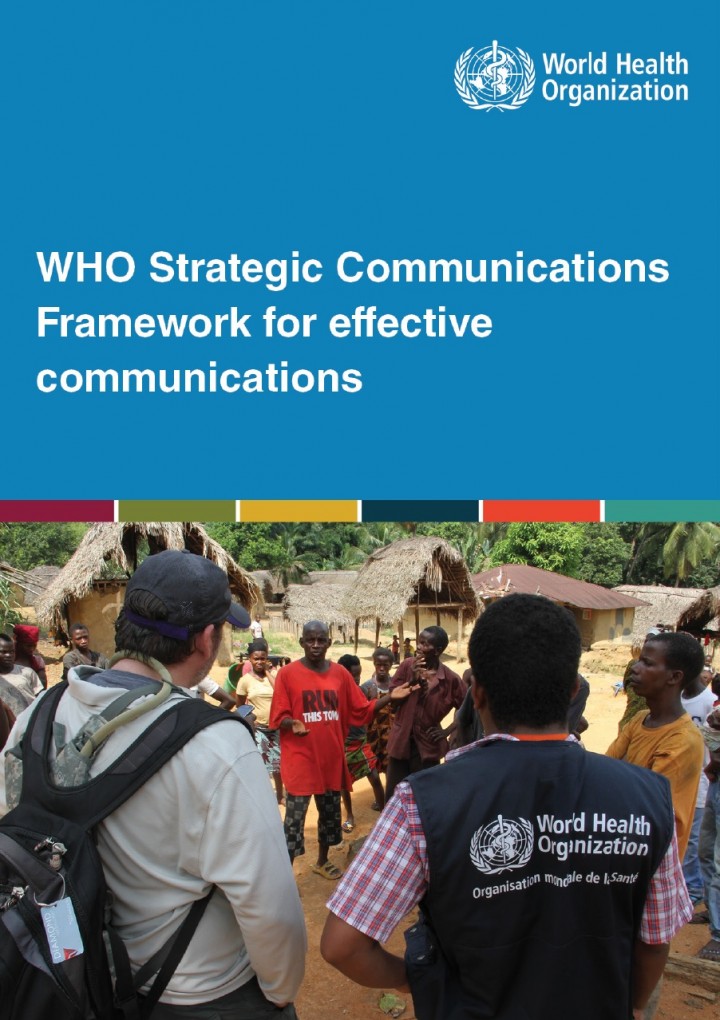
WHO (2017) WHO Strategic Communications Framework for Effective Communications
PURPOSE AND BACKGROUND WHO recognizes that effective, integrated and coordinated communication is integral to carrying out WHO’s goal to build a better, healthier future for people all over the world. The purpose of this Framework is to describe a strategic approach for effectively communicating WHO information, advice and guidance across a broad range of health issues: from chronic health issues to emerging and novel risks. WHO […]
Online since: 30.12.2021
Views: 1445
Downloads: 2372
Online since: 30.12.2021
Views: 1119
Downloads: 258
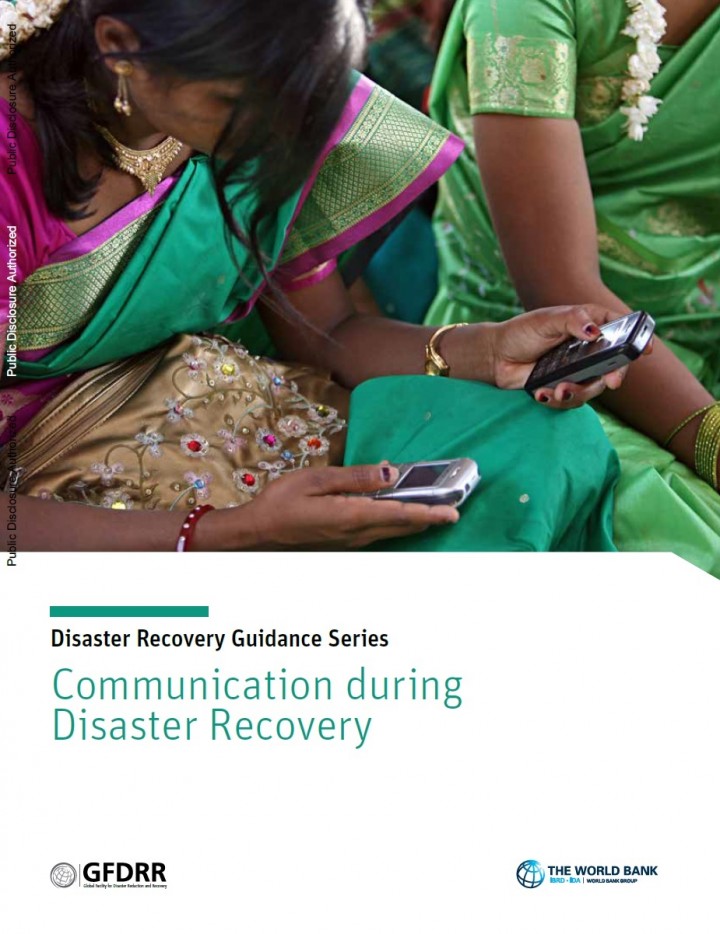
World Bank (2020) Communication during Disaster Recovery Disaster Recovery Guidance Series
This guide provides practical guidance for governments regarding how to effectively communicate with communities during the recovery phase following an emergency. It explains how to identify communication needs and presents best fit communication methods and strategies to deploy to support disaster recovery frameworks (DRF) and recovery strategies. For the purposes of this guide, recovery communication includes sending, gathering, managing, and evaluating information. Communication flows between […]
Online since: 30.12.2021
Views: 895
Downloads: 1487
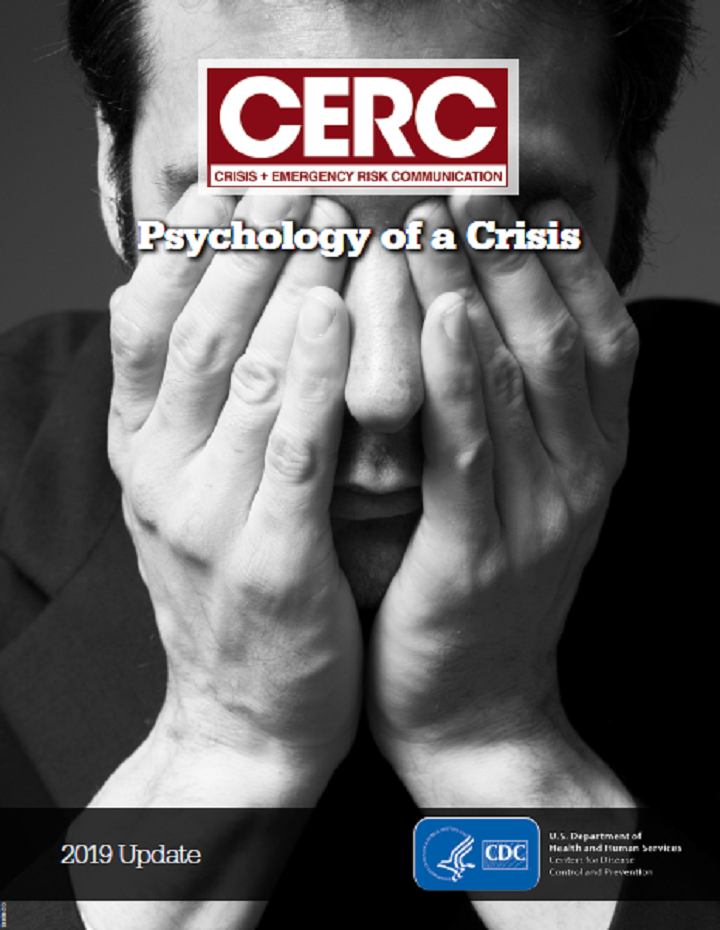
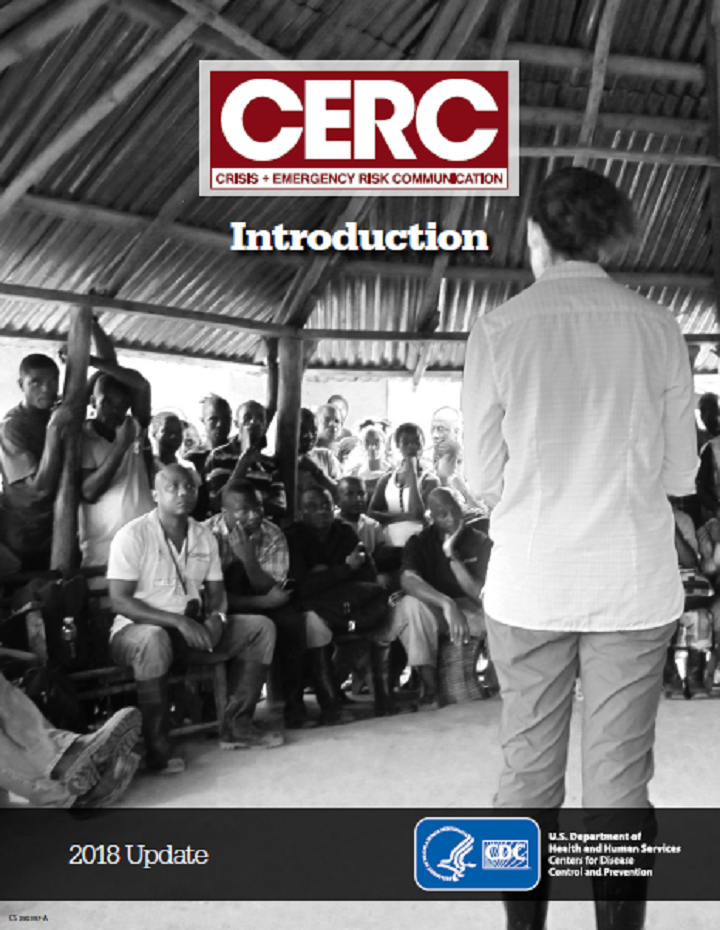
CDC (2018) CERC Crisis and Emergency Risk Communication. Introduction.
What is Crisis and Emergency Risk Communications (CERC)? The Centers for Disease Control’s (CDC) Crisis and Emergency Risk Communication (CERC) manual provides an evidence-based framework and best practices for anyone who communicates on behalfof an organization responding to a public health emergency.1 CERC is built around psychological and communication sciences, studies in the field of issues management, and lessons learned from emergency responses. Emergencies can […]
Online since: 30.12.2021
Views: 1411
Downloads: 2541