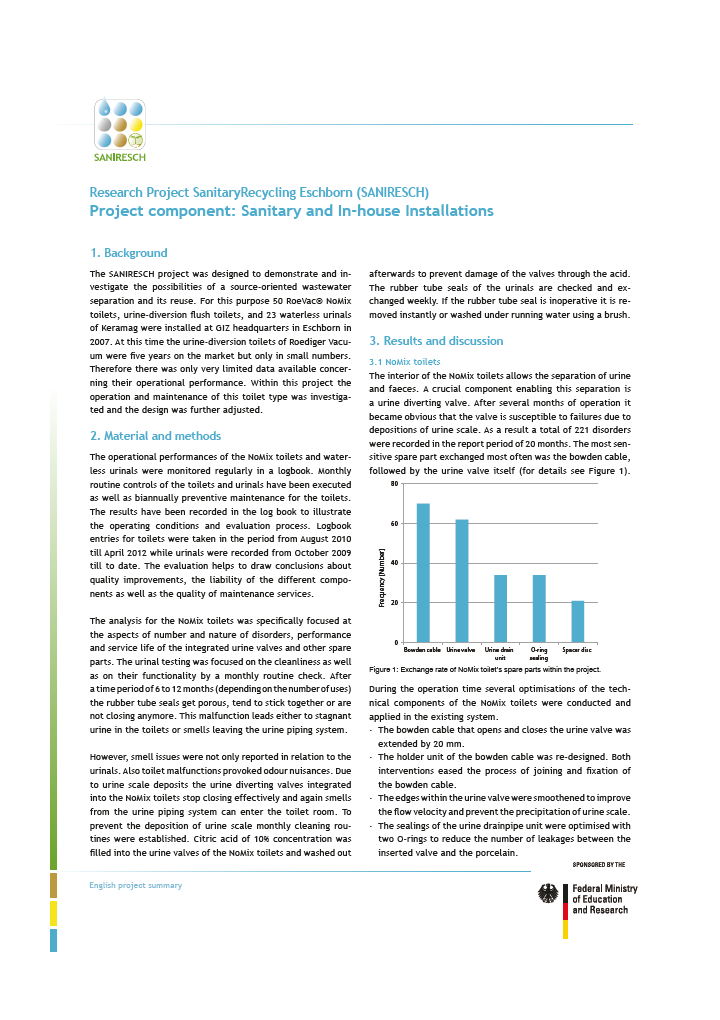
Various Authors (2010) Sanitary and in-house installations within SANIRESCH Project
In the main building of the GIZ headquaters located in Eschborn, 23 waterless urinals of Keramag and 38 RoeVac© NoMix toilets have been installed for the source separation of the wastewater streams. Within this project component, the RoeVac© NoMix toilets are tested in a continuous-operation mode and necessary modifications are made. In the course of the project several modifications of the technical components of the RoeVac© NoMix […]
Online since: 03.04.2018
Views: 1668
Downloads: 1191
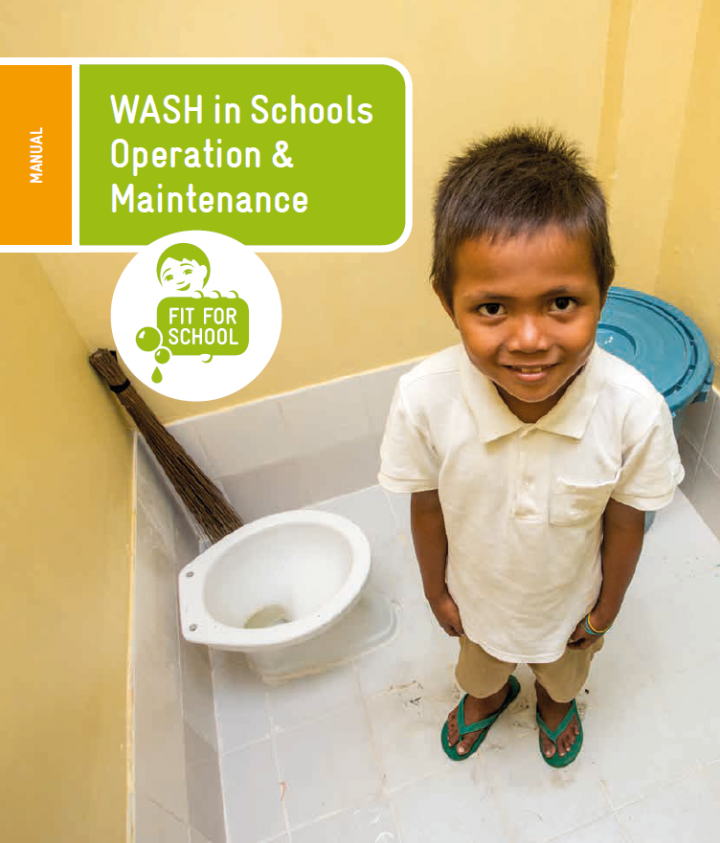
Fit For School (2017) WASH in Schools Operation & Maintenance Manual FIT for School
This manual is used in selected schools in the Division of Batangas in the context of researching the conditions to improve O&M of sanitation facilities in public elementary schools in the Philippines. Users of this manual are highly encouraged to provide feedback on their experience using this tool to improve the next edition. The learnings of this research project are supporting the further roll out […]
Online since: 21.03.2018
Views: 5578
Downloads: 594
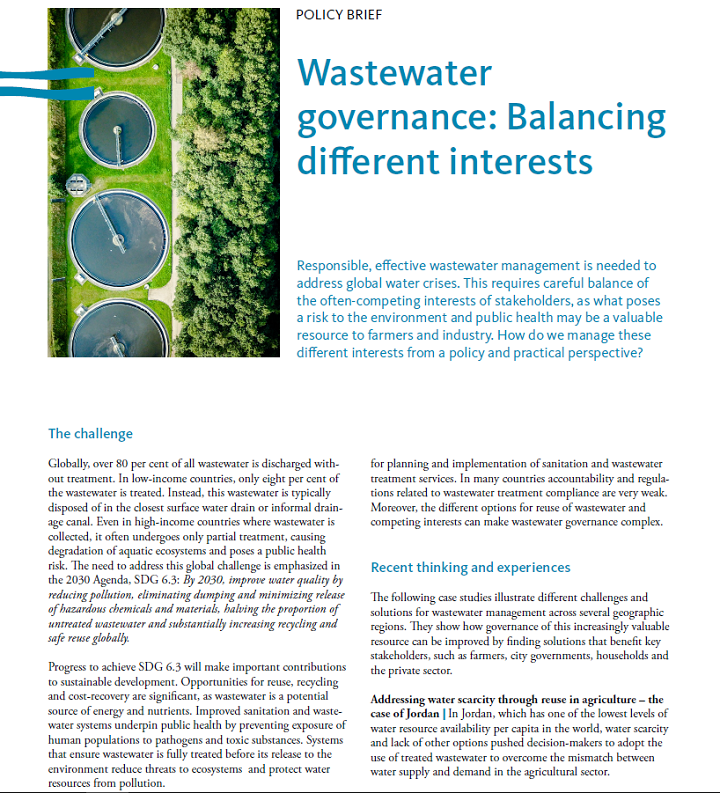
SEI, GIZ, UNDP-SIWI Water Governance Facility, CEPT University, Water Research Commission of South Africa, SuSanA (2018) Wastewater governance: Balancing different interests Policy Brief
Responsible, effective wastewater management is needed to address global water crises. This requires careful balance of the often-competing interests of stakeholders, as what poses a risk to the environment and public health may be a valuable resource to farmers and industry. How do we manage these different interests from a policy and practical perspective? At World Water Week 2017, Stockholm Environment Institute, GIZ, the UNDP-SIWI Water […]
Online since: 23.02.2018
Views: 2888
Downloads: 267
Veses, O., Evans, B., Bieker, S. (2018) Promotion of SFDs: Review of Phase 1 Report
This document represents a review report of the experience gained from producing SFDs from GIZ, WEDC, UoL, CSE and Eawag under the of the Phase I of the “Promotion of Shit Flow Diagrams” project funded by the Bill & Melinda Gates Foundation. This report results from collating inputs from all partners on the use of the manual for SFD production, the SFD calculation tool, key learning […]
Online since: 12.02.2018
Views: 2684
Downloads: 358
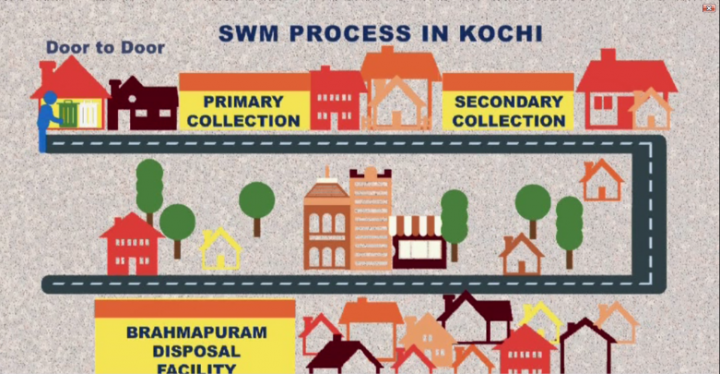
GIZ (2018) Best Practices on Solid Waste Management in India English and Hindi Versions - SNUSP II
Case study tutorials under the Swachh Bharat Mission of the Government of India. The Kochi module reflects the best practices on source segregation of waste as exemplified by the Kochi Municipal Corporation. The case study shows how source segregation, composting, stringent legal system coupled with multi-stakeholder participation leads to effective waste managemnet in urban places which are devoid of adequate landfill spaces. The Panaji module […]
Online since: 01.02.2018
Views: 23686
Downloads: 39161
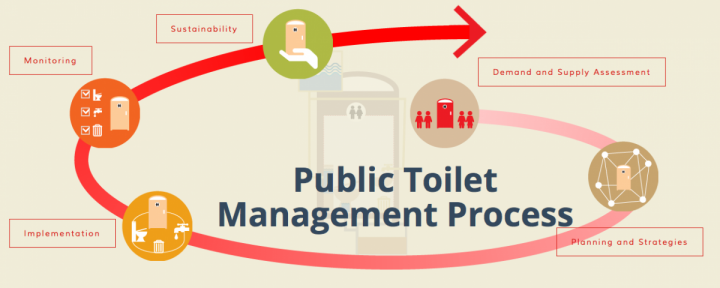
GIZ (2017) PTM Process Overview
The “Support to the National Urban Sanitation Policy II (SNUSP II)” Programme implemented by GIZ supported the Indian Ministry in achieving the targets of the National Urban Sanitation Policy during 2014-2017. We have integrated the Public Toilet Management (PTM) Process including the most important focal areas for each process step and tools in the SuSanA website for our Community of Practise to utilise. You can […]
Online since: 31.01.2018
Views: 4102
Downloads: 6787
GIZ (2018) Upscaling Sanitation - Instruments and Initiatives Across India The Road to 100% City Sanitation - SNUSP II
This impact brochure introduces the reader to the main objectives and interventions of the GIZ project "Support to the National Urban Sanitation Policy (SNUSP) II " and highlights hands-on experiences from the ground. SNUSP II supported the states in preparing strategies, roadmap and framework for quality implementation. The project also supported cities to strengthen its capacities in planning and implementation of projects. The focus […]
Online since: 31.01.2018
Views: 2549
Downloads: 284
Salian, P., Kibuuka A., Niwagaba, C. (2017) Town Sanitation Planning and District Investment Planning approaches in 6 towns and 4 districts in northern Uganda, and developing a Town Sanitation Plan strategy Lessons Learnt Report
GIZ-RUWASS program is supporting the improvement of the Ugandan water and sanitation sector through various projects. Amongst these projects is the USAID and GIZ co-funded project 'Capacity development of Town Councils to design and implement integrated and sustainable town sanitation plans'. The objective of the project is to make use of Town Sanitation Plans as a basis for planning and prioritizing investments resulting in tangible […]
Online since: 15.01.2018
Views: 2888
Downloads: 315
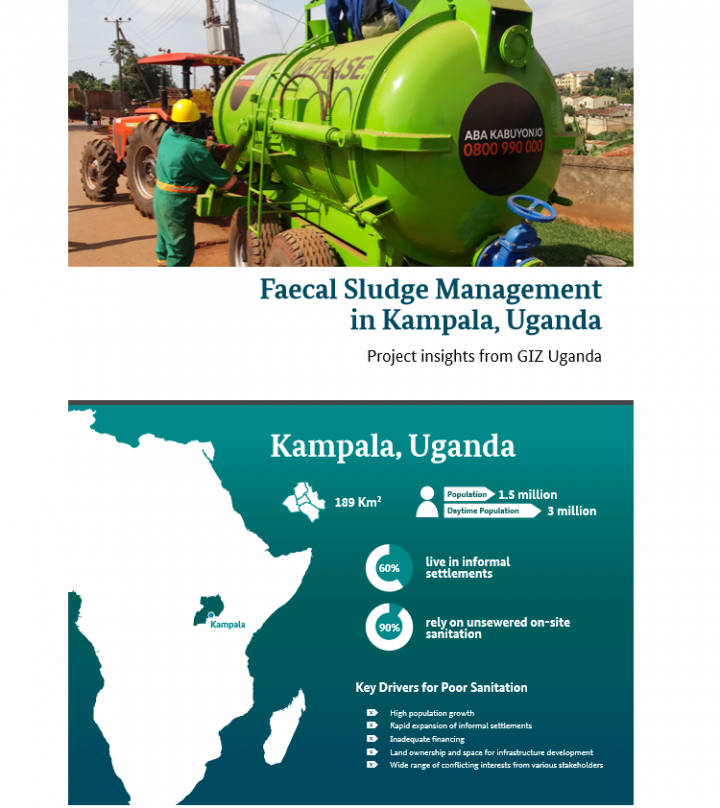
GIZ (2017) Faecal Sludge Management in Kampala, Uganda Project insights from GIZ Uganda
The sanitation situation in most of Kampala can be summarized as follows: About 90% of it’s population relies on on-site sanitation facilities (pit latrines and septic tanks) whereas 50% of households share one sanitation facility, leading to unhygienic conditions. More than 50% of pit-latrines are un-lined and filled with solid waste and only 20 – 25% of the toilets have ever been emptied by a service […]
Online since: 28.11.2017
Views: 6464
Downloads: 1243
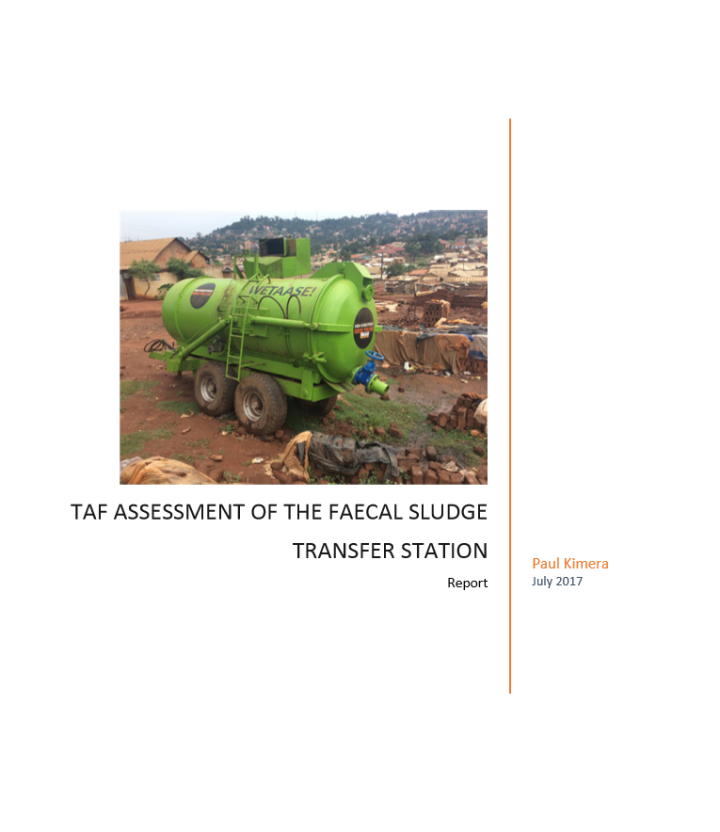
Kimera, P. (2017) Technology Applicability Framework - Assessment of the Faecal Sludge Transfer Station in Kampala, Uganda
The Faecal Sludge Transfer Station (FSTS) design is an innovation of Water for People (WfP) supported by GIZ RUWASS under a cofunding arrangement with the Swiss Development Cooperation (SDC). Under the Resource Recovery and Safe Reuse (RRR) Project Phase II, two mobile Faecal Sludge Transfer Stations have been piloted from April to June 2017 within informal urban settlements in Kampala. The Technology Applicability […]
Online since: 28.11.2017
Views: 2803
Downloads: 355
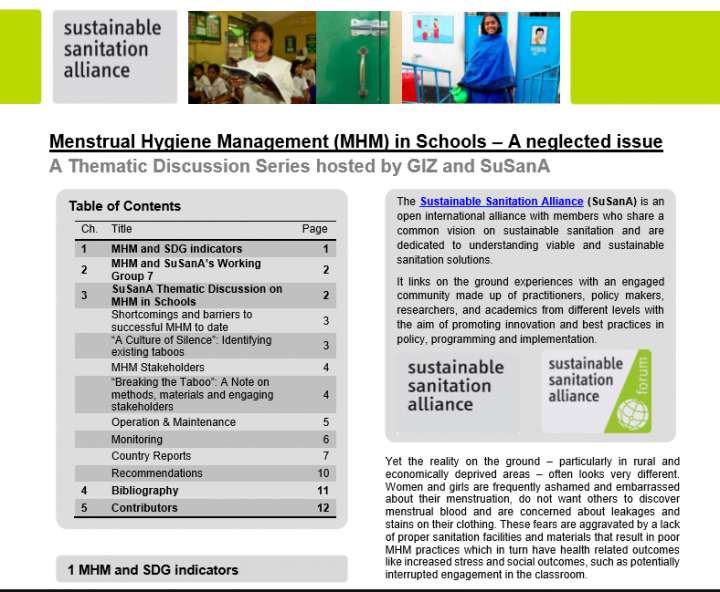
Dauenhauer, K., Büürma, M., Schlenk, J., Sommer, M., Mahon, T. (2017) Menstrual Hygiene Management (MHM) in Schools: A neglected issue - A Thematic Discussion Series hosted by GIZ and SuSanA
Menstrual Hygiene Management (MHM) refers to the way in which women and girls deal with their menstruation. Girls usually menstruate for the first time between the age of 10 and 15. Learning about menstruation is thus vital for secondary school students, but it is not too early to raise awareness in elementary school. Given the number of people affected by MHM in some way or […]
Online since: 24.10.2017
Views: 13156
Downloads: 1704
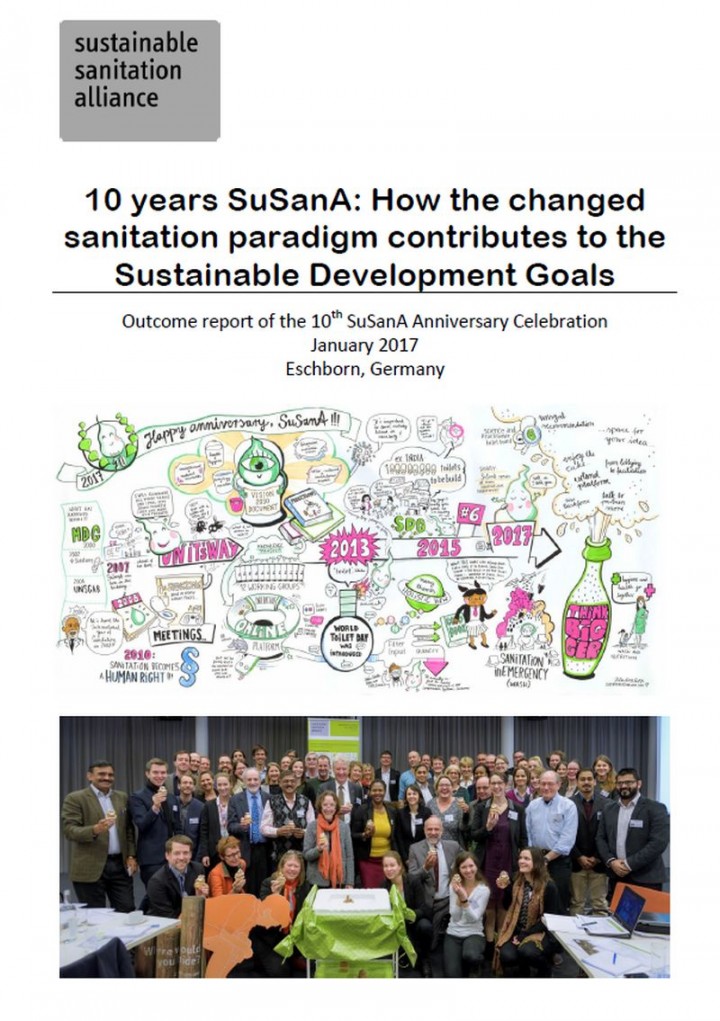
Ohler, S. (2017) SuSanA 10th Anniversary Report
On the 17th of January 2017, the Sustainable Sanitation Alliance (SuSanA) celebrated its 10th anniversary at the GIZ headquarters in Eschborn, Germany. The celebration took place under the theme "10 years SuSanA: How the changed sanitation paradigm contributes to the Sustainable Development Goals". During the event, SuSanA’s achievements, milestones, and impact in the sanitation sector were reflected upon. Moreover, SuSanA’s future was discussed as well as […]
Online since: 28.09.2017
Views: 5239
Downloads: 405
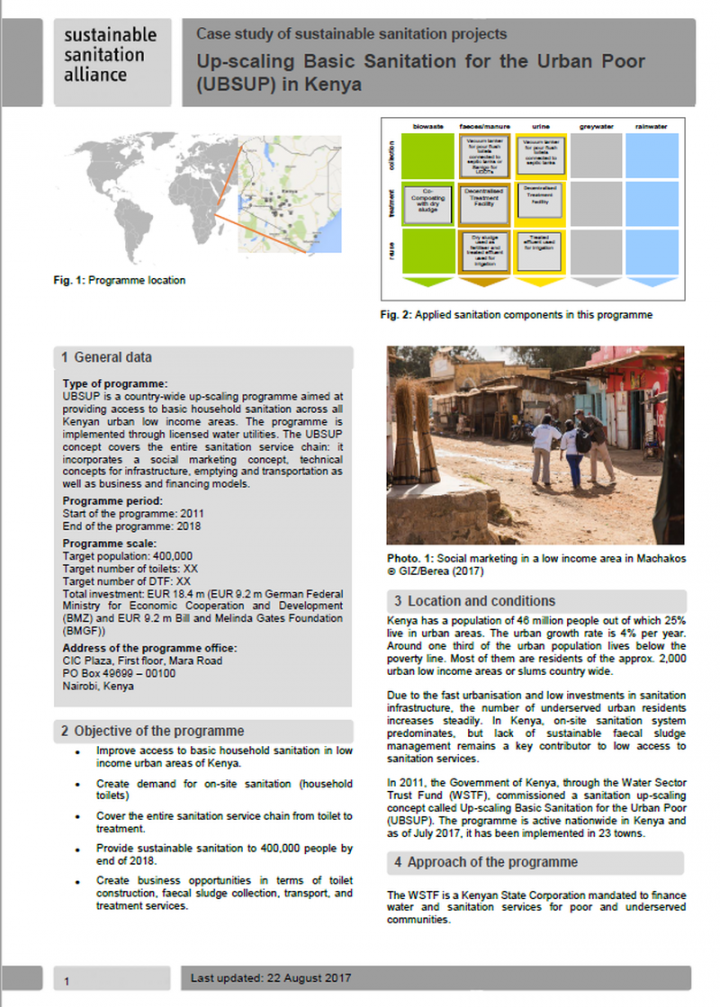
Dubois, A. (2017) Up-scaling Basic Sanitation for the Urban Poor (UBSUP) in Kenya
This case study describes the Upscaling Basic Sanitation for the Urban Poor (UBSUP) programme, which is a country-wide up-scaling intervention aimed at providing access to basic household sanitation in urban low income areas of Kenya. UBSUP is anchored at the Water Sector Trust Fund with technical support from GIZ and funding from the Bill and Melinda Gates Foundation and the German Government through the German […]
Online since: 13.09.2017
Views: 10507
Downloads: 1055
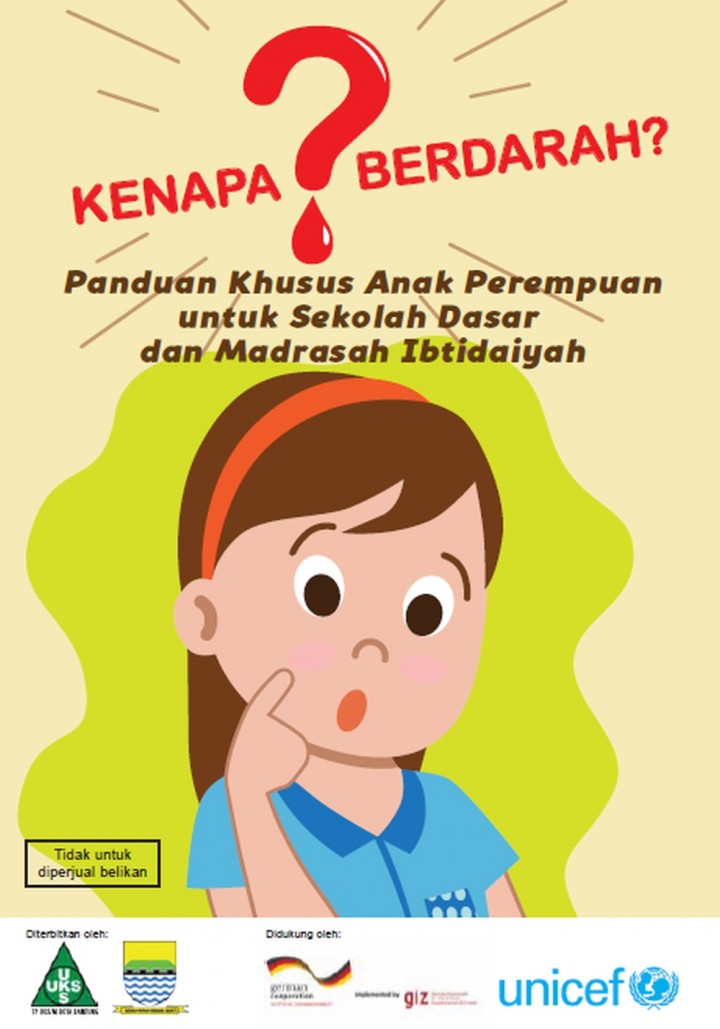
UKS, GIZ and UNICEF (2016) Kenapa Berdarah? “Why bleeding?”
A MHM comic in Bahasa Indonesia developed by UKS team and UNICEF, in collaboration with GIZ. This book aims to provide proper guidance for young women when they face periods, while at the same time providing education for young men to appreciate their female peers who are menstruating. This book was developed based on the results of a study on MHM in Indonesia conducted by […]
Online since: 24.03.2017
Views: 4308
Downloads: 354
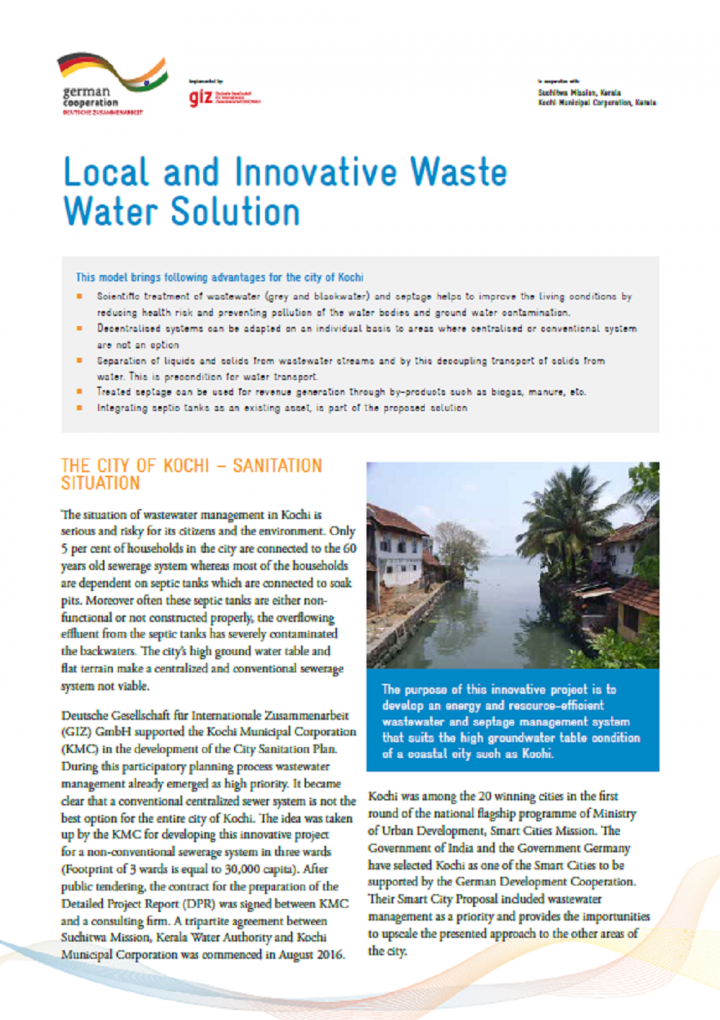
Walther, D., et al. (2016) Local and innovative waste water solution The case of Kochi - SNUSP II
This project description summarises the steps towards an energy and resource-efficient wastewater and septage management system in Kochi. It is a project coordinated by the Support to National Urban Sanitation Policy project of GIZ India.
Online since: 20.01.2017
Views: 4313
Downloads: 332
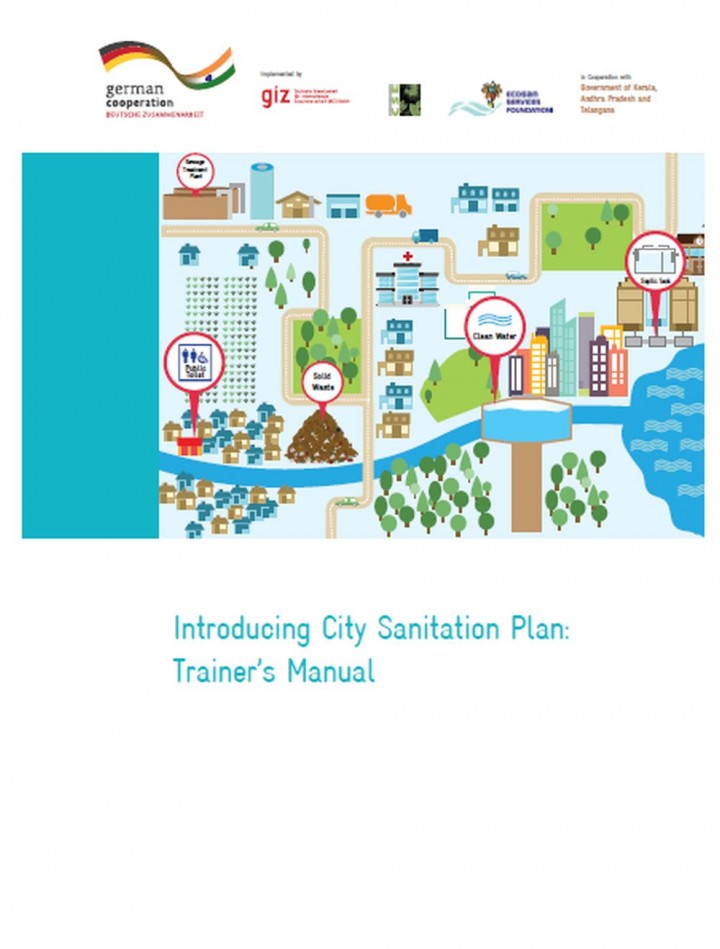
Walther, D. et al. (2015) Introducing City Sanitation Plan - SNUSP II Trainer's Manual
Ensuring citywide sanitation is challenging and needs strategic planning as well as involvement of various actors /agencies, such as decision makers at state and city level, city engineers and technical experts in areas of urban planning, sanitation, technical infrastructure and financing. One of the main requirements in establishing a citywide sanitation system on the ground is strong institutions and technical as well as managerial capacities […]
Online since: 10.01.2017
Views: 3853
Downloads: 338
Nandan, V., Dua, S. (2014) Enabling Systems for Improved Municipal Solid Waste Management in Cities Making way for a clean and healthy India
This factsheet was published by the Support to National Urban Sanitation Policy-Project by GIZ India to give an overview of ways that this project apporaches to manage Municipal Solid Waste (MSW) in urban areas.
Online since: 10.01.2017
Views: 3451
Downloads: 296
Stockholm International Water Institute (2016) City-wide sanitation: The role of planning Policy brief
In 2016 the World Water Week (WWW) brought together leading experts from around the world to discuss and share the latest experiences on planning urban sanitation in two sessions convened by WaterAid, UNDP-SIWI Water Governance Facility, GIZ, SuSanA, and the World Bank. This policy brief synthesises the key lessons and recommendations that grew out of that encounter, calling for more flexible and context-sensitive planning and […]
Online since: 19.12.2016
Views: 5314
Downloads: 9043
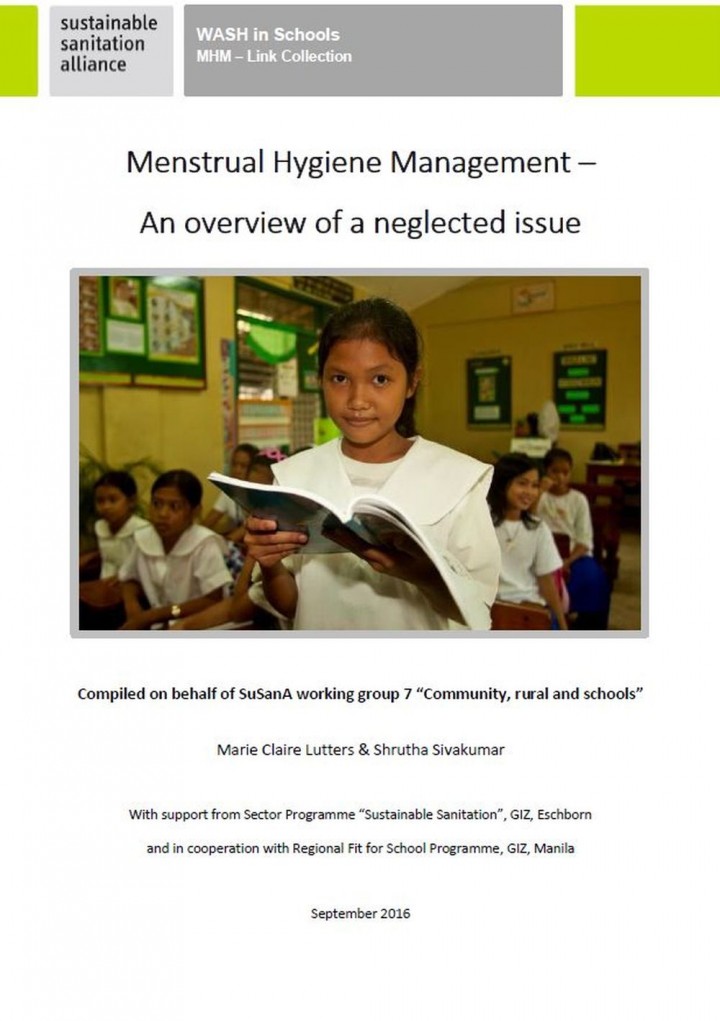
Lutters, M.C., Sivakumar, S., Bäurle, S. (2016) Menstrual Hygiene Management – An overview of a neglected issue Link collection for MHM - updated version 2018
Globally 52% of the female population is of reproductive age, meaning approximately 1.9 billion women and adolescent girls menstruate each month for between two and seven days. A first examination of the MHM global landscape: literature, academic studies, main actors, and debates, by the Sector Programme Sustainable Sanitation of the Gesellschaft für Internationale Zusammenarbeit (GIZ) was discussed and made more comprehensive through discussions with members […]
Online since: 20.10.2016
Views: 7129
Downloads: 529
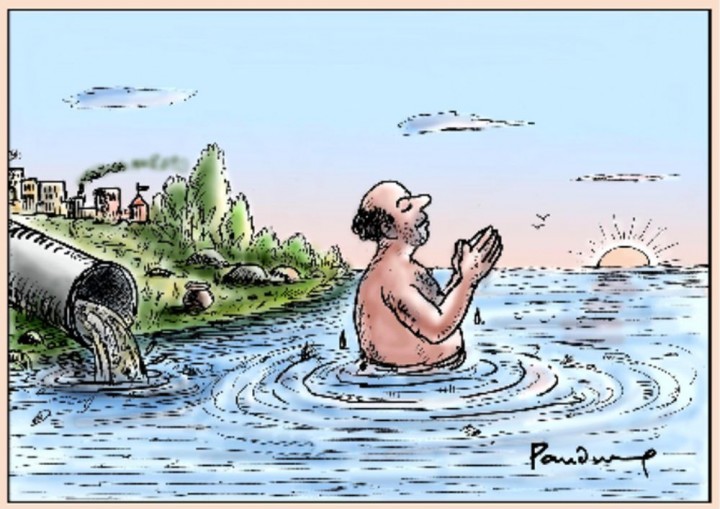
Various authors (2014) SuSanA cartoon competition
SuSanA and the Deutsche Gesellschaft für Internationale Zusammenarbeit (GIZ) held a sanitation-themed cartoon competition. The spirit of the competition was to create cartoons which would get people to laugh and talk about sanitation - towards breaking the taboo around sanitation! We received creative, funny, and profound cartoons from around the world, which highlighted humour around the subject, while also vividly displaying the seriousness of the issues. […]
Online since: 13.10.2016
Views: 3638
Downloads: 0