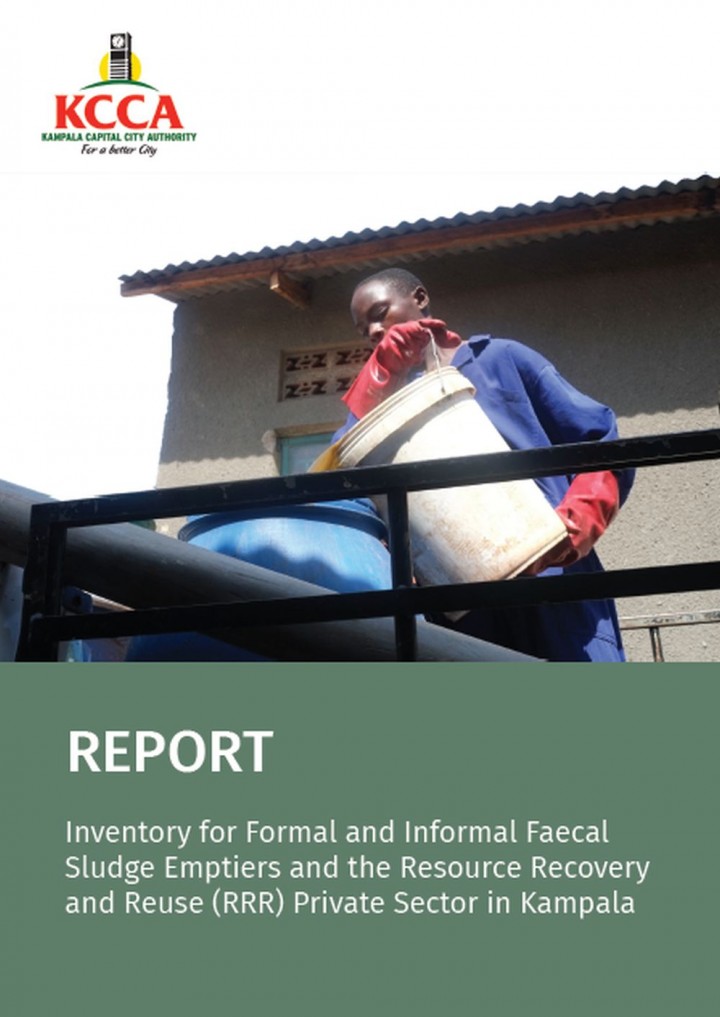
Musabe, K. (2015) Inventory for Formal and Informal Faecal Sludge Emptiers and the Resource Recovery and Reuse (RRR) Private Sector in Kampala
In Kampala, about 90% of the people rely on on-site sanitation solutions, which cannot be considered “improved” or “acceptable” in most cases: too many households share one toilet; pit-latrines are unlined, filled with solid wastes, and hard to access for emptying services, ultimately leading to filled-up facilities that are either abandoned or directly emptied into the environment, posing health and environmental risks for the city […]
Online since: 02.06.2016
Views: 6064
Downloads: 406
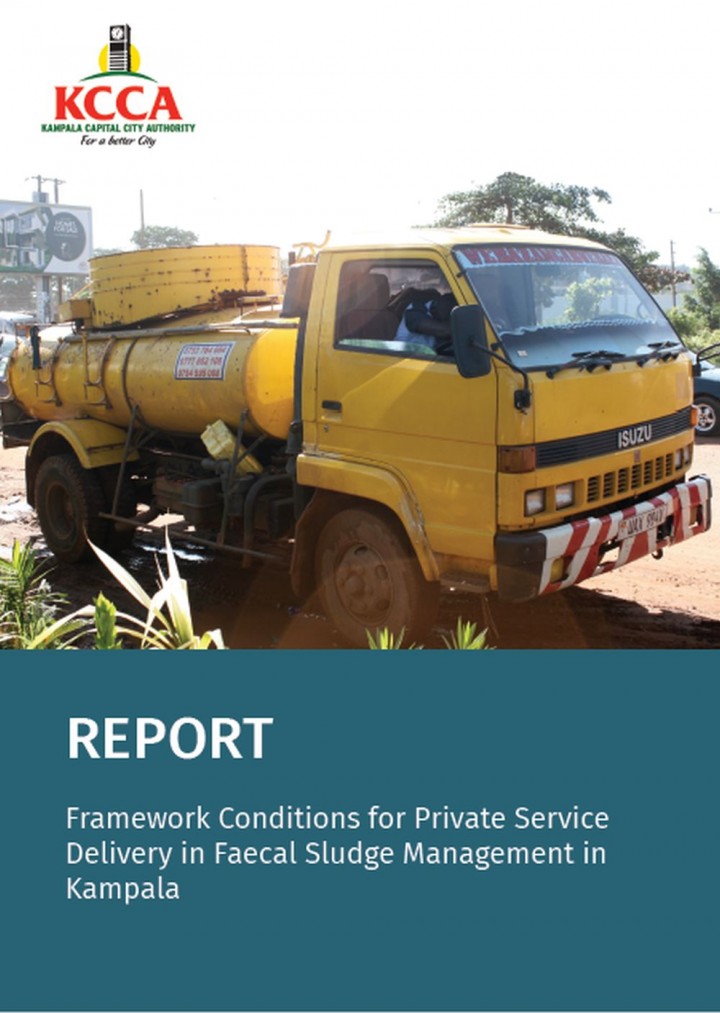
Schuen, R., Musabe, K. (2015) Framework Conditions for Private Service Delivery in Faecal Sludge Management in Kampala
Sanitation issues are some of the most significant development challenges for Kampala City, Uganda. Like many other capital cities in developing countries, Kampala is experiencing rapid population and economic growth. However, provision of key services including adequate sanitation for the city population has not been in tandem with these developments. In Uganda, piped sanitation systems are available only to a very limited extent of the urban […]
Online since: 02.06.2016
Views: 3728
Downloads: 298
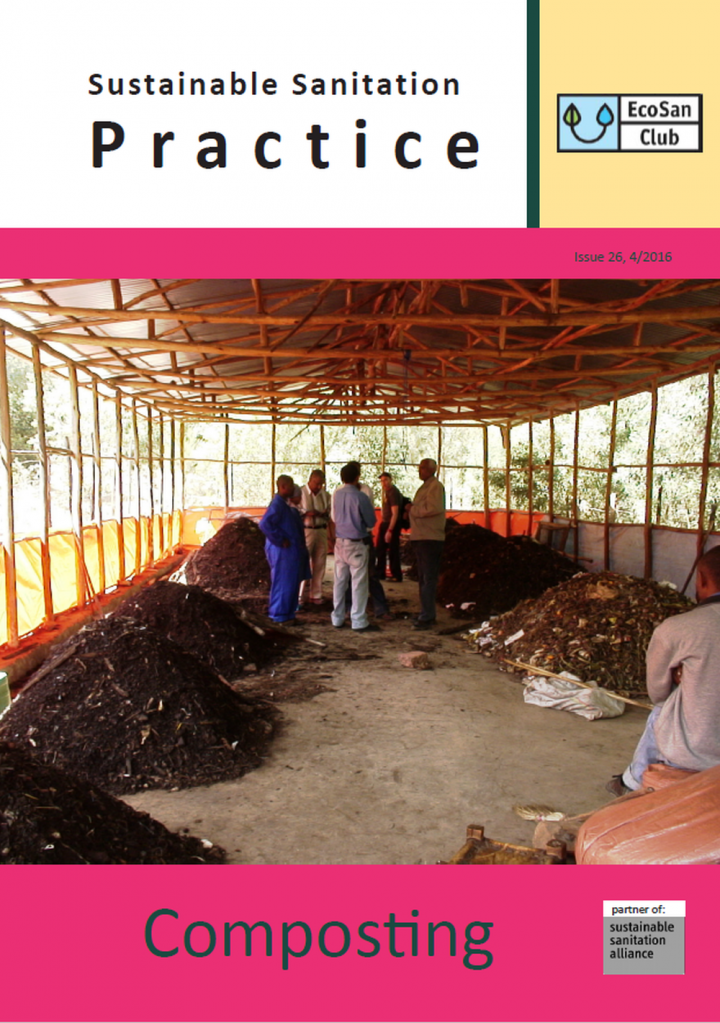
Langergraber, G., Lechner, M., Müllegger, E. (Eds.) (2016) Composting Sustainable Sanitation Practice 26
Besides sanitation, solid waste management plays an important role in improving the hygienic conditions in cities. There are several strong links between sanitation and solid waste management. In sanitation systems without sewers, urine, faecal matter and faecal sludge have to be collected from the single households such as solid waste. Faecal matter as well as sludge from wastewater treatment plants can be treated by composting […]
Online since: 03.05.2016
Views: 4079
Downloads: 335
Various authors (2016) Equipment and health and safety modifications required for developing the capacity to support grantees field-testing in Durban, SA Various documents on results from research grant
This library entry contains background documents for a grant that Chris Buckley is leading and which is funded by the Bill and Melinda Gates Foundation. Further information is also available on the SuSanA discussion forum, see link below. Short description of the project: The grant was awarded to the Pollution Research Group (PRG) at the University of KwaZulu-Natal in order to increase the capacity of the PRG to […]
Online since: 03.03.2016
Views: 5883
Downloads: 872
Grange, C. (2016) Faecal Sludge Management - WASH in Emergencies, Problem Exploration Report
During the immediate phase of an emergency in an urban context, the implementation of sanitation programmes takes a long time to provide suitable and sufficient facilities for the affected population. While the emergency response for drinking water programmes has been improved with the design of standardised, rapid deployment kits, sanitation programmes in urban areas are limited to very few technologies. The construction of pit latrines […]
Online since: 18.02.2016
Views: 11467
Downloads: 832
Lukooya, N. B. et al. (2015) Improving faecal sludge (FS) management for on-site sanitation in Kampala City, Uganda Various documents on results from research grant
This library entry contains background documents for a grant that Daniel Okello (Phase 1) and Najib B. Lukooya (Phase 2) are leading and which is funded by the Bill and Melinda Gates Foundation. Further information is also available on the SuSanA discussion forum, see link below.
Online since: 10.02.2016
Views: 5243
Downloads: 8679
Harada, H., Schoebitz, L., Strande, L. (2015) SFD Report - Danang, Vietnam SFD Promotion Initiative
Danang is located at the South Central Coast of Vietnam. It is the fourth most populated city in the country with approximately 1,007,400 inhabitants in 2014 (GSO 2015). The total land area of the city is 1,285 km2, including 65 km2 of residential area (GSO 2015). Sixty-two percent (62%) of the excreta flow was classified as unsafe management along the sanitation service chain (containment, emptying, […]
Online since: 29.12.2015
Views: 6333
Downloads: 683
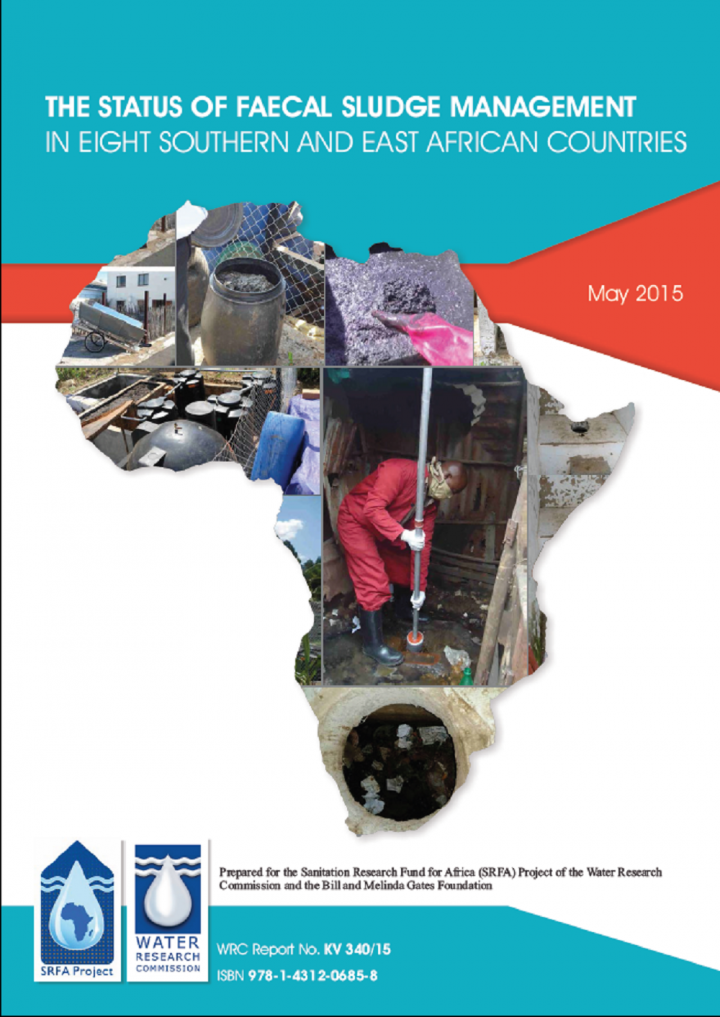
WRC (2015) The Status of Faecal Sudge Management in Eight Southern and East African Countries
In 2012, the Water Research Commission, together with the Bill and Melinda Gates foundation, took a strategic decision to develop capacity in Africa to deal with faecal sludge management. This initiative, known as the Sanitation Research Fund for Africa (SRFA) Project, provides an exclusive research and development grant of up to US$200 000 to African institutions and organisations. 12 African institutions and organisations from […]
Online since: 19.11.2015
Views: 10346
Downloads: 457
Furlong, C., Mensah, A. (2015) SFD Report - Kumasi, Ghana SFD Promotion Initiative
Kumasi is the second largest city in Ghana and lies in the Ashanti Region in the south of the country (Adarkwa, 2011). The city covers approximately 254 sq. km. It has an approximately population of 2.7 million with an annual growth rate of 5.5% (City Population, 2015, World Bank, 2008). A high percentage of the population of Kumasi is reliant on public toilets that are […]
Online since: 17.11.2015
Views: 7783
Downloads: 1137
SFD PI (2017) SFD Manual (in Arabic, English and French) SFD Promotion Initiative
An excreta flow diagram (also often described as shit flow diagram, SFD) presents a clear picture of the outcome arising from wastewater and faecal sludge management practices and services in a city or town. This is expressed in terms of the percentage of the population. An accompanying report describes the service delivery context of the city or town.
Online since: 05.11.2015
Views: 15383
Downloads: 26613
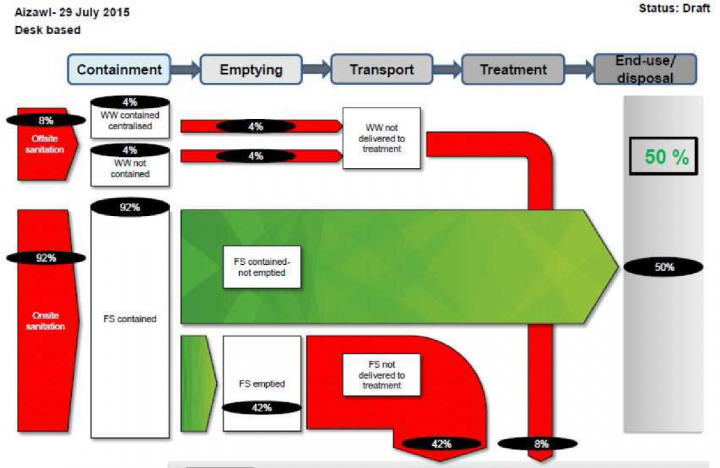
CSE (2015) SFD Executive Summary Aizawl India Draft
Aizawl is the capital of Mizoram State located in the east of the Himalayan region of India. The density of the city, 2,823 persons per sq. km, is higher compared to state average, 52 persons per sq. km. 92% of the city depend on onsite sanitation systems and 8% of the city on offsite systems. There is no wastewater treatment leading to unsafe management […]
Online since: 24.08.2015
Views: 5534
Downloads: 329
Various authors (2015) FSM 3 Conference - Workshop 4B FSM Systems Approach for Implementation and Operation: Learning Tools for Faecal Sludge Management: Engagement with New Text Book and Curriculum
The workshop participants were divided into two groups to discuss the existing material in the new book on Faecal Sludge Management. The first group was asked to focus on the chapters dealing with the FSM Technology issues while the second group focused on the Planning and Management chapters of the book. All workshop presentations are available on http://www.susana.org/en/resources/conference-materials-2/2015/265-fsm3-ws-4b

Online since: 30.03.2015
Views: 3845
Downloads: 715
Various authors (2015) FSM 3 Conference - Workshop 3 FSM – Maximizing Resources Recovery
Resource recovery is important to consider before choosing a method for faecal sludge treatment and management, to ensure technologies are adequately and appropriately designed to produce resource recovery products. The workshop covered a wide range of resource recovery opportunities from faecal sludge including composting, vermicomposting, protein, fodder and plants, building materials and biofuels. The speakers are acknowledged leaders in their fields, and have been chosen […]

Online since: 30.03.2015
Views: 4244
Downloads: 1829
Various authors (2015) FSM 3 Conference - Workshop 2 Scaling-up sanitation businesses in low- and middle-income countries
Resource recovery is important to consider before choosing a method for faecal sludge treatment and management, to ensure technologies are adequately and appropriately designed to produce resource recovery products. The workshop covered a wide range of resource recovery opportunities from faecal sludge including composting, vermicomposting, protein, fodder and plants, building materials and biofuels. The speakers are acknowledged leaders in their fields, and have been chosen […]

Online since: 30.03.2015
Views: 3802
Downloads: 1568
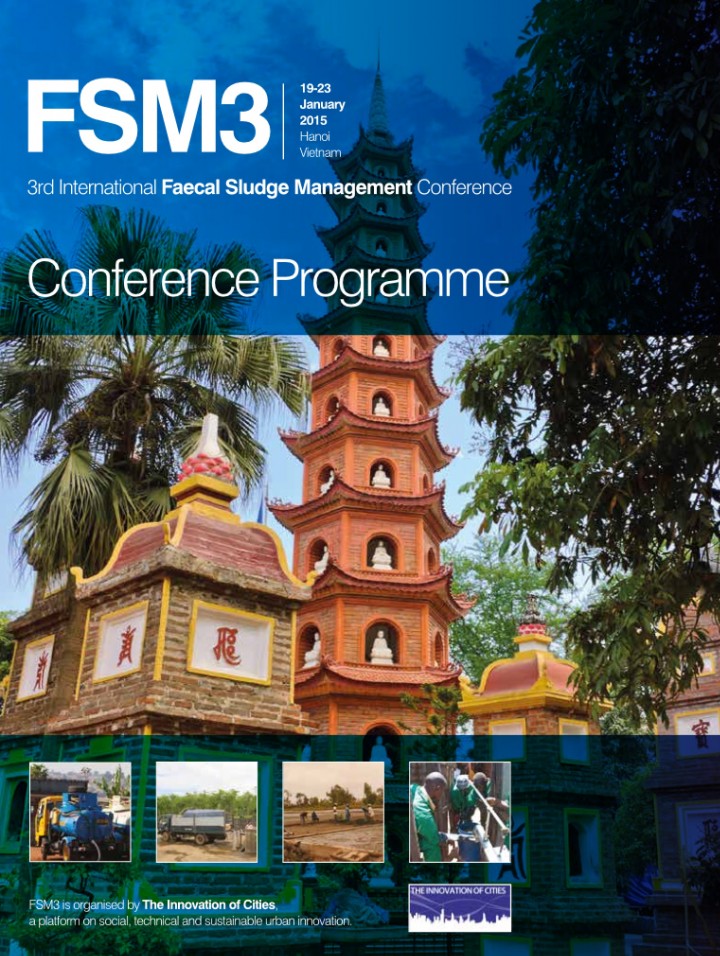
Various authors (2015) 3rd International Faecal Sludge Management Conference 2015 Hanoi, Vietnam
The Third International Faecal Sludge Management Conference was held in Hanoi from the 18th to the 21st of January 2015. More than 700 delegates from around the world shared ideas and discussed challenges and opportunities in on-site sanitation. Below you find the list of papers in chronological order by day (Day 1-3) and room (room 1-3 ). In order to search by author, simply press "Ctrl+F" […]
Online since: 30.03.2015
Views: 10338
Downloads: 16939
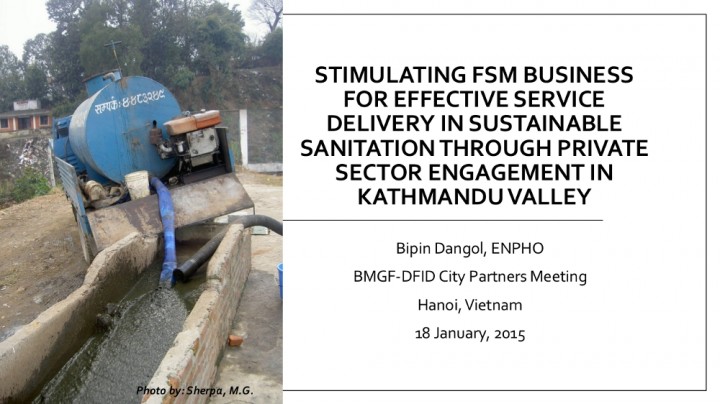
Dangol, B. et al. (2015) Stimulating Faecal Sludge Management (FSM) business for effective service delivery in sustainable sanitation through private sector engagement in Kathmandu Valley Various documents on results from research grant
Online since: 27.03.2015
Views: 5036
Downloads: 405
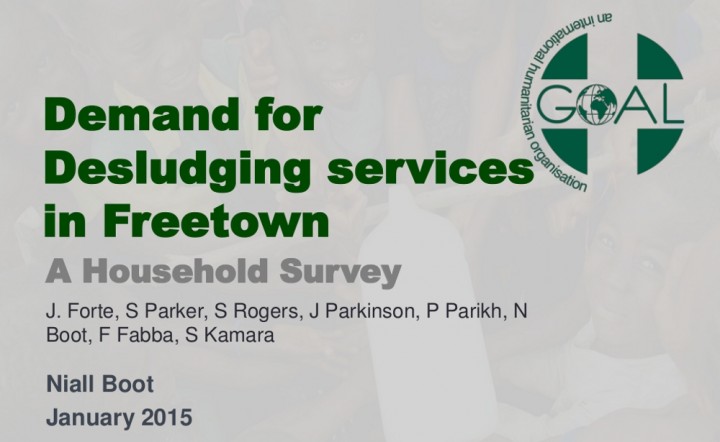
Boot, N. (2015) Achieving sustained environmental health improvements in Freetown through fecal sludge management enterprises Various documents on results from research grant
This library entry contains background documents for a grant that Mirco Keller is leading and which is funded by the Bill and Melinda Gates Foundation. Further information is also available on the SuSanA discussion forum, see link below. Goal(s): The overall goal of the Project is to decrease in the quantity of untreated faecal sludge being released into the environment of Freetown. Objectives: Three outcomes have been set to achieve […]
Online since: 20.02.2015
Views: 4563
Downloads: 309
Various (2015) Key documents on sanitation systems and technology options
In this library entry we have grouped together up to five documents that we think are important "first reading" materials for anyone wishing to obtain a quick overview of this topic. For more details, please see the external links to the discussion forum below. The documents listed in this library entry in reverse chronological order already exist as individual library entries but have been grouped together […]

Online since: 09.12.2014
Views: 6934
Downloads: 1654
Pillay, S., Bhagwan, J. (2014) Sanitation Research Fund of BMGF/WRC (SRFA): Knowledge-based Solutions for Onsite Dry Sanitation Challenges in Sub-Saharan Africa Various documents on results from research grant
This library entry contains background documents for a grant that Sudhir Pillay is leading and which is funded by the Bill and Melinda Gates Foundation (further information is also available on the SuSanA discussion forum, see link below). The SRFA Project was established through a USD 2.5 Million grant from The Bill & Melinda Gates Foundation (BMGF). The project was aims to stimulate local competency and […]

Online since: 10.11.2014
Views: 7203
Downloads: 14697
Opel, A., Bashar, M. K., Ahmed, M. F. (2012) Faecal sludge management in Bangladesh: an issue that needs urgent attention

Online since: 28.12.2012
Views: 9569
Downloads: 1232