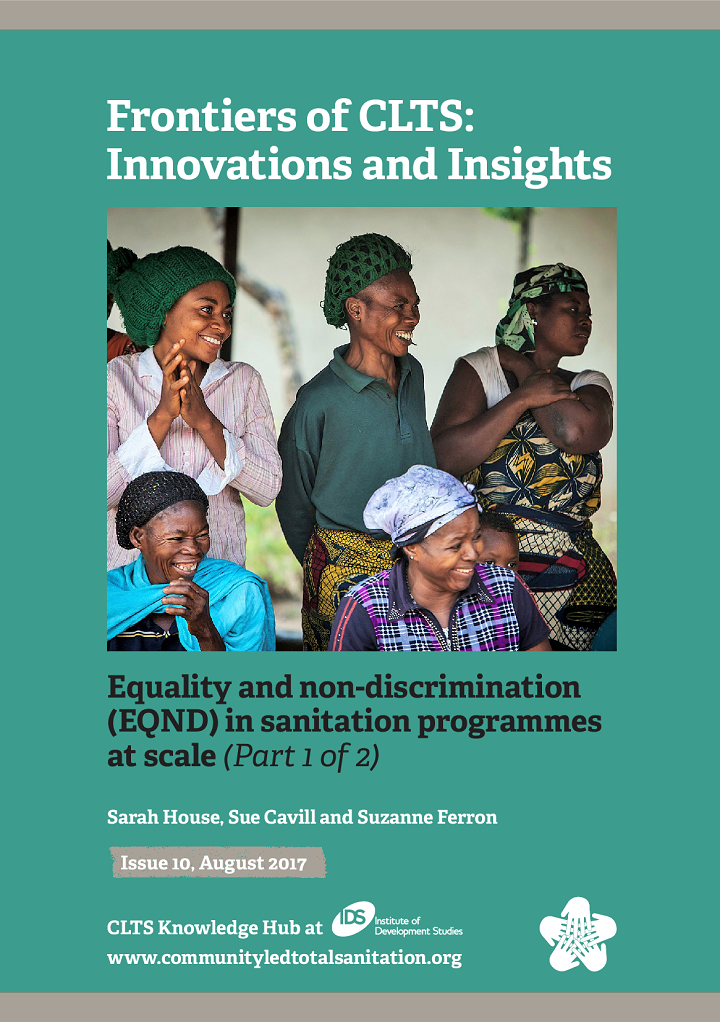
House, S., Cavill, S., Ferron, S. (2017) Equality and non-discrimination (EQND) in sanitation programmes at scale. (Part 1 of 2)
A well-facilitated Community-Led Total Sanitation (CLTS) programme that pro-actively considers and involves people who might be disadvantaged has been shown to have many benefits. A lack of this can and will often have negative impacts and make programmes and ODF unsustainable. This issue of Frontiers of CLTS looks at who should be considered potentially disadvantaged, how they can effectively participate and what may be needed […]
Online since: 14.02.2020
Views: 1447
Downloads: 2464
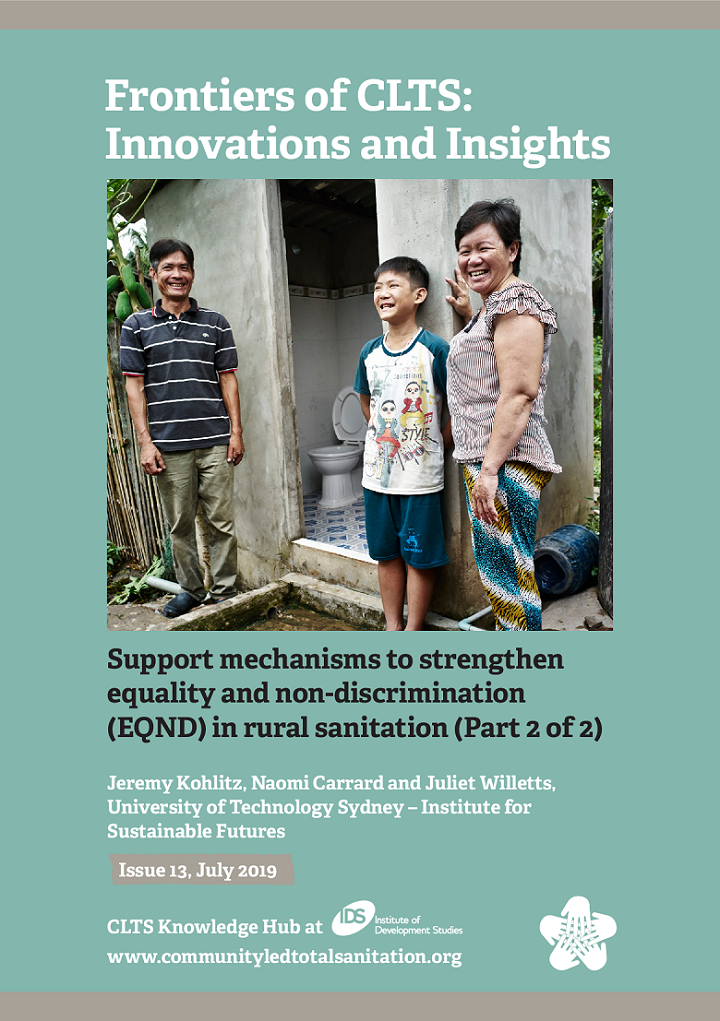
Kohlitz, J., Carrard, N., Willetts, J. (2019) Support mechanisms to strengthen equality and non-discrimination (EQND) in rural sanitation. (Part 2 of 2)
Achievement of adequate and equitable access to sanitation for all, and an end to open defecation, requires that special attention is given toward disadvantaged groups. It has become apparent that the benefits of conventional rural sanitation programming and service delivery are often not spread equally, and risk leaving disadvantaged groups behind. This issue of Frontiers of CLTS examines the potential of support mechanisms designed to […]
Online since: 14.02.2020
Views: 1783
Downloads: 292
Various authors (2019) Key documents on equity and inclusion for Discussion Forum category
In this library entry we have grouped together up to five documents that we think are important "first reading" materials for anyone wishing to obtain a quick overview of this topic. For more details, please see the external links to the discussion forum below. The documents listed in this library entry in reverse chronological order already exist as individual library entries but have been grouped together […]

Online since: 13.02.2020
Views: 1637
Downloads: 1416
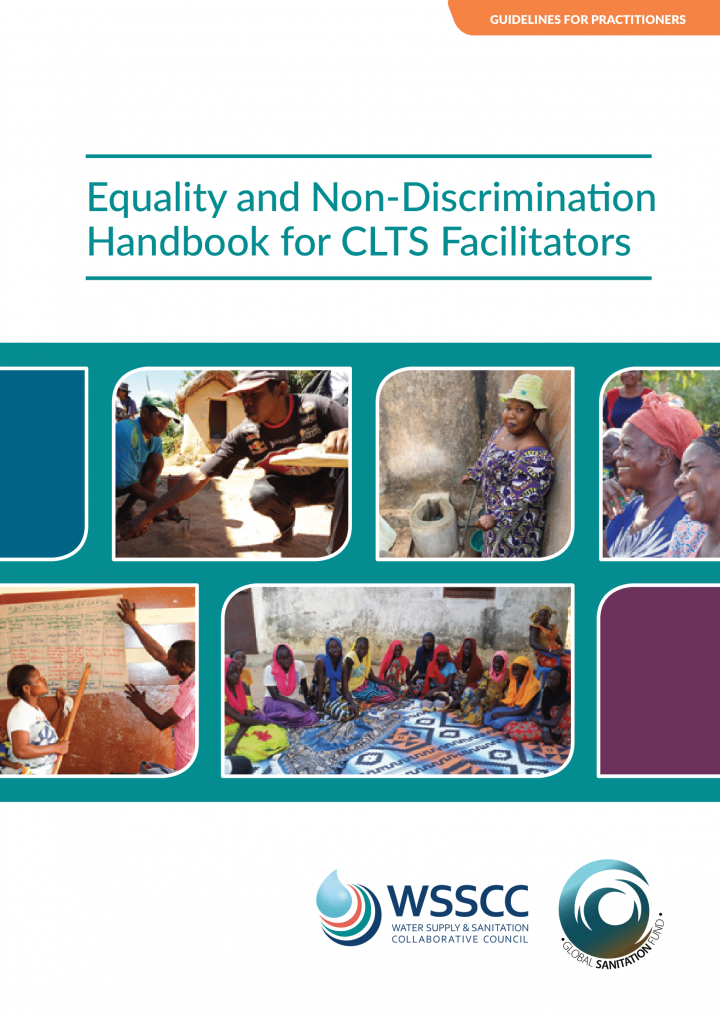
WSSCC (2019) Equality and Non-Discrimination - Handbook for CLTS Facilitators
The Equality and Non-discrimination (EQND) and Community-led Total Sanitation (CLTS) Handbook provides practical guidance for ensuring that behaviour change interventions leave no one behind. Drawing on experience from across the sector, this handbook is specifically targeted towards those implementing or supervising CLTS interventions at the community level. Key features include a summary of EQND principles, step-by-step guidance on applying these principles during pre-triggering, triggering meetings, […]
Online since: 23.08.2019
Views: 1500
Downloads: 303
Various Authors (2018) Dry Toilet Conference 2018 presentations and posters
The 6th International Dry Toilet Conference 2018 was held in Tampere, Finland on 22nd – 24th August 2018. The theme of the conference was Dry Toilet Goes Circular with a focus on Cooperation, Co-creation and Experimentation. Please find the oral presentations and poster presentations below via the links to the page of the GlobalDry Toilet association of Finland. ***** Oral Presentations: ***** Alisa Keesey: Container-based […]
Online since: 23.03.2019
Views: 2754
Downloads: 0
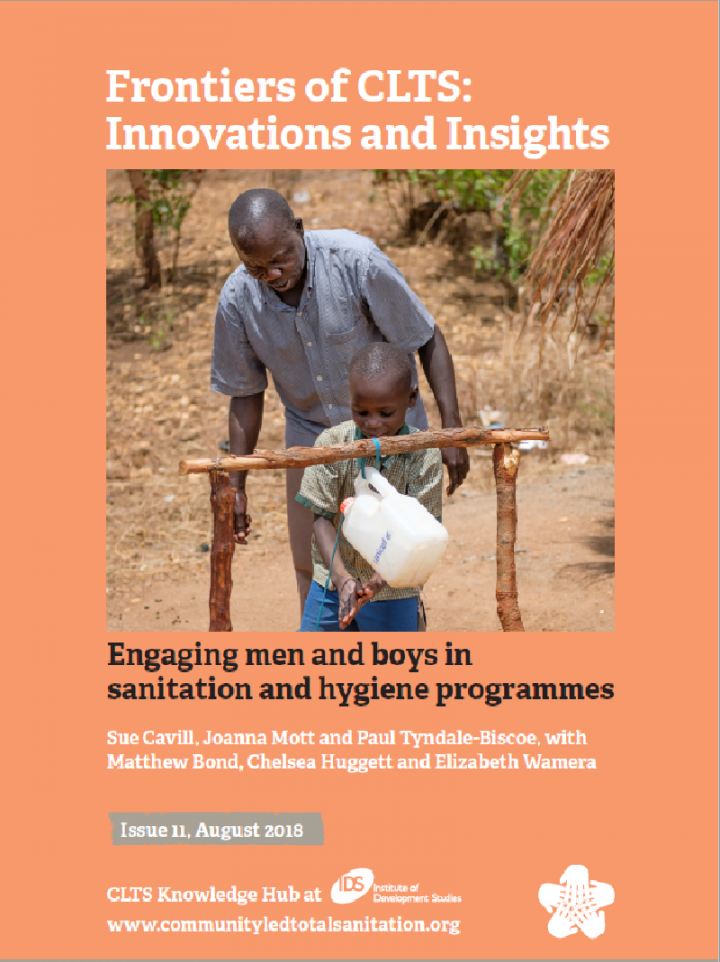
Cavill, S., Mott, J., Tyndale-Biscoe, P., Bond, M., Huggett, C., Wamera, E. (2018) Engaging men and boys in sanitation and hygiene programmes Frontiers of CLTS: Innovations and Insights
Men’s and boys’ active and positive engagement in sanitation and hygiene (S&H) means improving sustainable outcomes, as well as increasing the potential for redistribution of unequal domestic and care responsibilities from women to men. Discussions around gender in S&H (and elsewhere) often focus on the roles, positions or impacts on women and girls, however this issue of Frontiers of CLTS explores examples of men’s and […]
Online since: 12.10.2018
Views: 2490
Downloads: 330
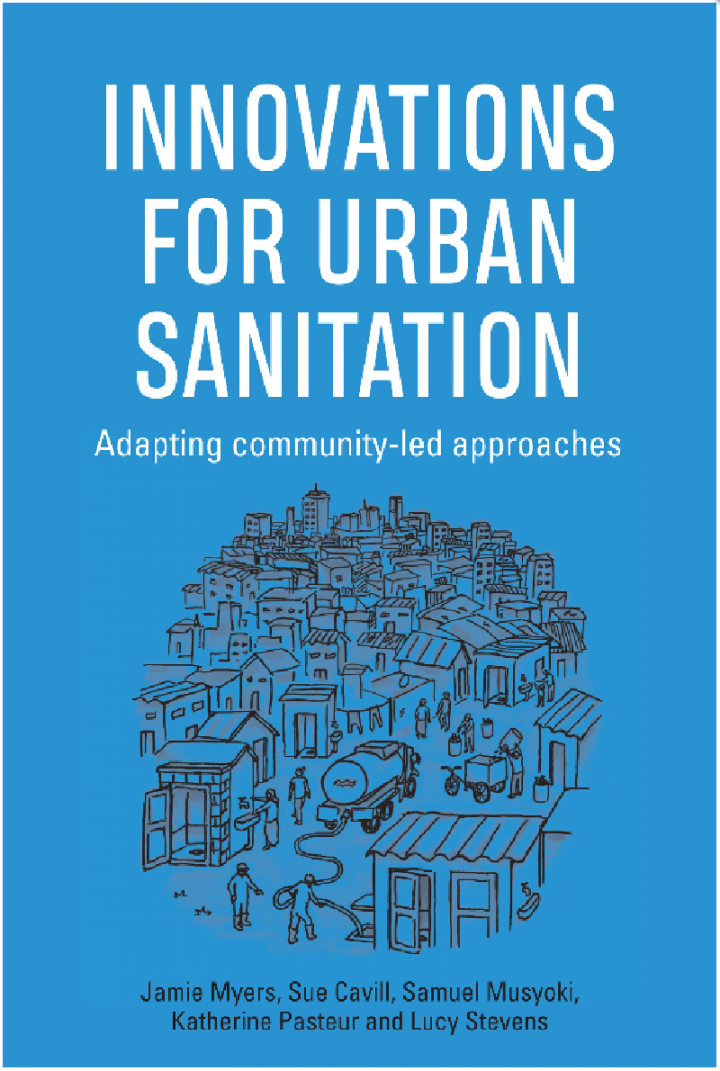
Myers, J., Cavill, S., Musyoki, S., Pasteur, K., Stevens, L. (2018) Innovations for Urban Sanitation Adapting Community-led Approaches
Over half the world’s population now lives in urban areas and a large proportion of them lives without improved sanitation. Efforts to tackle open defecation in rural areas has been led by the Community-led Total Sanitation (CLTS) movement. But how can the community mobilization techniques of CLTS be adapted to the more complex situations and transient populations in urban areas? How can landlords as well […]
Online since: 29.08.2018
Views: 2000
Downloads: 0
RCNN (2007) Community Led Total Sanitation A Handbook for Facilitators
This handbook has been prepared to guide the community health motivators, health and sanitation workers as well as community leaders to adopt and facilitate the CLTS approach in communities where sanitation programmes are being implemented. It is believed that this will help the concerned individuals to get a clear concept of CLTS and guide them to adopt its methods at the community level.
Online since: 04.08.2018
Views: 1536
Downloads: 0
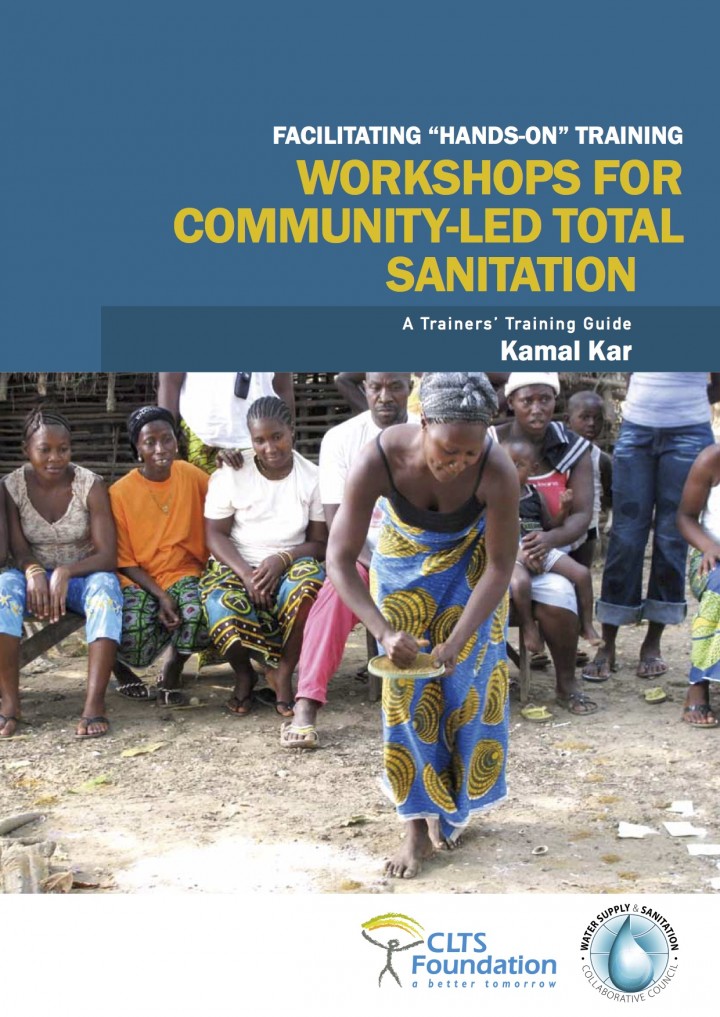
Kar, K. (2010) Facilitating “Hands-On” Training: Workshops for Community-Led Total Sanitation A Trainers’ Training Guide
The Handbook on CLTS describes the basics of CLTS facilitation and is essential and useful material for the field facilitators. This guideline, on the other hand, is written with a focus to meet the requirements of the trainers of CLTS facilitators, and of future CLTS trainers who are not yet experienced CLTS facilitators. The guide can also be used by trainers who wish to train […]
Online since: 05.06.2018
Views: 1744
Downloads: 0
InterAide, Engineers Without Borders Canada (2012) Community Follow-up Workshop Facilitation Guide: For Orientation of Community Leaders
This manual is meant to act as a guide for facilitators during the implementation of Community Follow-up Workshops as part of a Community-Led Total Sanitation (CLTS) program. Information provided is based on workshops piloted in Phalombe District during the GSF Program from 2011- 2012 by Engineers Without Borders Canada (EWB) and InterAide. The pilot was a village-level monitoring strategy that included a workshop for community leaders […]
Online since: 05.06.2018
Views: 1443
Downloads: 0
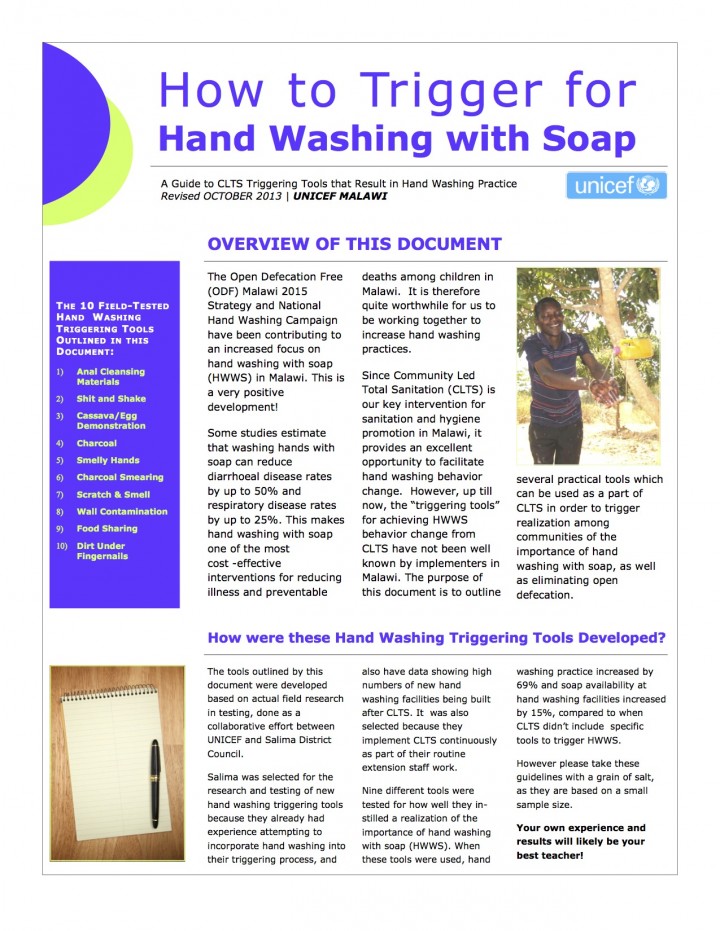
UNICEF Malawi (2013) How to Trigger for Hand Washing with Soap A Guide to CLTS Triggering Tools that Result in Hand Washing Practice
Since Community Led Total Sanitation (CLTS) is our key intervention for sanitation and hygiene promotion in Malawi, it provides an excellent opportunity to facilitate hand washing behavior change. However, up till now, the “triggering tools” for achieving HWWS behavior change from CLTS have not been well known by implementers in Malawi. The purpose of this document is to outline several practical tools which can be […]
Online since: 05.06.2018
Views: 2671
Downloads: 0
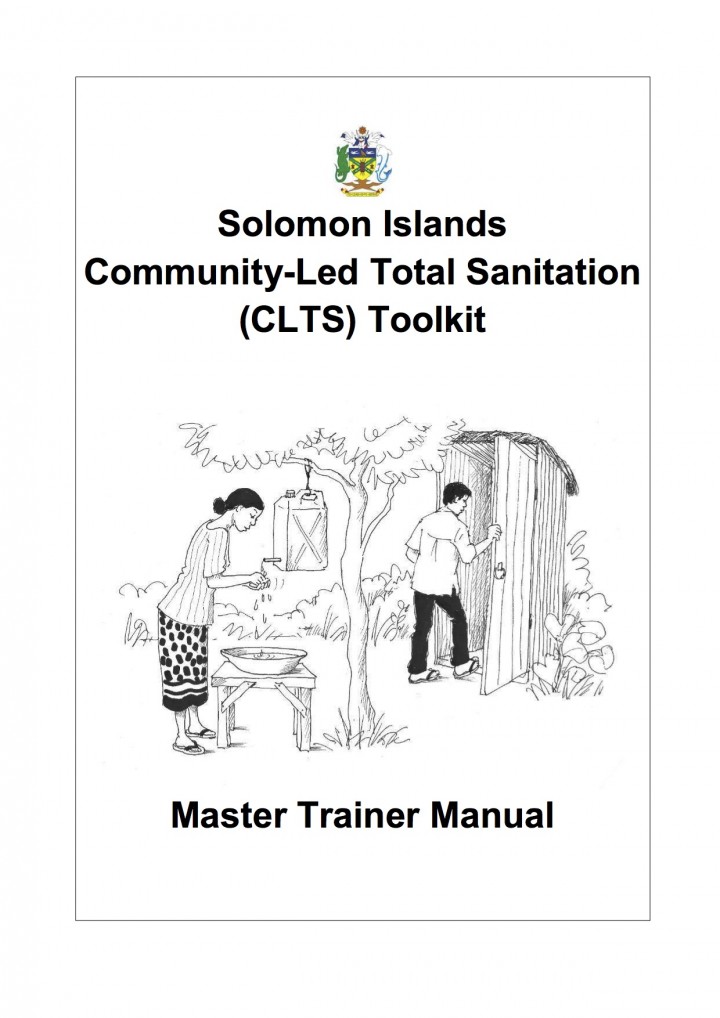
Ross, I., Ngoli, J. (2017) Solomon Islands Community-Led Total Sanitation (CLTS) Toolkit Master Trainer Manual
The Solomon Islands Community-Led Total Sanitation (CLTS) Toolkit is one of the manuals developed for the Rural Water Supply, Sanitation and Hygiene Program in the Solomon Islands. It will be used to guide CLTS Facilitators, and others working with villages, to trigger village action on taking control of sanitation and hygiene within their villages. Any organisations that are doing CLTS in Solomon Island villages are […]
Online since: 05.06.2018
Views: 2925
Downloads: 0
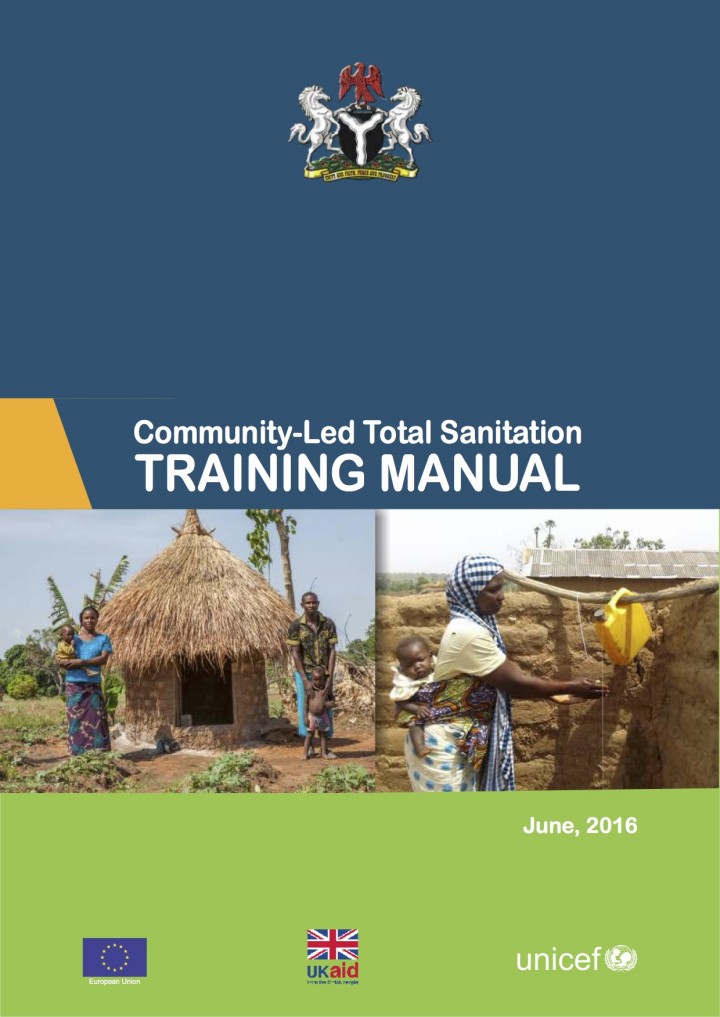
UNICEF (2016) Community-Led Total Sanitation Training Manual
This training manual is meant to provide a guide for Master Trainers/Trainers of CLTS trainers and facilitators at national and sub-national levels. The manual provides step by step approach of conducting CLTS training workshops and can be adapted to suit specific situations based on target audience and their level of involvement in CLTS implementation. The manual was reviewed and finalized at a stakeholders' meeting involving the […]
Online since: 05.06.2018
Views: 4591
Downloads: 0
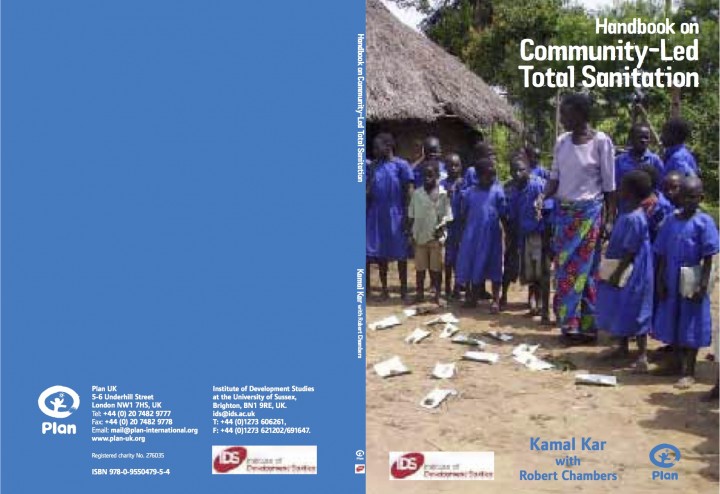
Kar, K., Chambers, R. (2008) Handbook on Community-Led Total Sanitation
This handbook has been developed from experiences with Community-Led Total Sanitation (CLTS) since December 1999. These have been in Bangladesh, India, Cambodia, Indonesia, Mongolia, Nepal, China and Pakistan in Asia; in Uganda, Zambia, Ethiopia, Tanzania, Kenya and Sierra Leone in Africa; in Bolivia in South America; in Yemen in the Middle East; and in other countries. Users of this handbook must feel free to use its guidelines the […]
Online since: 05.06.2018
Views: 2224
Downloads: 0
Federal Democratic Republic of Ethiopia Ministry of Health (2011) Community-Led Total Sanitation and Hygiene (CLTSH) Training Manual
The heart of the program is about “triggering” or “igniting” communities to change their hygiene and sanitation habits, namely by constructing and using latrines instead of defecating in the open. In Ethiopia, CLTS was the precursor to CLTSH, a modified version that has an added hygiene component. As with its predecessor, CLTSH functions without subsidies and has as its primary goal the achievement of open […]
Online since: 05.06.2018
Views: 3953
Downloads: 0
Ministry of Rural Rehabilitation & Development (2012) Implementation Manual For Implementing Community Led Total Sanitation (CLTS) in the Community (For the use of CLTS Master Trainers and Facilitators)
CLTS is a new approach in Afghanistan; and all stakeholders should become familiar with how it is implemented. CLTS component has been successfully implemented in various developing nations throughout the world; however, there was an urgent need how to adapt this approach to fit the societal and cultural aspects of in Afghanistan. MRRD is pleased to have this opportunity to develop this manual for CLTS […]
Online since: 05.06.2018
Views: 1582
Downloads: 0
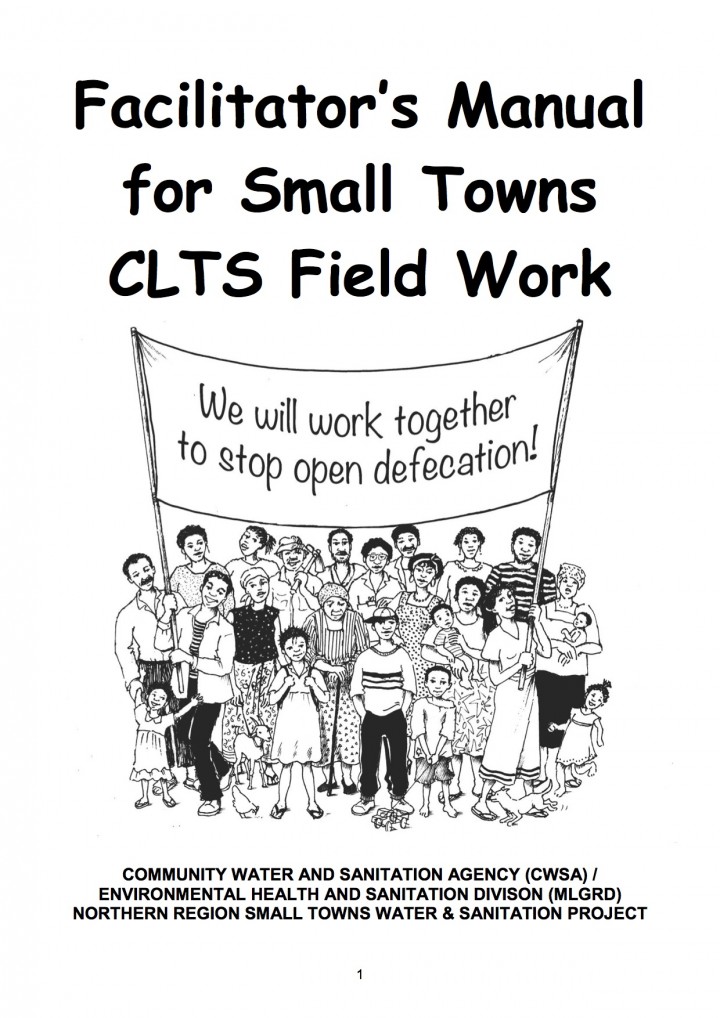
Kidd, R. (2014) Facilitator’s Manual for Small Towns CLTS Field Work
The Facilitator’s Manual for Small Towns CLTS Field Work is a guide for field workers who are promoting sanitation improvements at community and household levels, using the CLTS approach applied to the small towns context.
Online since: 24.05.2018
Views: 1952
Downloads: 0
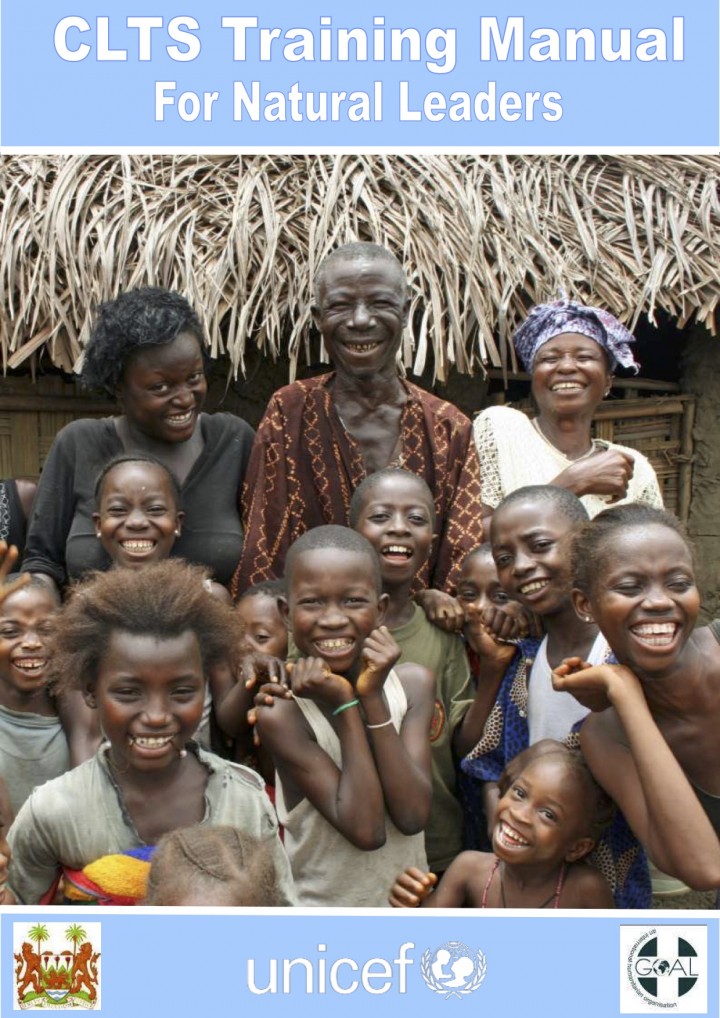
MoHS Sierra Leone, UNICEF, GOAL (2010) CLTs Training Manual for Natural Leaders
This manual has been designed by the Ministry of Health and Sanitation (MoHS), UNICEF and GOAL to help support Natural Leaders during the pre-triggering, triggering and follow-up of CLTS communities. The following pages will give simple examples of how to carry out each stage of CLTS. The booklet is not meant to be a script to read out whilst triggering however. A good natural leader […]
Online since: 24.05.2018
Views: 1827
Downloads: 0
DFID, UNWATER, UNICEF, WSSCC and Care Bangladesh. (2008) Community Led Total Sanitation in Bangladesh A documentary video
The video is a documentary about the Community Led Total Sanitation (CLTS) approach, an innovative methodology for mobilising communities to completely eliminate open defecation and take their own action to become open defecation free. It shows projects in Bangladesh and interviews with one of its pioneers Dr. Kamal Kar. It has been produced 2008 within the BBC earth report series on behalf […]
Online since: 26.04.2018
Views: 2471
Downloads: 0
SEI (2015) 9th SEI Webinar: CLTS monitoring success
This webinar was conducted on 22 June 2015 and has been recorded in 4 parts. This video clip contains Part 1 which is introduction by Pippa Scott (Euforic Services) during the webinar 'What constitutes success for CLTS? Measuring community outcomes and behavior changes'. To watch part 2-4 please go to links below. Speakers: 1) Ada Oko Williams, Technical Support Manager, Sanitation and Hygiene, WaterAid UK; 2) Darren […]
Online since: 24.04.2018
Views: 2087
Downloads: 0