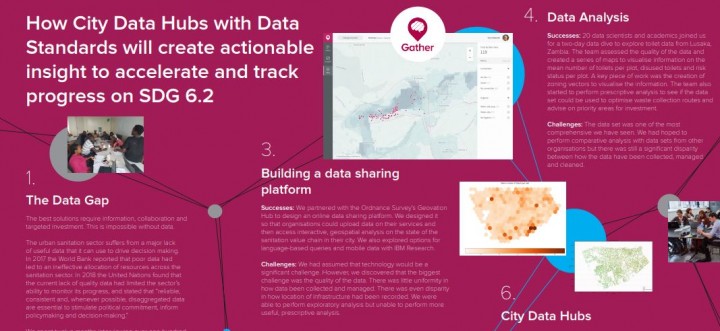
Archer, J. P. and Noakes, L. (2018) How City Data Hubs with Data Standards will create actionable insight to accelerate and track progress on SDG 6.2
Poster Presentation at UNC Water Institute's Water and Health Conference 2018.
Online since: 26.04.2019
Views: 1581
Downloads: 249
WHO, UNICEF (2019) WASH in health care facilities Practical steps to achieve universal access to quality care
The purpose of this document is to present eight practical actions that Member States can take at the national and sub-national level to improve WASH in health care facilities. It also summarizes the global response to the UN Secretary General’s Call to Action. This document is a companion to the WHO and UNICEF JMP 2019 SDG baseline report for WASH in health care facilities (available […]
Online since: 16.04.2019
Views: 2178
Downloads: 285
TBC (2017) Introducing The Sanitation Economy
The Sanitation Economy presents vast potential for global economic growth while addressing one of the most urgent grand challenges of our time, achieving universal access to improved sanitation (SDG6). It monetises toilet provision, products and services, biological resources, data and information to provide benefits across business and society.
Online since: 16.04.2019
Views: 1033
Downloads: 265
Aavishkaar-Intellecap, TBC (2018) Beyond CSR To The Sanitation Economy Transformational Business & Investment Opportunities In India
The transition to the Sanitation Economy presents a transformational opportunity to ensure a sustainable future for sanitation systems that can provide alternatives to the cost burdened systems of today, towards cost recovery and full of life-improving innovations, business and commercial investment opportunities - that could turn the outlook for SDG 6 around and ensure the resilience of India’s progress on sanitation access via the Swachh […]
Online since: 16.04.2019
Views: 877
Downloads: 272
WHO and UNICEF (2019) WASH in Health Care Facilities Global Baseline Report 2019
The WHO/UNICEF JMP has expanded its global databases to include WASH in health care facilities. The 2019 global baseline report includes harmonized national estimates as well as regional and global estimates for 2016. The Key messages for sanitation are: In 2016: 1. 18 countries and only one SDG region had sufficient data to estimate coverage of basic sanitation services in health care facilities. 2. There were not enough […]
Online since: 04.04.2019
Views: 2726
Downloads: 258
WHO, UN-Water (2017) Financing Universal Water, Sanitation and Hygiene under the Sustainable Development Goals UN-Water Global Analysis and Assessment of Sanitation and Drinking-Water GLAAS 2017 Report
The GLAAS 2017 report focuses on the key role of financing in the water, sanitation and hygiene (WASH) sector. It is designed to provide a global perspective as the world embarks on achieving the SDGs, particularly SDG 6 relating to clean water and sanitation, which is essential to good health and well-being. It also provides country-specific data for governments to use as they plan investments […]
Online since: 28.01.2019
Views: 1260
Downloads: 272
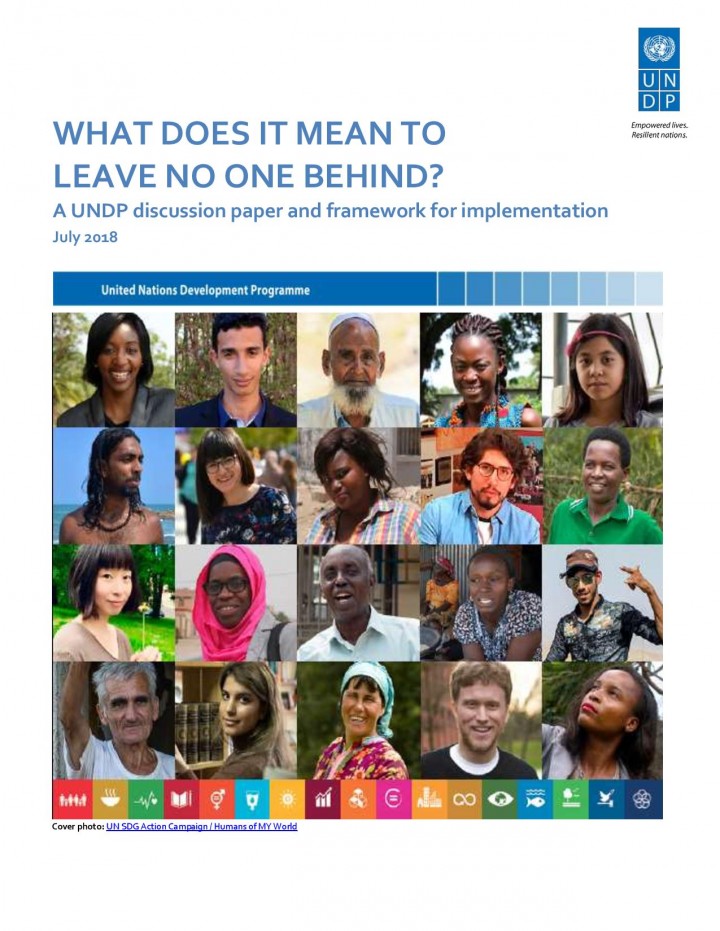
UNDP (2018) What does it mean to leave no one behind? A UNDP discussion paper and framework for implementation
With the adoption of the 2030 Agenda, UN Member States pledged to ensure “no one will be left behind” and to “endeavour to reach the furthest behind first”. This paper advances a framework that governments and stakeholders can use to act on their pledge in a way that enables and accelerates progress to achieve the Sustainable Development Goals (SDGs). It also seeks to inform the manner […]
Online since: 13.01.2019
Views: 1104
Downloads: 235
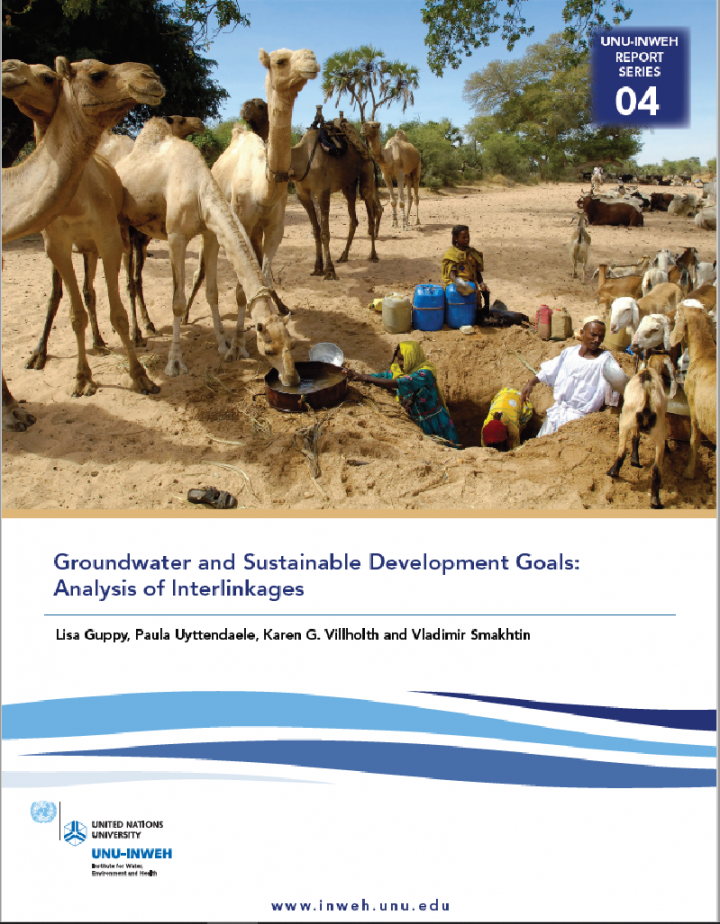
Guppy, L., Uyttendaele, P., Villholth, K. G., Smakhtin, V. (2018) Groundwater and Sustainable Development Goals Analysis of Interlinkages
Groundwater represents 97% of the world’s available freshwater resources and is extensively abstracted throughout the world. While abundant in a global context, it can only de developed to a certain extent without causing environmental impacts. Also, it is highly variable across the globe, and where it is heavily relied on, it is less renewable. Hence, it is critically important that this resource is managed sustainably. […]
Online since: 10.01.2019
Views: 3460
Downloads: 5828
Laramee, J. E. (2017) Assessing Lifecycle Costs and Benefits of Integrated Sanitation and Energy Recovery Strategies in low-income Countries (PhD thesis)
By mid-century, the global urban population is projected to increase by 2.4 billion people with 60% of growth expected to take place in cites of sub-Saharan Africa (SSA) and South Asia (SA) (UN-DESA, 2015). These regions have some of the lowest rates of urban sanitation coverage and modern fuel access, with only 41% and 67% estimated to have access to improved sanitation and 19% and […]
Online since: 14.12.2018
Views: 1676
Downloads: 330
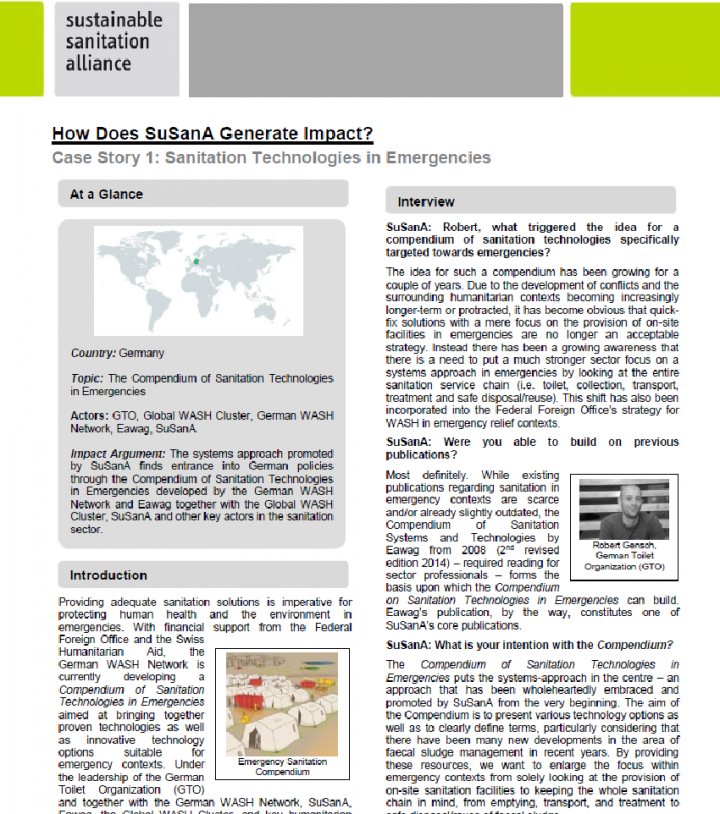
SuSanA (2019) How does SuSanA generate impact? A compilation of SuSanA Impact Stories
Selected sanitation projects from different parts of the world were requested to report on how SuSanA had influenced the work carried out. This resulted in a variety of evidence indicating that SuSanA can have a far-reaching effect providing expertise, convenor of meetings, a source of online information, networked contacts, discussion platform and a place to disseminate reports and publications. Case Story 1: Sanitation Technologies in Emergencies Case […]
Online since: 14.12.2018
Views: 6129
Downloads: 13150
SuSanA (2017) Communications Plan of SuSanA
This SuSanA Communications Plan is based on the CAWST Sector Knowledge Management Study which was funded as part of a grant by the Bill & Melinda Gates Foundation (see link below). The Communications Plan was written mainly by Arno Rosemarin and subsequently endorsed by the SuSanA secretariat and core group It has 9 Appendices which are provided for download below. The following were the components of the market […]
Online since: 10.12.2018
Views: 3182
Downloads: 3800
UN Water (2018) Global workshop for integrated monitoring of Sustainable Development Goal 6 on water and sanitation Summary Report
The inclusion of a goal on water and sanitation within the 2030 Agenda for Sustainable Development represented a significant advancement in the recognition of the sector, and of the complexities and interlinkages that characterize it. Recognizing the importance of integration across the goal, the United Nations custodian agencies for Sustainable Development Goal 6 (SDG 6) are collaborating under the UN-Water Integrated Monitoring Initiative for SDG […]
Online since: 25.10.2018
Views: 2026
Downloads: 3359
The World Bank (2017) Reducing inequalities in water supply, sanitation, and hygiene in the Era of the Sustainable Development Goals Synthesis Report of the WASH Poverty Diagnostic Initiative
The Sustainable Development Goals (SDGs) and the World Bank’s corporate goals of ending extreme poverty and boosting shared prosperity call for specific attention to the poor and vulnerable. The overarching objective of the SDGs is to end poverty in all its forms, but their key difference from the earlier Millennium Development Goals (MDGs) is the integration of social, economic, and environmental goals (UN 2015). This […]
Online since: 24.10.2018
Views: 950
Downloads: 232
WHO (2017) Water and Sanitation for Health Facility Improvement Tool (WASH FIT) A practical guide for improving quality of care through water, sanitation and hygiene in health care facilities
WASH in health care facilities is a fundamental prerequisite for achieving national health goals and Sustainable Development Goals (SDGs) 3 (ensure healthy lives and promote well-being) and 6 (ensure availability and sustainable management of water and sanitation). Safe water, functioning hand washing facilities, latrines, and hygiene and cleaning practices are especially important for improving health outcomes linked to maternal, newborn and child health, as well […]
Online since: 22.10.2018
Views: 2839
Downloads: 368
WHO (2018) WHO water, sanitation, and hygiene strategy 2018-2025
The WHO WASH Strategy has been developed in response to Member State Resolution WHA64.4 and the 2030 Agenda for Sustainable Development and its Sustainable Development Goals (SDGs). It also takes on board the need for progressive realization of the human rights to safe drinking-water and sanitation, adopted by the UN General Assembly in July 2010. The 2025 end date of the Strategy is proposed to […]
Online since: 17.10.2018
Views: 2104
Downloads: 270
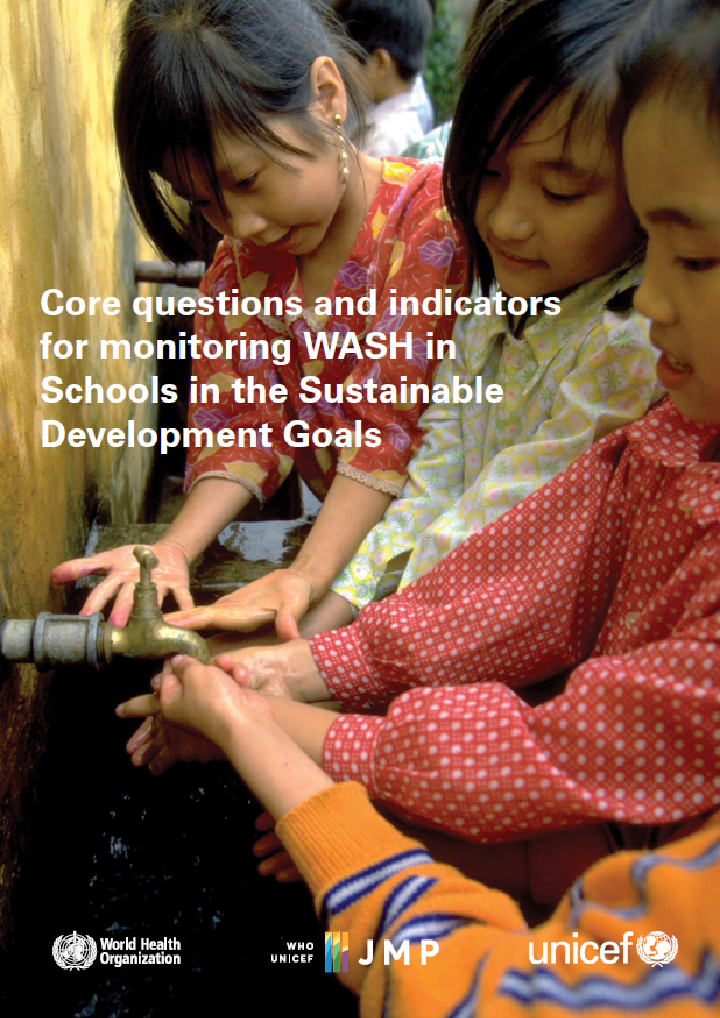
UNICEF & WHO (2018) Core Questions and Indicators for Monitoring WASH in Schools in the SDGs - Update 2018
This updated document presents recommended core questions to support harmonised monitoring of WASH in schools as part of the SDGs. The questions map to harmonised indicator definitions of “basic” service and to service ladders that can be used to monitor progress. They are intended for use in national or sub-national facility surveys and census questionnaires. If national and sub-national surveys use the questions and response categories […]
Online since: 31.08.2018
Views: 2549
Downloads: 319
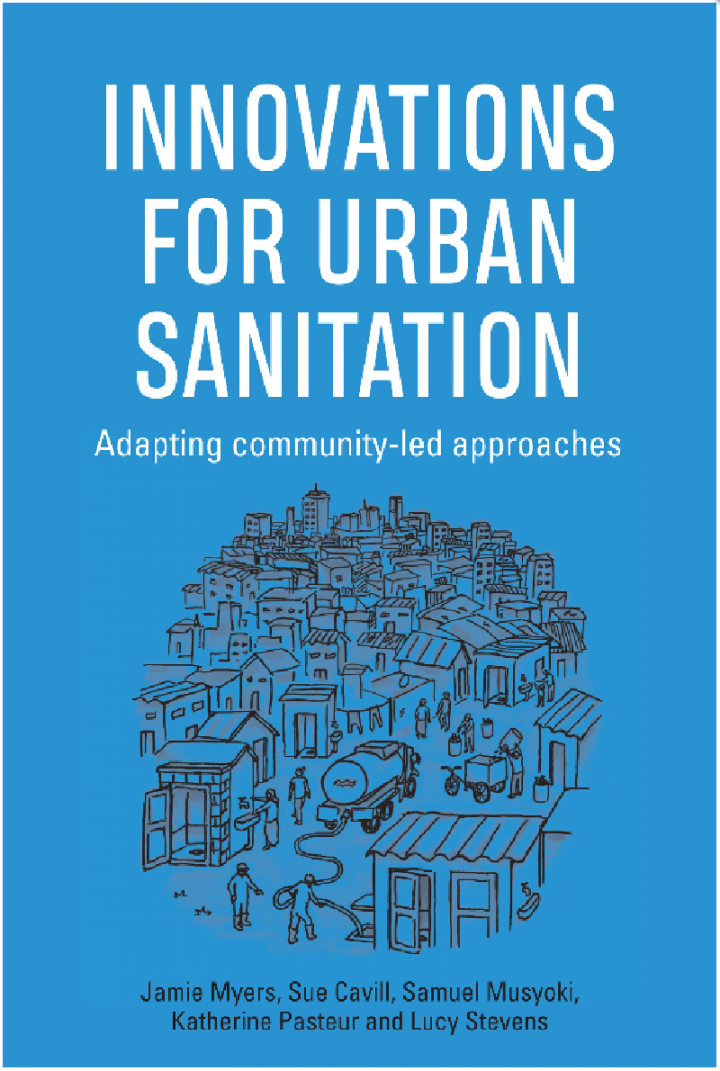
Myers, J., Cavill, S., Musyoki, S., Pasteur, K., Stevens, L. (2018) Innovations for Urban Sanitation Adapting Community-led Approaches
Over half the world’s population now lives in urban areas and a large proportion of them lives without improved sanitation. Efforts to tackle open defecation in rural areas has been led by the Community-led Total Sanitation (CLTS) movement. But how can the community mobilization techniques of CLTS be adapted to the more complex situations and transient populations in urban areas? How can landlords as well […]
Online since: 29.08.2018
Views: 2000
Downloads: 0
World Vision, WASH United, Simavi, GIZ (2018) Menstrual Hygiene Webinar Series Report of a five-part Webinar Series on MH from May to July 2018
As Menstrual Hygiene (MH) has been continuously gaining visibility and importance, World Vision, WASH United, Simavi, and GIZ organized a five-part webinar series from May to July 2018. Each webinar aimed to address one of the key aspects of MH management, including evidence (webinar 1), knowledge (webinar 2), menstrual products (webinar 3), infrastructure (webinar 4) and policy (webinar 5) providing an overview and sharing good practices […]
Online since: 23.08.2018
Views: 2232
Downloads: 588
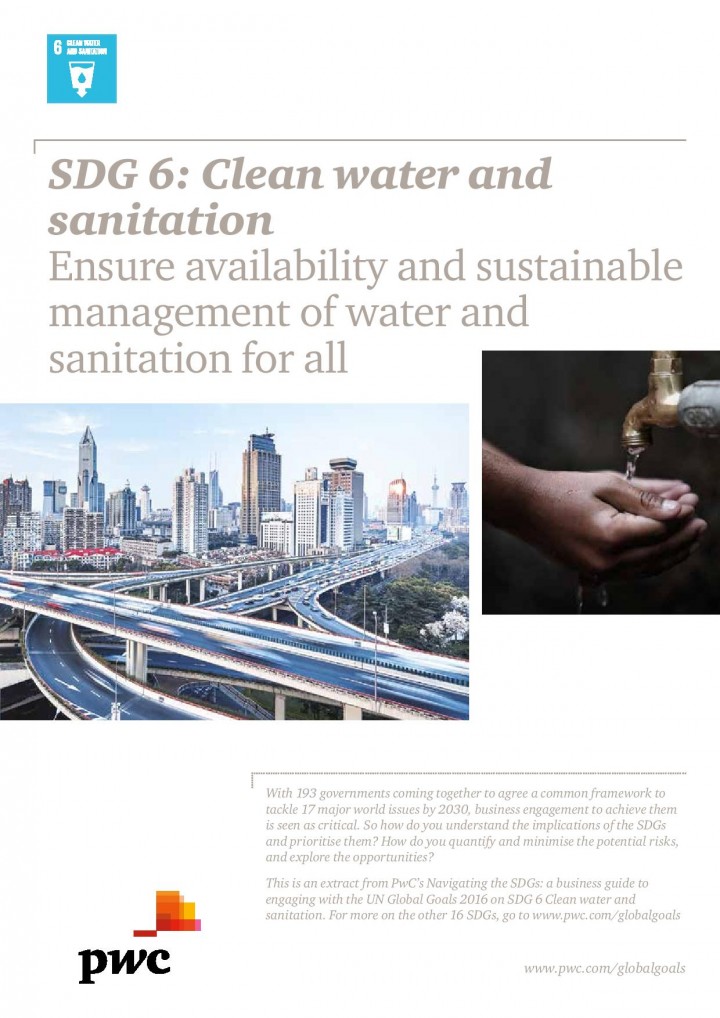
PwC (2016) SDG 6: Clean water and sanitation Report
With 193 governments coming together to agree a common framework to tackle 17 major world issues by 2030, business engagement to achieve them is seen as critical. So how do you understand the implications of the SDGs and prioritise them? How do you quantify and minimise the potential risks, and explore the opportunities? This is an extract from PwC’s Navigating the SDGs: a business guide to […]
Online since: 02.08.2018
Views: 1536
Downloads: 219
Ministry of Planning and International Cooperation in Jordan (2017) Jordan’s Way to Sustainable Development First National Voluntary review on the implementation of the 2030 Agenda
This report was published in 2017 and presented at the UN meeting in July 2017. This is the first National Voluntary Review of the SDGs for Jordan and contains progress on the SDGs, future plans and recommendations.
Online since: 29.07.2018
Views: 2530
Downloads: 230